Can You Sell Fan Art on Etsy? Rules, Risks & Safer Options
November 12,2026 6:42 PM(UTC+8) 35 views
If you browse Etsy for anime prints, game-inspired stickers, or character keychains, you will find plenty of fan art for sale. That makes the question seem simple: if other artists are selling it, can you sell yours?
The short answer: sometimes, but not simply because you created the drawing. Selling fan art on Etsy can be possible when you have the necessary rights or another valid legal basis, and your listing meets Etsy’s policies. A product being live on the marketplace is not proof that its seller has permission.
Here is how Etsy’s rules work, what can put a listing at risk, and what to consider before turning fandom-inspired artwork into merchandise.
Legal note: This article provides general information, not legal advice. Intellectual-property rules differ by country, and individual designs may involve different rights.
Does Etsy Allow Fan Art?
Etsy does not offer a blanket exemption that makes fan art safe to sell. Its Creativity Standards allow products made or designed by a seller, including original designs produced by an eligible third-party production partner. But sellers must also comply with Etsy’s Intellectual Property Policy and have the rights needed for the content in their listings.
That distinction matters. Drawing a character yourself may make the new illustration your own creative work in some respects, but it does not automatically give you commercial rights to the character or other protected elements it uses.
The same principle applies whether you sell a physical print, an acrylic charm, a sticker, or a downloadable illustration. Product format does not create a copyright exception. If a production partner makes an eligible item from your design, Etsy also requires you to disclose that partner in the listing.
Why Fan Art Can Raise Copyright and Trademark Issues
Copyright: More Than the Original Image
Copyright can protect original artwork, stories, and sufficiently distinctive fictional characters or visual elements. Making a new drawing does not necessarily remove the underlying rights. A hand-drawn portrait of a recognizable game character, for example, can still rely on material owned by the game’s rights holder.
Trademark: Names, Logos, and Branding
Trademark rules are a separate concern. Franchise names, logos, and other brand identifiers can create problems in product designs, titles, tags, or descriptions, depending on how they are used and whether they cause confusion. Avoiding a brand name in the listing does not automatically fix an unauthorized character design; adding “unofficial” does not automatically fix a trademark problem either.
Five Fan Art Myths Etsy Sellers Should Know
1. “I drew it, so I can sell it.” Your original contribution and the rights to a pre-existing character are different questions.
2. “Credit makes it legal.” Attribution can be respectful or required under a license, but it is not a substitute for authorization.
3. “Small batches are exempt.” There is no general rule allowing a certain number of unlicensed fan-art sales.
4. “Changing the design enough makes it safe.” There is no fixed percentage of changes that guarantees a lawful use.
5. “Other Etsy shops are doing it.” A listing’s visibility or longevity is not evidence of a license, legal clearance, or Etsy’s approval of the rights involved.
Does Fair Use Protect Fan Art Sold on Etsy?
Fair use is frequently mentioned in fan-art discussions, but it is not a general permission slip. Under US law, courts assess factors including the purpose of the use, the nature of the original work, how much was taken, and the effect on the market for the original. The U.S. Copyright Office’s fair use guidance explains why the outcome depends on the specific facts.
Selling something does not automatically rule out fair use, just as drawing a completely new composition does not automatically establish it. Artwork created to comment on or parody a work may raise different questions from a decorative character image sold on merchandise. Neither label guarantees a result.
There is also no universal “30% different” rule. If your commercial plan depends on a difficult fair-use argument, that is a good reason to seek qualified advice before listing products.
What Happens if Someone Reports Your Etsy Fan Art?
Etsy says it removes or disables material identified in an intellectual-property report that complies with its policies. A seller may receive a notice explaining which listing was affected and identifying the reporting party. Etsy’s action is not, by itself, a court ruling on whether infringement occurred.
Repeated or multiple infringement notices can lead to loss of selling privileges. If a listing is removed, Etsy advises sellers not to relist the same material unless the issue has been resolved. Its guidance for sellers who receive an IP notice outlines the available next steps.
For certain US-based copyright claims, a DMCA counter-notice process may be available. That is a formal legal procedure, not a routine appeal button; it is worth understanding the consequences before using it.
When Might Selling Fan Art on Etsy Be Permitted?
The clearest starting point is to identify why you are entitled to use the material commercially. Common possibilities include the following.
You Have Written Permission or a License
A rights holder may authorize specific artwork, merchandise categories, sales channels, countries, or quantities. Read the scope carefully. Approval to post a drawing, take commissions, or sell prints does not necessarily cover making keychains, using print-on-demand services, or shipping internationally.
An Official Fan-Content Policy Allows the Sale
Some creators and publishers publish rules for fan-made goods. Check the actual policy rather than relying on screenshots, forum summaries, or another seller’s interpretation. Look for permitted products, sales limits, restrictions on logos and official art, production methods, and where sales may take place. A policy allowing noncommercial fan activity is not the same as permission to sell merchandise.
You Use Verified Public-Domain or Fully Original Material
A particular work may be in the public domain, but newer adaptations, redesigned characters, and associated branding may still be protected. Original characters and artwork that do not borrow protected expression from another franchise offer more control over what you can sell and how you can expand.
For a wider look at licensing, fair use, and fan-content policies beyond Etsy, see our guide to selling fan art legally.
A Practical Checklist Before Listing Fan Art on Etsy
· Identify any third-party characters, artwork, names, logos, lyrics, or other recognizable protected elements in the design.
· Find the rights holder and check current official licensing or commercial fan-content terms.
· Confirm that permission covers the exact product, manufacturing method, marketplace, territory, and planned volume.
· Make sure titles, tags, images, and descriptions do not falsely suggest official merchandise or endorsement.
· Keep records of written permissions and the policy version you relied on.
· If a production partner helps make your original design, comply with Etsy’s production-partner disclosure rules.
If you cannot establish a reasonable basis for selling a particular design, reconsider the product before spending money on stock, samples, or advertising.
Safer Options for Artists Who Want to Sell Merchandise
Fan art can be a valuable part of creative communities. A merchandise business, though, benefits from designs you can confidently use across products, shops, and future collections. The aim is not to abandon what inspires you; it is to separate fandom participation from the rights needed for commercial sales.
Create Original Characters With a Familiar Genre Appeal
An original magical-girl character, cozy fantasy creature, or retro sci-fi illustration can appeal to people who enjoy those genres without depending on one specific franchise. Draw from broad themes and aesthetics rather than copying signature costumes, emblems, or identifiable character designs.
Choose Projects With Clear Commercial Permissions
If you enjoy making work tied to an existing property, prioritize projects where the rightsholder’s commercial rules are clear or where you can obtain permission. Record those terms and revisit them when adding new products.
Build a Store Around Artwork You Have the Rights to Sell
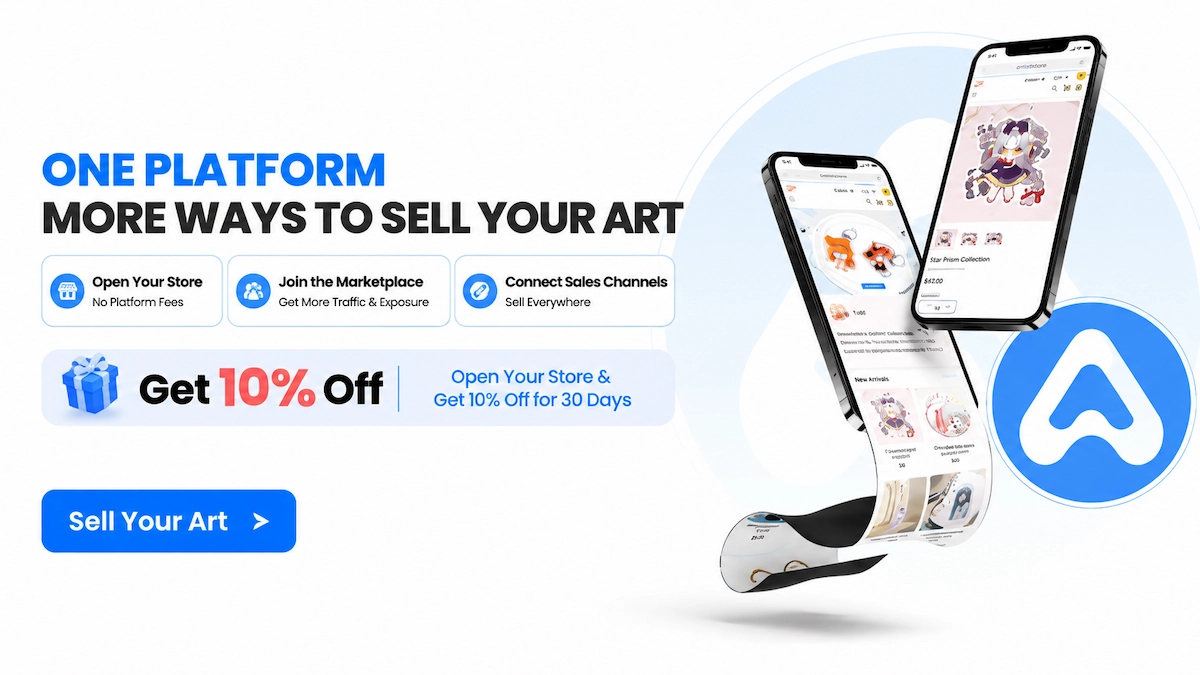
Once the artwork is cleared for commercial use, the next decision is how to make and sell it. Artiststore is a print-on-demand storefront platform for artists. Creators can put their designs on products such as stickers, keychains, pins, and prints, set their selling prices, and have production and order fulfillment handled without holding inventory. Artiststore currently offers store setup without upfront platform fees.
That convenience does not change the rights requirement. Artiststore’s own intellectual-property rules require creators to use original work or obtain appropriate authorization for third-party material. It is not an alternative way to bypass Etsy’s copyright restrictions, and approval to open a shop does not amount to approval of every design.
If your collection is ready and you have the rights to sell it, you can apply to open an Artiststore shop. Applications are reviewed before activation.
Already Have an Etsy Shop? Connect It to Artiststore
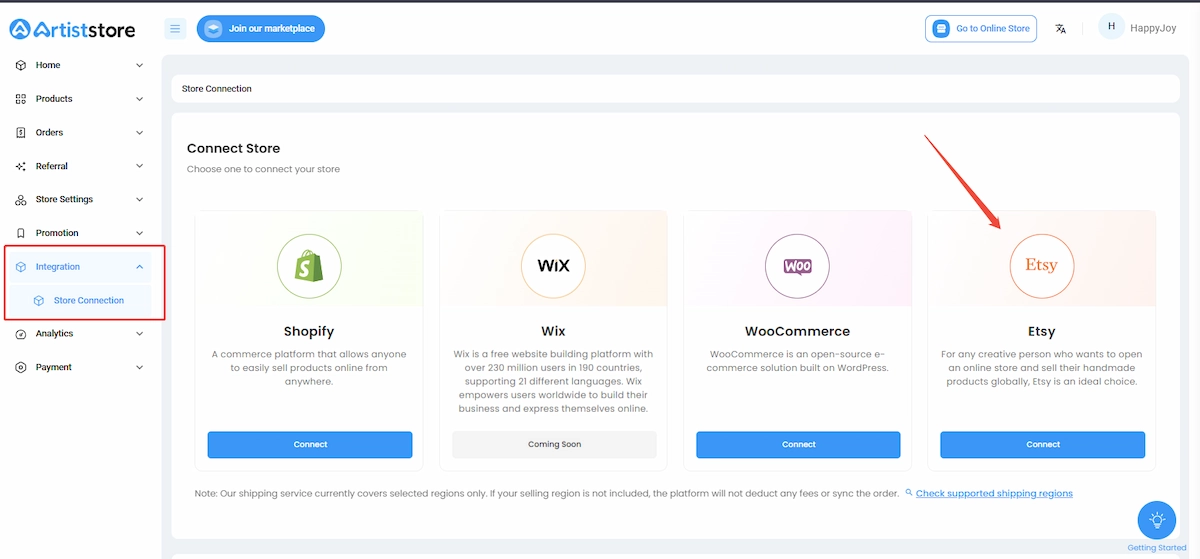
If you already sell on Etsy, you may not need to start a separate storefront. Artiststore also provides an Etsy integration that allows eligible sellers to connect their existing shops and use Artiststore for print-on-demand production and fulfillment.
With a supported connection, artists can turn their original or properly licensed designs into products such as stickers, keychains, pins, and prints without holding inventory. Artiststore handles production and shipping, while sellers continue managing their Etsy storefronts.
Getting started involves connecting your Etsy account, confirming supported product categories, setting up shipping and processing profiles, and disclosing Artiststore as a production partner where required. You can follow the Artiststore Etsy Integration Guide for detailed instructions.
One important distinction: Integrating Artiststore with Etsy does not change either platform's intellectual property requirements. Artwork must still be eligible for commercial use, and connecting a fulfillment provider does not make unauthorized fan art permissible.
For artists with the appropriate rights, this offers another way to sell merchandise through an existing Etsy shop without managing physical inventory.
The Bottom Line
Can you sell fan art on Etsy? In some circumstances, yes—but your right to sell matters more than the fact that you drew it or found similar items online. Check the relevant permissions, understand Etsy’s policies, and avoid building a business around rights you cannot verify.
For artists planning a long-term merch brand, original designs and clearly authorized projects provide a stronger foundation, whether you sell through Etsy, your own storefront, or both.
FAQ: Selling Fan Art on Etsy
Is all fan art banned from Etsy?
No. The key question is whether you have the rights or other applicable legal basis for the particular use, as well as whether the listing follows Etsy’s rules. There is no blanket fan-art permission.
Can I sell anime or game fan art on Etsy?
The same principles apply to anime, manga, games, films, and other fandoms. Check the relevant rights holder’s policies and the specific design and product rather than assuming a genre has special permission.
Are fan art stickers or prints safer than other products?
A smaller or cheaper product is not automatically safer legally. Stickers, prints, shirts, acrylic charms, and digital files can all raise rights questions when they reproduce protected material.
Can I sell fan art commissions on Etsy?
A customer requesting a character drawing does not automatically grant the artist commercial rights to that character. The resulting listing or deliverable must still meet Etsy’s applicable product rules and intellectual-property requirements.
Does writing “fan-made” or “not official” protect a listing?
Those phrases may clarify that you are not claiming official status, but they do not grant permission to use copyrighted material or trademarks.
If the copyright owner has not complained, is the listing okay?
Not necessarily. Silence is not the same as authorization, and a listing remaining live does not settle the underlying rights question.