Creative Design Stores: How Junebu Builds a Cohesive Anime Merch Store
October 1,2026 1:07 AM(UTC+8) 266 views
Opening a merch store is only the first step.
The bigger challenge is making it feel unmistakably yours.
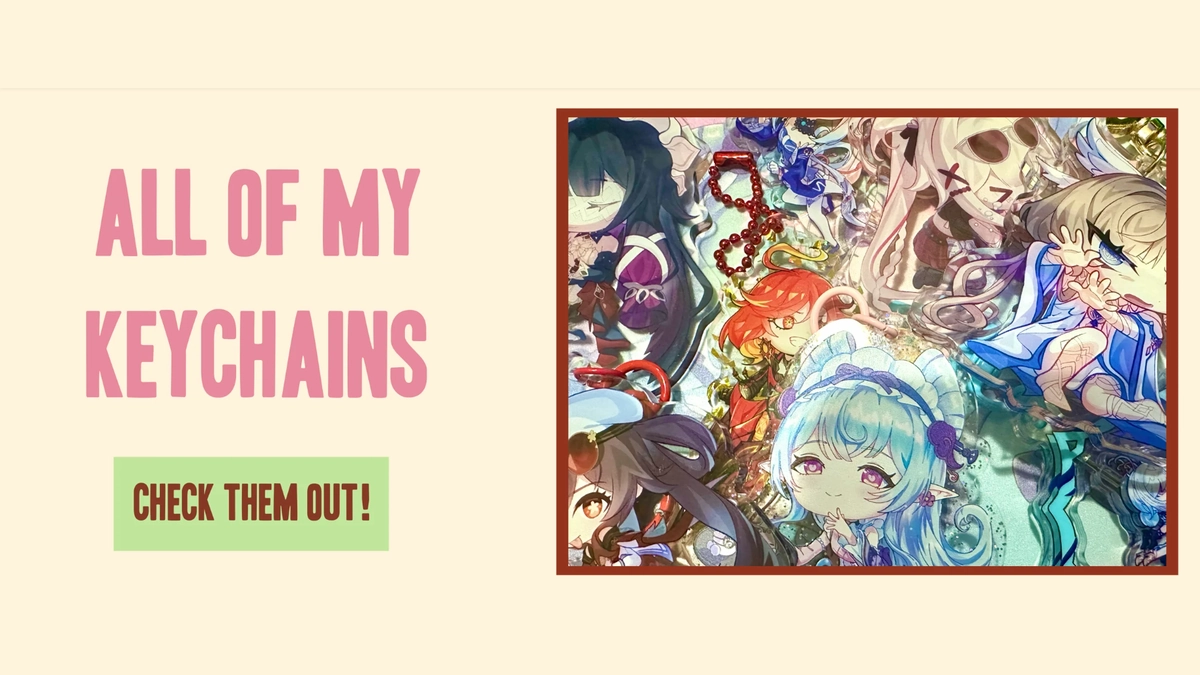
For anime-style artist Junebu , the Artiststore storefront shows how artwork, product choices, banners, collections, colors, and product presentation can work together as one experience.
Rather than feeling separate from the illustrations that originally attracted fans, the store acts as an extension of Junebu’s creative identity—giving followers another way to discover, collect, and enjoy the artwork.
Build the Store Around Your Artwork
Independent artists already have something traditional ecommerce brands often need to create from scratch:
their own visual identity.
Junebu’s store builds around anime-style artwork and character-focused illustrations instead of relying on generic commercial graphics.
That visual language carries across:
· character artwork
· banners
· product thumbnails
· collections
· colors
· product presentation
The result is a much more natural path from artwork to store:
Artwork → Characters → Products → Store
When someone arrives, they should be able to understand three things quickly:
1. Who is this artist?
2. What kind of work do they create?
3. What can I collect here?
That first impression gives the storefront a clearer identity.
Create a Clear Visual First Impression
A strong artist storefront does not need to be complicated.
What matters more is visual hierarchy .
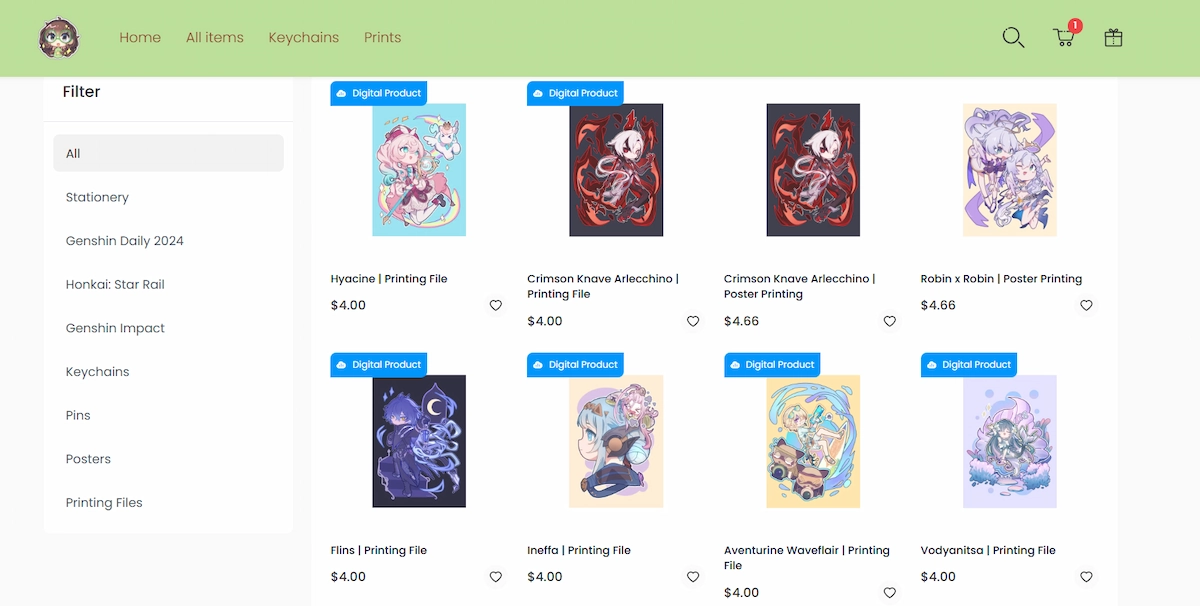
Junebu’s store shows how artwork can guide visitors through the shopping experience rather than leaving them with one long product grid.
A useful homepage structure can include:
Artist Identity
Introduce the artist and establish the visual direction immediately.
Featured Artwork
Show the illustrations or series that best represent the creator’s work.
Featured Products
Give representative products a prominent place instead of treating every listing equally.
Collections
Organize products by fandom, character, theme, or merchandise type.
Social Links
Give visitors a way to continue following the artist beyond the storefront.
Together, these elements can make an Artiststore feel closer to an artist portfolio + merch shop than a generic ecommerce page.
Make the Store Feel Like the Artist
One of the easiest mistakes for an artist shop is making it look too much like a standard online store.
But personality is one of the biggest advantages independent creators have.
A visitor should feel:
“This is Junebu’s world.”
Not simply:
“This is another place selling merch.”
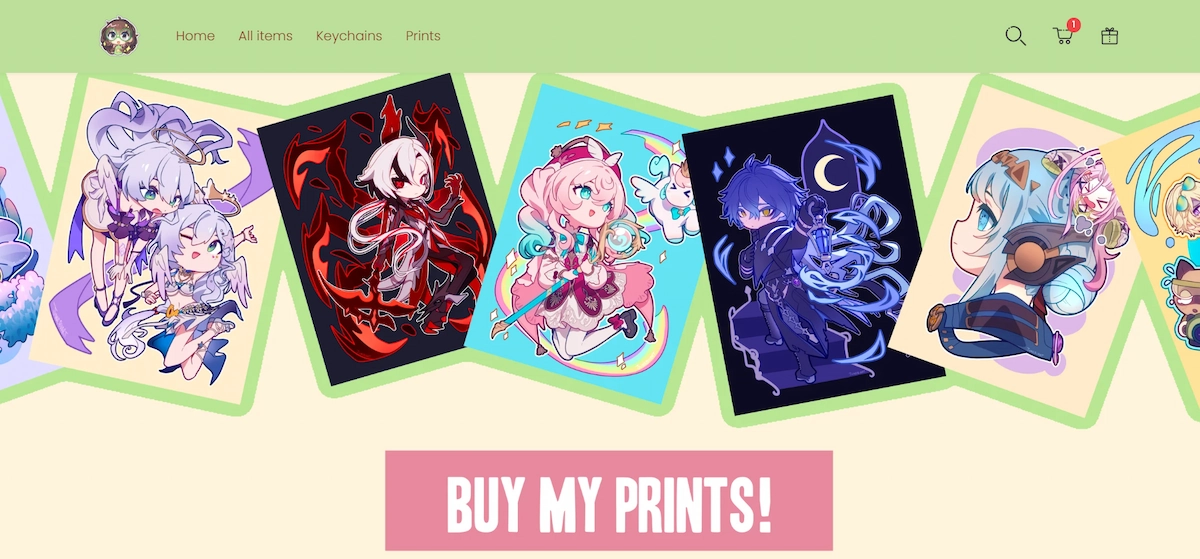
For anime and fandom artists, that identity can come from small details:
· illustration style
· collection banners
· product thumbnails
· typography
· background elements
· color combinations
· the way products are arranged
None of these needs to be complicated on its own.
What matters is that they feel like they belong together.
Turn Digital Artwork Into the Right Physical Product
Junebu’s storefront also demonstrates another important part of artist merchandising:
not every illustration needs to become the same product.
Different artwork can suit different formats.
Acrylic Keychains
Character-focused designs naturally work well as compact collectibles.
Fans can carry favorite characters on bags, backpacks, keys, or convention bags.
Stickers
Stickers offer a lightweight way to collect artwork and work particularly well with recognizable character designs.
Pins
Pins turn illustrations into wearable collectibles that can become part of a fan’s bag, jacket, or display.
Prints
More detailed or composition-heavy artwork often benefits from a larger format where the original illustration can remain intact.
The main principle is simple:
Do not put every artwork on every product. Choose the product that best serves the artwork.
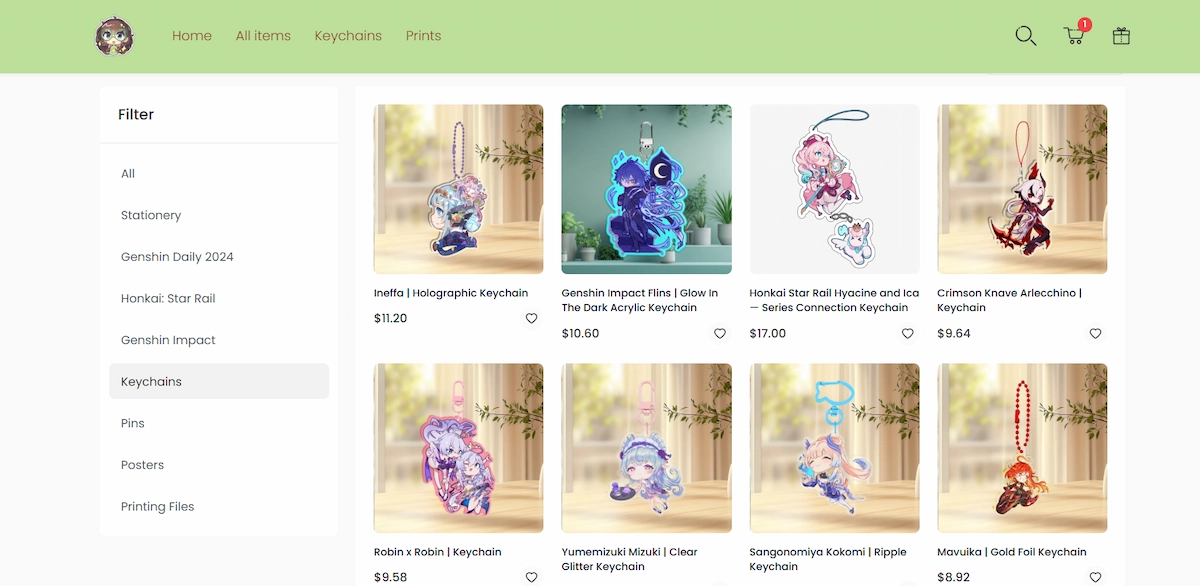
Character Art Is Naturally Merch-Friendly
Anime-style character artwork has an advantage when it moves into physical merchandise:
strong characters are usually recognizable even at smaller sizes.
Features such as:
· silhouette
· hairstyle
· costume
· color palette
· facial expression
· signature character details
can remain identifiable even when the artwork becomes a keychain, sticker, or pin.
That creates a natural progression:
Illustration → Character → Collectible → Everyday fan experience
A character that originally existed only on a screen can become something fans carry, display, or collect.
Build Collections, Not Just Product Lists
As a catalog grows, organization becomes increasingly important.
Simply adding more products can make a shop harder to browse.
Collections solve that problem by grouping related items around meaningful themes.
For an anime or fandom artist, useful categories might include:
· Character Collections
· Fandom Collections
· New Releases
· Best Sellers
· Keychains
· Stickers
· Prints
This helps visitors move beyond one product.
Someone who arrives looking for one character may discover an entire collection built around the same fandom or theme.
That makes browsing easier while also creating more natural paths between related products.
Design for Fans Who Already Know Your Work
Artist-store visitors are different from completely cold ecommerce traffic.
Many may already have:
· seen your illustrations on social media
· followed your account
· recognized a character
· watched a WIP
· interacted with your content
The store therefore does not always need to introduce the artist from zero.
Instead, it can build on an existing relationship.
The journey may look like:
See artwork → Follow artist → Discover store → Find the artwork as merch → Collect it
For independent artists, this connection between digital content and physical merchandise is especially valuable.
The store becomes the next step in a relationship that already started elsewhere.
Keep Product Presentation Consistent
Strong artwork alone does not guarantee a cohesive storefront.
If every product is presented differently, the catalog can still feel messy.
Useful areas to keep consistent include:
· mockup style
· product titles
· image quality
· product descriptions
· collection naming
· thumbnail presentation
This becomes even more important for artists working across multiple fandoms.
The artwork itself may change dramatically from one collection to another.
The presentation can provide the consistency.
From Fandom Art to a Personal Artist Brand
Junebu’s work is strongly connected to anime, games, and HoYoverse-related fandom content.
For fandom artists, that can become a useful discovery path.
A fan may first arrive because they recognize one character.
Then they discover another illustration.
Then another collection.
Eventually, the reason they stay may no longer be only the fandom.
It becomes:
“I like the way this artist draws these characters.”
That is an important shift.
Fandom can introduce people to the work.
The artist’s interpretation can turn that first discovery into a longer-term creative identity.
Treat the Store Like a Curated Gallery
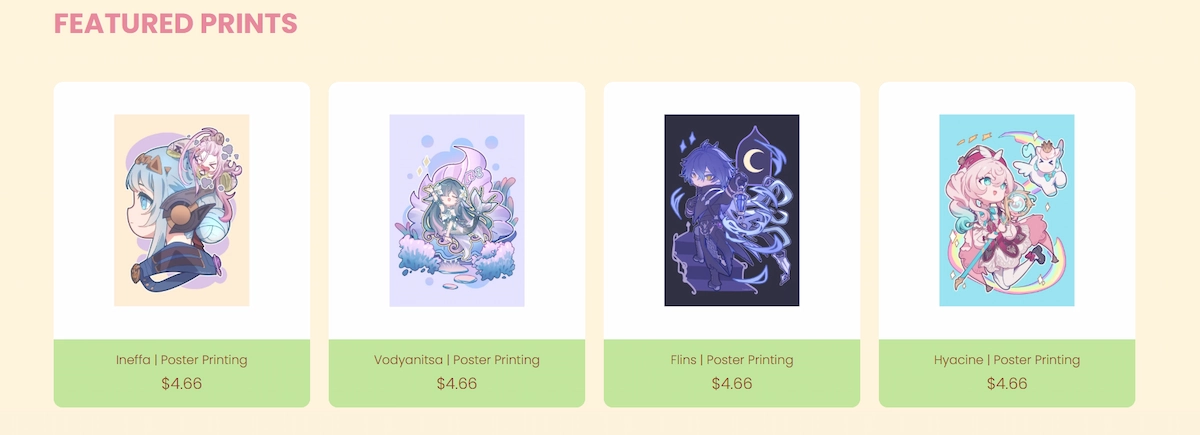
A good artist store does not need to have the largest possible catalog.
It needs enough products to communicate the creator’s work clearly.
Instead of asking:
“How many products can I upload?”
It can be more useful to ask:
“Which products best represent my artwork?”
A focused collection is often easier to understand than a large but disconnected catalog.
This is especially important as the store grows.
More products should add depth—not visual noise.
Why Junebu’s Store Works
Several ideas stand out from the way Junebu’s storefront connects artwork and merchandise.
🎨 Artwork Comes First
The store’s identity begins with Junebu’s own illustrations rather than a generic ecommerce aesthetic.
✨ Fandom Creates Discovery
Anime, games, and HoYoverse-related artwork give fans a familiar entry point.
🛍 Artwork Becomes Collectible
Digital illustrations extend into physical merchandise that fans can own beyond the screen.
🧩 Different Products Serve Different Purposes
Keychains, stickers, pins, and prints give fans different ways to collect the artwork.
🏠 The Store Extends the Artist’s Creative World
The storefront becomes more than a checkout page—it becomes another place where fans experience Junebu’s work.
What Other Artists Can Learn From Junebu
Junebu’s store offers a few practical lessons:
· Let your artwork become the visual foundation of your store.
· Think about the homepage experience before simply adding more products.
· Match each product format to the artwork.
· Use collections to make growing catalogs easier to explore.
· Keep the artist visible behind the products.
· Maintain consistent product presentation.
· Let fandom bring people in, but give them reasons to remember your personal style.
· Treat the store as a curated collection rather than an endless product list.
The goal is not to make the storefront more complicated.
It is to make every part of it feel intentional.
Final Thoughts
Junebu’s Artiststore illustrates a simple idea:
an artist’s storefront should not feel separate from the artwork.
The illustrations establish the visual identity.
The characters create recognition.
The products turn those illustrations into collectibles.
And the storefront brings everything together.
For fandom artists, that can create a natural journey:
Discover the artwork → Follow the artist → Visit the store → Collect the work
A strong artist store is therefore more than a place to sell merchandise.
It can become part of the creator’s artistic identity.
Your art is already your brand.
Your store is where fans can take part of it home.
FAQ
What makes an artist merch store feel cohesive?
Consistent artwork, product presentation, collection structure, colors, thumbnails, and branding can help different products feel like part of one creative identity.
Should every artwork be turned into every product?
No. Choose the format that best suits the artwork’s composition, detail, and character design.
Why are collections important for artist stores?
Collections help fans quickly find related characters, fandoms, or products instead of browsing an unstructured catalog.
How can fandom artists build a personal brand?
Fandom can help people discover the work, while a recognizable illustration style and consistent creative voice give them a reason to keep following the artist.
Does an artist store need a large number of products?
No. A smaller, well-organized collection can feel more complete than a large catalog with weak structure.
Ready to build a store around your art?
With Artiststore , you can turn your illustrations into print-on-demand merchandise, organize them into collections, and create a storefront that feels connected to your creative identity.