Etsy vs Shopify vs Your Own Store: Where Should Artists Sell Online?
September 9,2026 6:06 PM(UTC+8) 336 views
Where you sell your art online affects more than just how you take orders. It influences how customers discover your work, how much control you have over your brand, what you need to manage yourself, and how easily you can grow over time.
For artists, three common routes are Etsy, Shopify, and your own artist store.
They work in different ways. Etsy is a marketplace with an existing shopping audience. Shopify gives you the tools to build and manage a full ecommerce website. With Artiststore , artists can open their own branded storefront while production, packaging, shipping, and after-sales support are handled through the platform.
So which option makes the most sense? It depends on whether you value marketplace discovery, maximum ecommerce control, or a simpler way to build your own artist store.
Etsy, Shopify, and Your Own Store: What’s the Difference?
Etsy places your products inside an established marketplace. Shoppers can discover your listings through Etsy search even if they have never heard of your work before.
Shopify lets you create an independent ecommerce website. You get much more control over your storefront, but you generally need to bring in your own traffic through social media, SEO, email, advertising, or an existing audience.
Your own artist store through Artiststore takes a different approach. You get a dedicated storefront for your work, while Artiststore handles the production and fulfillment side of selling merch. Artists can upload designs and sell products without purchasing inventory in advance.
The real question is therefore not simply which platform has more features. It is how you want to balance traffic, brand control, and day-to-day store management.
Etsy vs Shopify vs Your Own Store at a Glance
| Etsy | Shopify | Your Own Artist Store with Artiststore | |
|---|---|---|---|
| Selling model | Online marketplace | Ecommerce platform | Branded artist storefront + POD |
| Built-in marketplace traffic | Yes | Limited | Primarily bring your own audience |
| Brand control | Moderate | High | High within the artist storefront |
| Setup complexity | Low | Moderate | Low |
| Monthly platform fee | No standard monthly shop subscription | Usually required | No platform fee |
| Main costs | Listing, transaction and payment-related fees | Subscription, payment and optional app costs | Production and shipping costs when orders are placed |
| Inventory required | Depends on seller | Depends on setup | No |
| Production | Seller or production partner | Seller or third-party provider | Handled by Artiststore |
| Packaging & shipping | Seller or partner | Seller or integrated provider | Handled by Artiststore |
| Best for | Testing products and gaining marketplace discovery | Building a highly customizable ecommerce business | Artists who want their own store without managing production and fulfillment |
Artiststore currently describes its store model as having no platform fee and no inventory requirement, with production, packaging and global shipping handled through the service.
Selling Art on Etsy: Best for Testing the Market
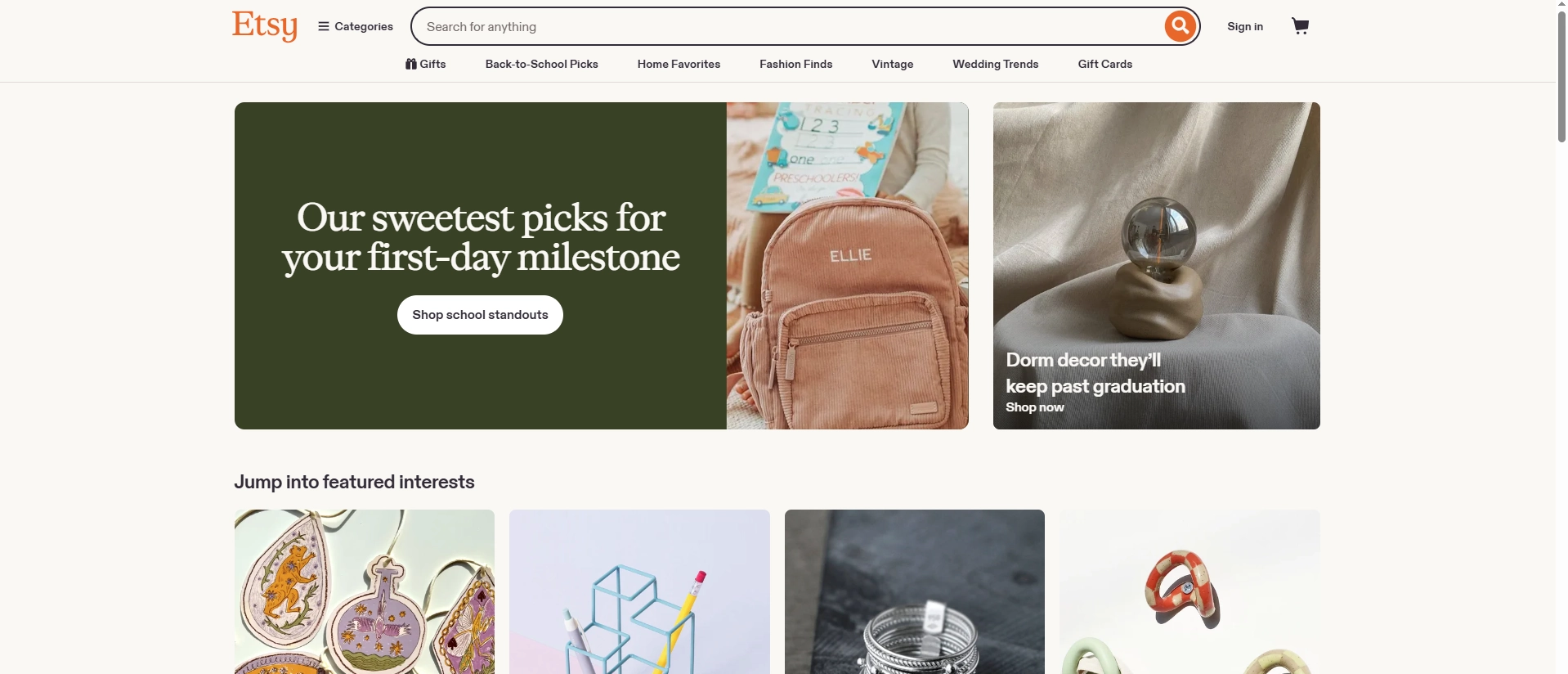
Etsy is one of the most accessible places for artists to begin selling online because customers are already there looking for creative products.
Why Artists Choose Etsy
The biggest advantage is built-in discovery.
Someone searching Etsy for stickers, prints, charms, pins, or other creative products can find your listing without already following you on social media.
You also do not need to build an entire ecommerce website before getting started. Product listings, checkout, reviews, and marketplace search are already part of the platform.
That makes Etsy useful for testing:
·Product ideas
·Designs
·Pricing
·Product photography
·Search keywords
There are costs attached to that convenience. Etsy currently charges $0.20 per listing and a 6.5% transaction fee, alongside payment processing and other fees that may apply depending on the seller and order.
For a new artist, those fees may be a reasonable trade-off for access to an existing marketplace.
Where Etsy Can Become Limiting
The downside is that customers are shopping on Etsy, not entirely within your own brand environment.
Your products can appear alongside many alternatives, and the overall shopping experience is controlled by the marketplace.
You can customize your Etsy shop, but you do not have the same level of control over store structure, customer journey, or branding that you would have with a dedicated storefront.
As your audience grows, that distinction becomes more important.
If followers are already coming from Instagram, TikTok, conventions, or your own community specifically to buy your work, sending them to a store focused entirely on your brand may make more sense.
Selling Art on Shopify: Best for Building a Full Ecommerce Business

Shopify is designed for sellers who want greater control over how their ecommerce business looks and operates.
What Shopify Gives Artists
With Shopify, you can control much more of the store experience, including:
·Your domain
·Store design
·Navigation
·Product collections
·Brand content
·Promotions
·Apps and integrations
That flexibility makes Shopify a strong choice for artists who want to develop their creative work into a more complete ecommerce business.
It can also scale with more advanced requirements as your product catalog, marketing channels, and operations grow.
What You Need to Manage Yourself
The trade-off is that more control usually means more responsibility.
Unlike Etsy, Shopify does not primarily function as a marketplace that sends search traffic to individual stores. Artists generally need to attract visitors through their own channels.
You may also need to manage themes, apps, payment settings, fulfillment, shipping, analytics, and third-party integrations.
Shopify’s Basic plan is currently listed at $29 per month when billed annually in the U.S., with payment processing and other potential costs depending on the setup.
For an artist with a growing business and specific ecommerce requirements, that flexibility can be valuable.
For someone who mainly wants to turn artwork into merch and sell it to followers, however, a full ecommerce system may involve more setup and management than necessary.
Running Your Own Artist Store: Best for Building Your Brand
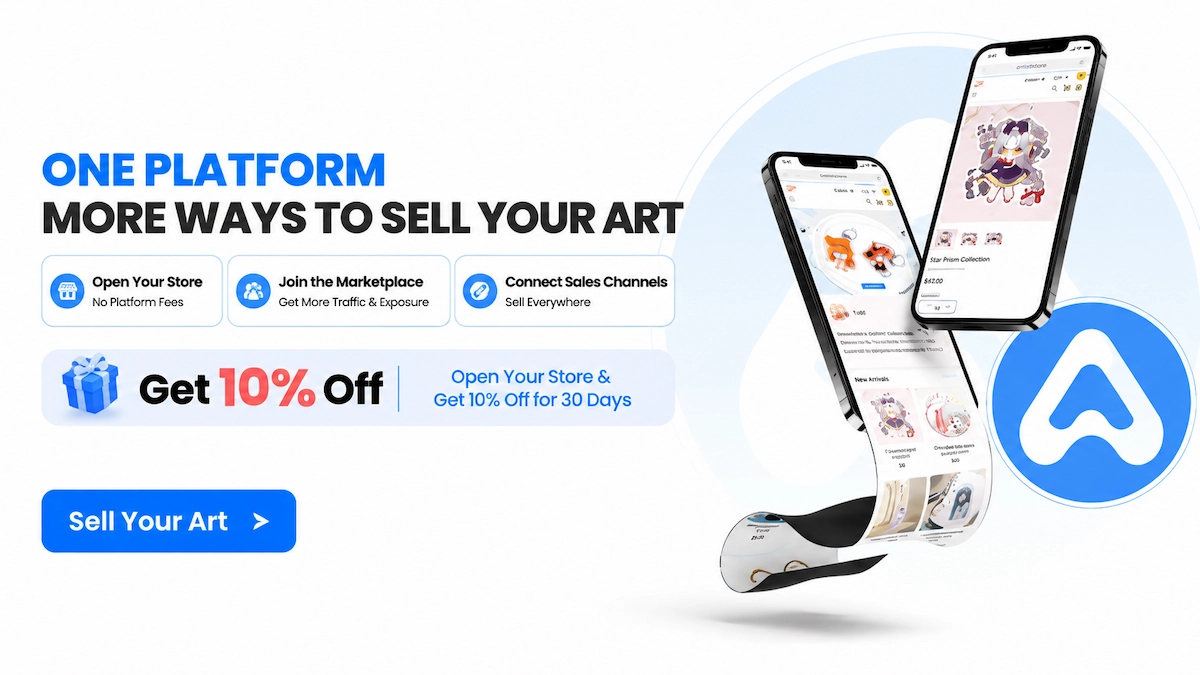
There is another option for artists who want a store that feels like their own without managing every part of ecommerce themselves.
This is where an Artiststore storefront fits.
Instead of selling primarily inside a third-party marketplace, you can create a dedicated store around your own artwork and products while leaving production and fulfillment to Artiststore.
More Control Over Your Brand and Customer Experience
Having your own artist store gives followers a clear destination for your work.
Rather than directing your audience to a marketplace filled with competing listings, you can send them to a storefront centered on your name, your artwork, and your products.
This can be especially useful for creators who already attract customers through:
·TikTok
·YouTube
·Conventions
·Art communities
·Portfolio websites
For illustrators, character artists, fan artists, and independent creators, a dedicated storefront also makes it easier to present different merch collections as part of one recognizable creative identity.
This does not mean your store automatically generates traffic.
Unlike Etsy, the main value is not access to marketplace search. The artist still plays an important role in bringing followers and customers to the store.
A Simpler Option for Artists Who Don’t Want to Manage Everything
The main difference between an Artiststore shop and a traditional self-managed ecommerce store is what happens after you create the product.
With Artiststore, artists can upload designs and create products without ordering inventory upfront. When an order is placed, Artiststore handles production, packaging, shipping, and after-sales support.
Customer payments can go directly to the artist’s connected Stripe or PayPal account, while Artiststore charges the associated production and shipping costs for fulfillment.
That can reduce the operational work involved in selling merch.
It is not necessarily the right choice for everyone. An artist who depends heavily on marketplace discovery may prefer Etsy. Someone who needs extensive website customization or complex ecommerce integrations may prefer Shopify.
Artiststore is more relevant for creators who want their own branded store without taking on inventory, production, and fulfillment themselves.
Which Platform Is Best for Different Types of Artists?
The easiest way to choose is to start with what you need at your current stage.
Choose Etsy If You’re Just Starting Out
Etsy may be a good fit if:
·You have a small audience
·You want access to marketplace search
·You are still testing products
·You want a relatively simple way to start selling
When you are still learning which designs and products customers respond to, Etsy’s existing marketplace can be useful.
Choose Shopify If You Want Maximum Control
Shopify may be the better option if:
·You already have an audience
·You want extensive store customization
·You need more advanced ecommerce features
·You are comfortable managing more of the business yourself
·You want to build a larger independent ecommerce operation
The trade-off is straightforward: more flexibility comes with more setup and management.
Choose Your Own Artist Store If You Want to Build a Long-Term Brand
An Artiststore shop may make sense if:
·You already attract followers through social media or communities
·You want a store dedicated to your own brand
·You plan to release merch regularly
·You do not want to buy inventory upfront
·You prefer not to manage production, packaging, and shipping yourself
·You want to spend more time creating and less time handling fulfillment
You do not need a huge following before opening your own artist store.
What matters more is whether people are starting to follow you as an artist, rather than simply discovering one individual product.
When your name, art style, characters, or community begin generating their own demand, having a dedicated storefront becomes much more valuable.
Do You Have to Choose Just One?
No.
These platforms can serve different purposes rather than replacing one another.
For example:
Etsy for marketplace discovery → social media for audience building → Artiststore for your own branded merch store.
An artist could also use Shopify as a primary ecommerce website while keeping selected products on Etsy.
Artiststore itself can also work alongside other sales channels rather than requiring creators to treat every platform as an either-or decision.
Think about the role each channel plays.
Etsy helps shoppers discover products.
Social media helps people discover artists.
Your own artist store gives those followers somewhere focused on your work to shop.
For many creators, a combination of channels can be more effective than expecting one platform to do everything.
Etsy vs Shopify vs Your Own Store: Final Verdict
There is no single best place for every artist to sell online.
Choose Etsy if marketplace discovery and a relatively easy starting point matter most.
Choose Shopify if you want maximum ecommerce flexibility and are prepared to manage more of the store yourself.
Choose your own Artiststore shop if you want a branded destination for your audience while avoiding inventory, production, packaging, and fulfillment work.
The right choice may also change as your creative business grows.
The platform that helps you make your first ten sales does not have to be the platform you rely on for your first thousand.
Start with the option that fits your audience, products, and current level of involvement, then build from there.