
How to Make Money as an Artist: 12 Ways to Try
November 17,2026 5:16 PM(UTC+8) 25 views
You don't need a gallery deal or a huge following to start earning from your art. You need something people want, a clear way to buy it, and a price that makes the work worthwhile. That might mean painting commissions this month, selling prints of an illustration you already love, or building a small collection of products over time.
Below are 12 realistic ways to make money as an artist, whether you draw digitally, paint, photograph, design, or make things by hand. Some pay for your time; others let one piece of work generate more than one sale.
12 Practical Ways to Make Money as an Artist
1. Sell Original Artwork
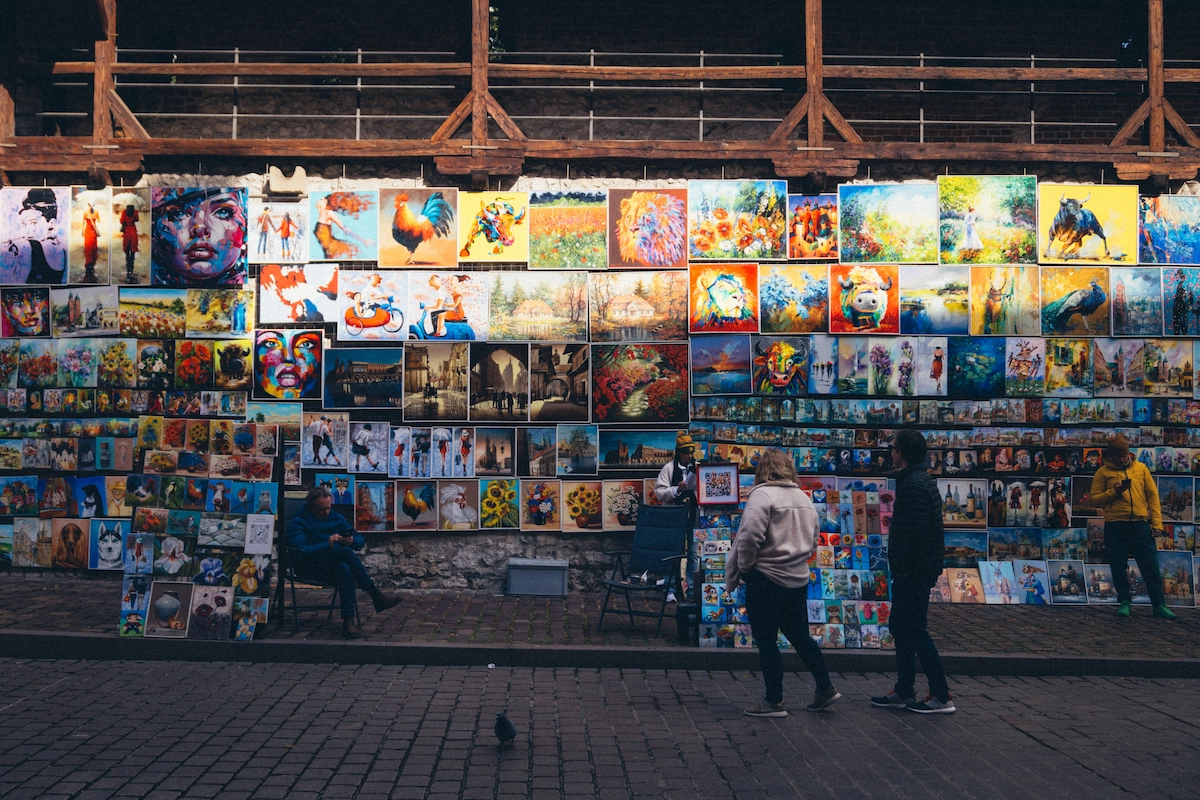
Selling an original painting, drawing, sculpture, or handmade piece is the most direct route: the buyer pays for the work itself. You can start through your own website, an art-focused marketplace, local exhibitions, or a small social media audience.
Begin with a manageable set of work and photograph it in consistent lighting. Include dimensions, materials, condition, and whether framing or shipping is included. Price for materials, labor, overhead, and selling costs—not just the supplies you bought.
2. Take Custom Art Commissions
Commission work gives customers a reason to buy something made specifically for them. Think pet portraits, family illustrations, character art, wedding stationery, or custom landscapes. It can also be a useful way to learn what people value in your style.
Offer two or three clear packages rather than an open-ended “DM for prices.” State the deliverables, number of revisions, delivery timeline, and allowed uses. A written agreement and an appropriate deposit can help prevent scope creep and last-minute cancellations.
3. Sell Art Prints
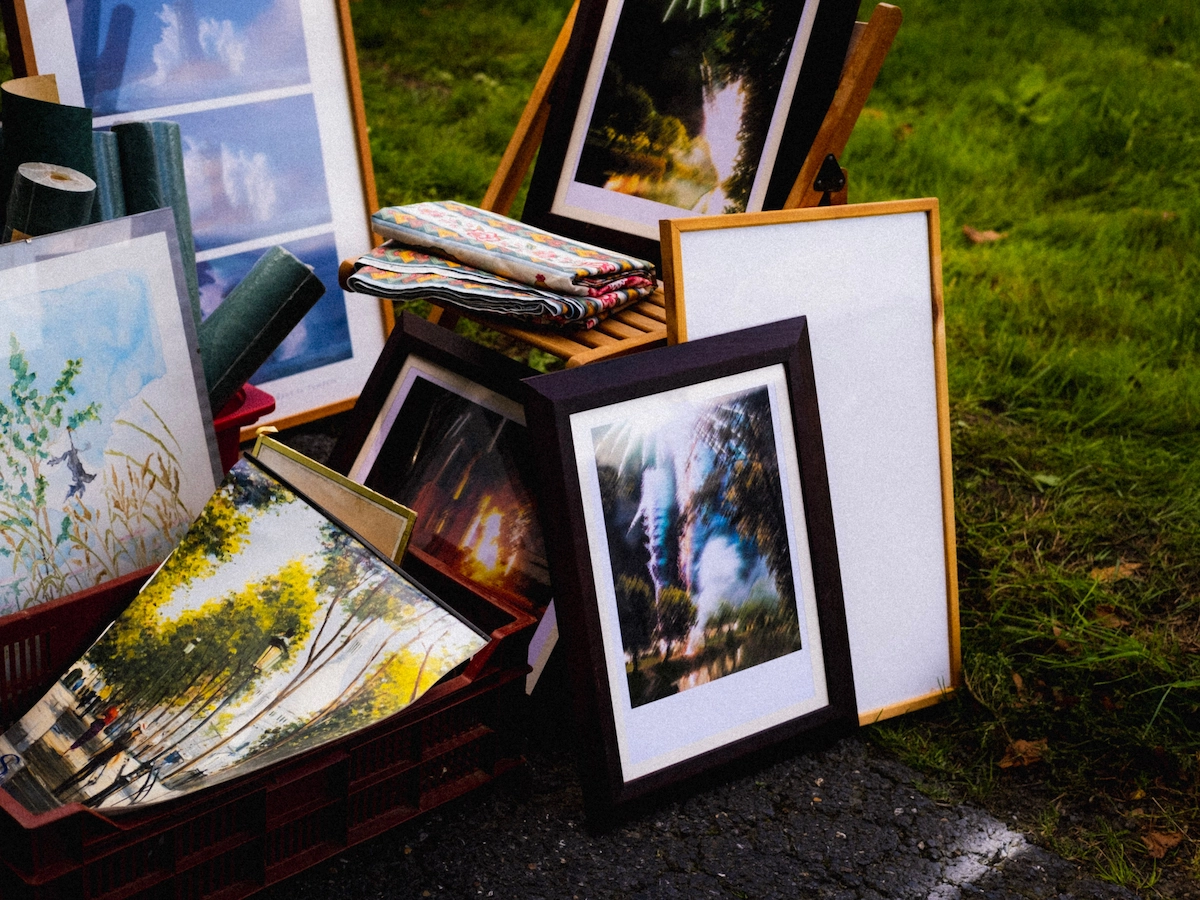
An original sells once; a reproduction can sell multiple times. Art prints are especially practical for illustrators, painters, photographers, and digital artists whose work looks good on paper. Offer a few sizes instead of launching a complicated catalog.
Test a physical proof before listing a print. Paper finish, color reproduction, borders, and packaging all affect the result. You can print a small batch yourself or use print-on-demand fulfillment to avoid carrying stock. Do not describe an edition as limited unless you intend to honor that limit.
4. Turn Your Designs Into Merchandise
Some people love a piece of art but would rather spend on something they can use, gift, or collect. Stickers, charms, keychains, pins, postcards, and tote bags make artwork accessible at different price points.
Start with designs that are already getting a response. One memorable character or illustration is a better test than twenty unrelated products. Order samples where practical, check how the design fits the material, and calculate the margin after production and fulfillment. Selling more units is not useful if each sale loses money.
5. Create Digital Products
Digital products remove physical inventory and shipping from the equation. Depending on your skills, you might sell printable wall art, brush packs, texture sets, coloring pages, planners, or templates that other creatives can use.
Make the files easy to understand: show previews, explain compatible software, specify file types, and state whether use is personal or commercial. Digital products still take time to design, support, and market, so treat “no shipping” as a cost advantage—not a promise of passive income.
6. Offer Freelance Illustration or Design Services
Businesses, publishers, and independent creators hire artists for book covers, editorial illustrations, packaging, album artwork, graphics, and other visual work. Freelancing can bring in income before you have a large audience of collectors.
Build a short portfolio around the kind of jobs you actually want. If you want packaging work, show packaging concepts; if you want book covers, show cover designs. When you quote a project, account for research, sketches, revisions, meetings, and any rights the client needs.
7. License Your Artwork
With art licensing, a business pays for permission to use your work—for example, on stationery, textiles, packaging, or a publication. The arrangement might involve a one-time fee, royalties, or a combination, depending on the agreement.
A license is not necessarily a sale of your copyright. Make sure the contract specifies where, how, for how long, and whether exclusively the artwork can be used. Keep records of the original files and agreed terms. Artists unfamiliar with licensing contracts may benefit from professional advice before signing.
8. Teach Art Classes or Workshops
Teaching is not limited to established professionals. If you can explain a technique clearly, you can create an approachable class on sketching, watercolor basics, digital coloring, lettering, or a craft process. Local community spaces and online live sessions are both possible venues.
Keep the first class focused on one achievable result. Calculate what you need to earn after materials, venue costs, preparation time, and any platform fees. A small, well-run workshop is a better starting point than an ambitious course no one finishes.
9. Make Recorded Tutorials and Creative Resources
Recorded lessons are a different business from live teaching: the main work happens up front, while customers can access the material later. A focused video course, drawing reference pack, or step-by-step project can help people who want to learn on their own schedule.
Check whether your audience is already asking the same questions. Build around one real problem, such as painting better lighting or preparing files for print. Update the material when tools change, and allow for customer questions. A recorded course still needs ongoing promotion.
10. Build a Membership or Supporter Community
If people follow your creative process as much as your finished pieces, a membership can support ongoing work. Possible benefits include behind-the-scenes posts, early access to new art, sketchbook updates, or occasional digital downloads.
Be cautious about promising too much every month. Pick rewards you can maintain alongside your actual art practice, and remember that membership revenue can fluctuate as supporters join or leave. This model usually works best after you have built trust and a regular audience.
11. Sell at Art Fairs, Markets, and Conventions
In-person events let you see which art people stop for, which products they pick up, and what questions they ask. Local craft markets may suit prints and handmade pieces; conventions can be useful for original characters, collectible art, and artist-made merchandise.
Before reserving a table, estimate booth fees, travel, materials, payment processing, and the sales needed to cover them. Bring clearly marked prices and a few different price points. Track what sells instead of guessing from compliments alone.

12. Collaborate With Brands and Local Businesses
Paid collaborations can include a mural for a café, artwork for a product launch, a limited-edition design, or a visual campaign. You do not necessarily need celebrity-level reach: a strong portfolio and a style that fits the business can matter more.
Approach prospects with a specific idea, not a generic request for sponsorship. Spell out deliverables, payment, approval rounds, publicity rights, and any usage or exclusivity terms. Be selective about unpaid “exposure” offers; visibility does not cover your production costs.
Which Way Should You Start With?
Choose based on what you can deliver consistently—not what sounds most profitable in a headline. These are useful starting points rather than hard rules.
How to Get Your First Sale Without Overcomplicating It
Choose one offer to test before building five income streams at once. A simple launch can look like this:
· Pick one buyer and one product. For example: custom pet portraits for pet owners, or small prints for people decorating a desk.
· Show the work clearly. Use a few strong examples, actual dimensions or deliverables, an understandable price, and a straightforward ordering method.
· Run the numbers. Include supplies, production, shipping you cover, fees, marketing, taxes, and the time you spend making the work.
· Put it in front of potential buyers. Share the story and process behind the work, ask for useful feedback, and make the buying step obvious.
· Review what happened. Track inquiries, sales, costs, and repeat questions. Improve the offer before expanding your catalog.
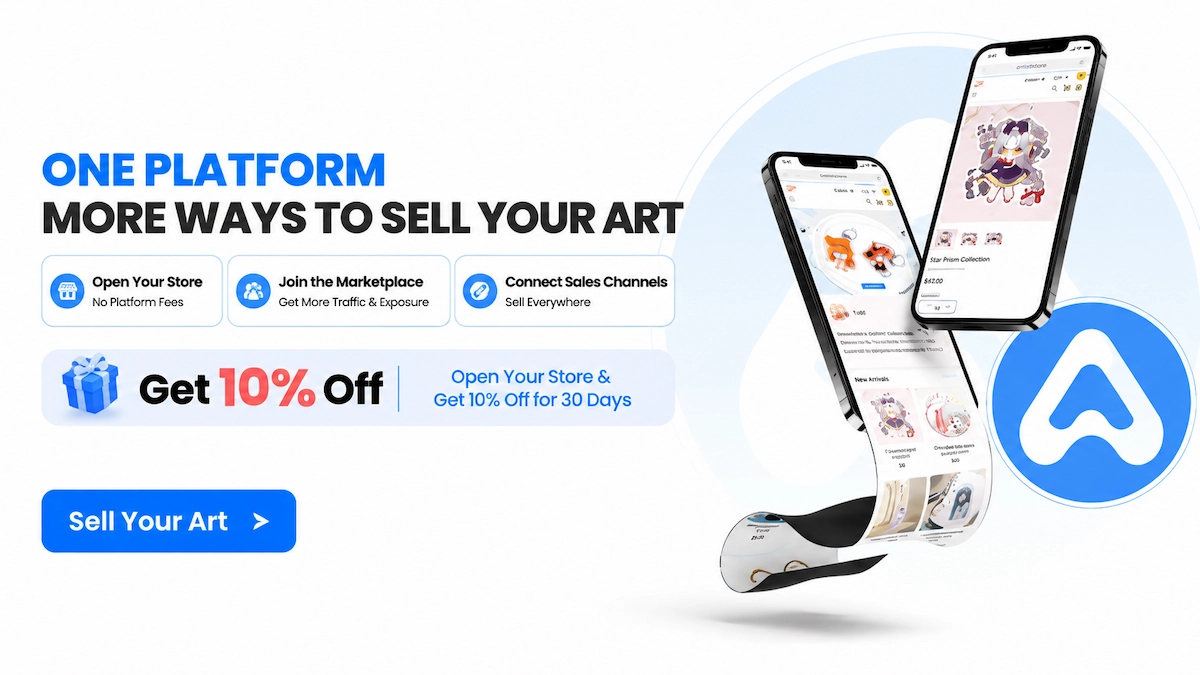
For physical products, an online storefront can help bring your designs together in one place. Artists who prefer not to buy inventory in advance can explore print-on-demand models. Artiststore, for example, lets creators build a store featuring designs on items such as prints, stickers, keychains, and pins, while it handles production and order fulfillment. That removes some operational work, but choosing the right products, pricing them well, and finding customers still matter.
A Quick Note on Pricing
Revenue is not profit. As a simple illustration, selling a print for $25 and spending $10 on production, $4 on transaction and selling costs, and $3 on shipping you absorb leaves $8 before labor, marketing, overhead, and taxes. The numbers are hypothetical; your actual costs will differ.
For commissions, price your time as well as the finished piece. For products, calculate per-order costs and check what buyers are willing to pay. Revise prices as you learn; do not assume that being the cheapest artist wins long-term customers.
The Bottom Line
Making money from art is less about finding a secret platform and more about matching your skills to a real buyer. Pick one way to earn, set a sensible price, make the buying process easy, and learn from what people actually purchase. A modest first sale can teach you more than months spent perfecting a store that has never met a customer.
Frequently Asked Questions
Can you make money as an artist without a big following?
Yes. Commissions, freelance work, local markets, and targeted outreach can help you reach buyers before you have a large social audience. You still need clear examples of your work and a way for customers to contact or purchase from you.
What is the easiest way for a beginner artist to earn money?
A small commission offer or a limited set of prints can be straightforward to test, provided the work matches your skills and you understand your costs. “Easiest” depends on your medium, available time, and access to buyers.
Can artists earn money online without shipping physical products?
Yes. Digital downloads, freelance services, remote commissions, online teaching, and licensing can all be delivered or arranged online. Each has its own fees, customer service needs, and rights considerations.
Should I focus on one income source or several?
Start with one offer you can execute well. Once you understand its costs, demand, and workload, add a second option that complements it—for example, prints alongside originals or a digital download alongside live teaching.