How to Sell Your Art Online in 2026: 7 Ways for Artists
September 9,2026 2:34 AM(UTC+8) 350 views
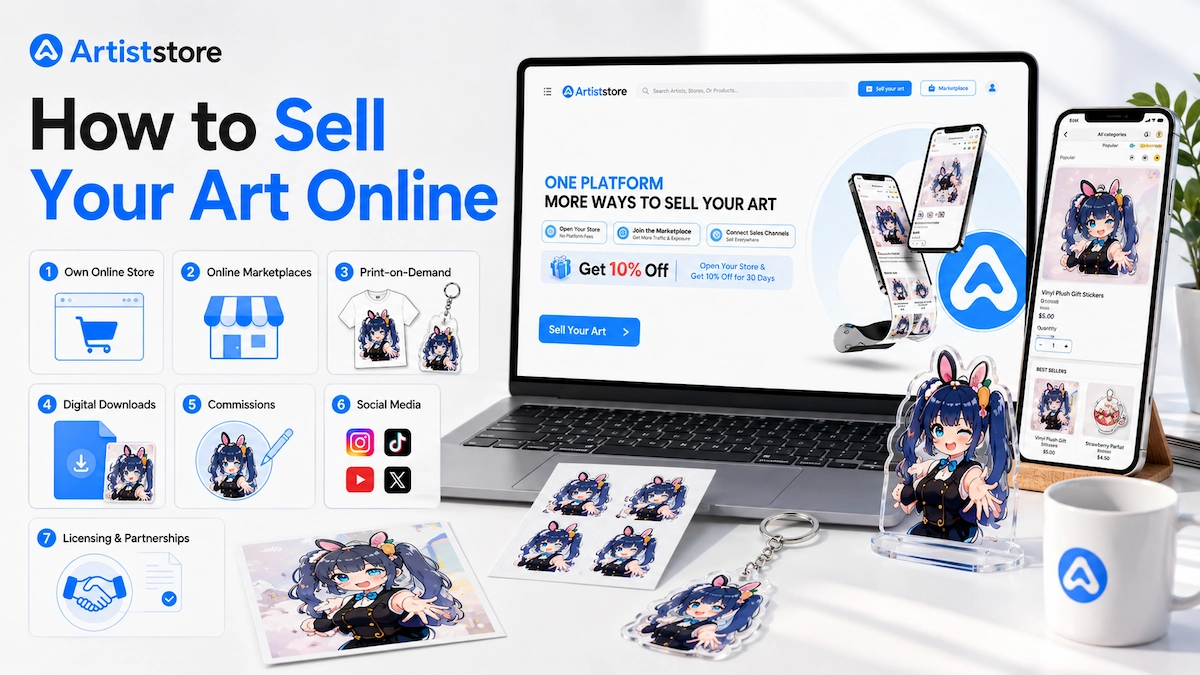
Selling art online today is about more than listing a few prints on a marketplace.
Artists can build income through physical products, digital downloads, commissions, print-on-demand, social media, licensing, or their own online store. The best option depends on your artwork, audience, budget, and how much control you want over your business.
Here are seven practical ways artists can sell their work online in 2026.
7 Best Ways to Sell Art Online
| Method | Best For | Main Advantage |
| Own online store | Artists building a brand | More control over branding and customers |
| Online marketplaces | Beginners testing demand | Existing customer traffic |
| Print-on-demand | Artists selling merch | No need to hold inventory |
| Digital products | Digital artists and designers | No manufacturing or shipping |
| Art commissions | Artists offering custom work | Higher value per order |
| Social media | Artists with growing audiences | Strong discovery potential |
| Licensing | Established artists and original IP | Scalable commercial opportunities |
You do not have to choose only one. Many artists combine several income streams over time.
1. Sell Through Your Own Online Store
Having your own store gives your art a permanent home online.
Instead of competing beside thousands of other sellers, you can build a storefront around your own artwork, products, and identity. You have more control over pricing, product presentation, promotions, and the overall customer experience.
Platforms such as Shopify offer broad ecommerce tools, while artist-focused platforms like Artiststore combine storefront creation with print-on-demand production.
The main challenge is traffic. Your store will not automatically bring customers, so social media, search, communities, and existing followers still matter.
Best for: artists who want to build a recognizable long-term brand.
2. Sell on Online Marketplaces
Marketplaces such as Etsy and Amazon Handmade give artists access to customers who are already looking for creative products.
That makes them useful for beginners who want to test which artwork or products attract demand.
The trade-off is less control.
You may compete with many similar sellers, pay platform-related fees, and have fewer opportunities to create a distinctive brand experience.
For many artists, marketplaces work well as an additional sales channel, rather than the only place where their business exists.
Best for: beginners who want easier access to existing shopper traffic.
3. Use Print-on-Demand to Sell Art Merch
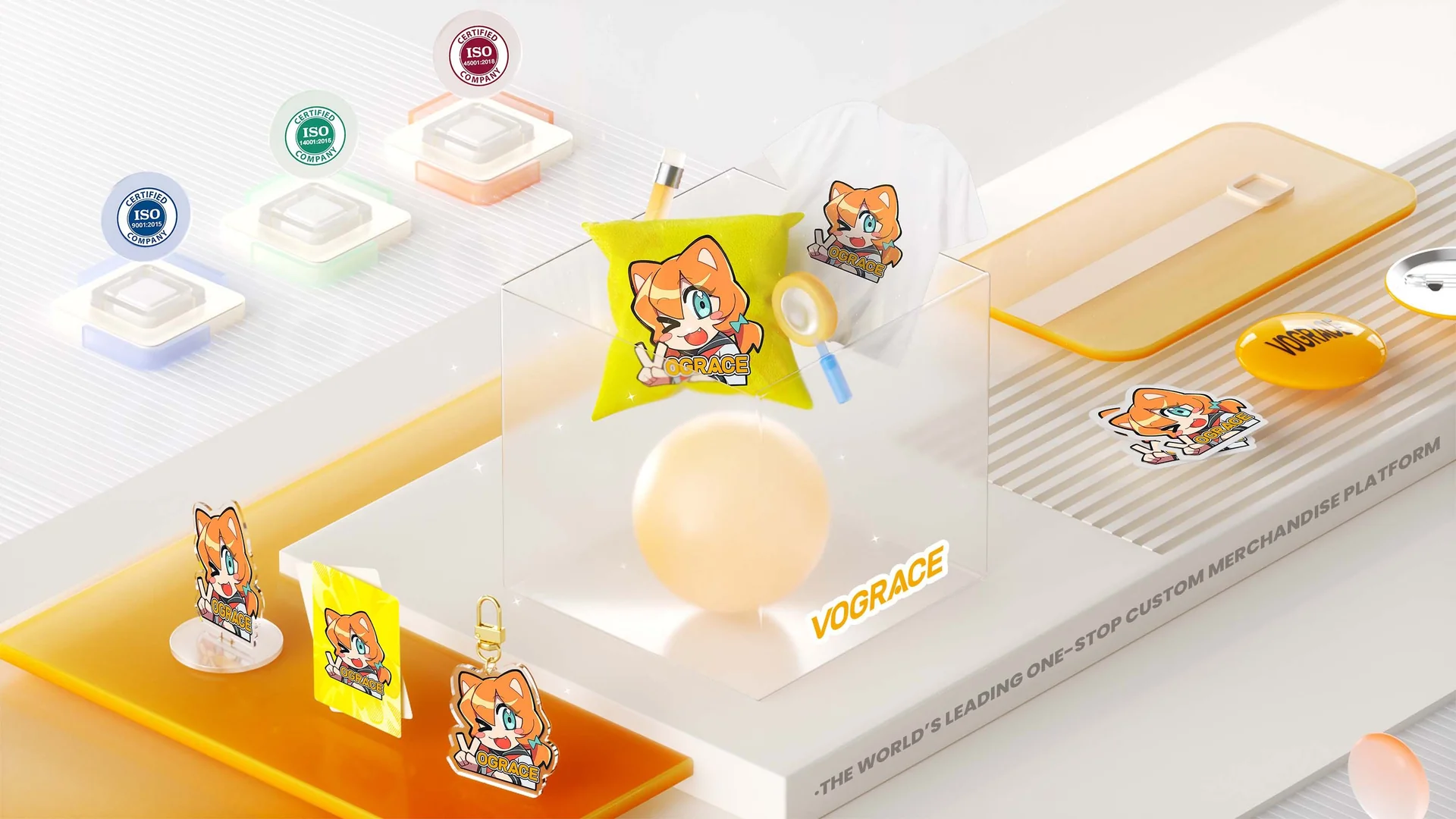
Print-on-demand, or POD , allows products to be made after a customer places an order.
That means artists can sell physical merchandise without ordering large amounts of inventory upfront.
Artwork can be turned into products such as:
· Stickers
· Acrylic keychains
· Acrylic standees
· Pins and badges
· Art prints
· Apparel
· Tote bags
· Other printed merchandise
Platforms such as Artiststore allow artists to create products and sell them through their own storefront while production, packaging, and shipping are handled after orders are placed. This makes POD especially useful for artists who want to test designs without managing inventory themselves.
Another option is to work directly with a custom merch manufacturer such as Vograce . This approach can make more sense when you want to order products for conventions, stock your own shop, or have more control over materials, finishes, quantities, and product combinations. Vograce offers custom products ranging from acrylic keychains and stickers to pins, standees, cards, prints, and other artist merchandise.
Whichever route you choose, consider product cost, shipping, retail price, and profit margin before launching. Ordering samples can also help you check print quality, color, material, and final product size.
Best for: artists who want to turn their artwork into physical merchandise while keeping inventory risk manageable.
4. Sell Digital Art and Downloads
Digital products can be sold repeatedly without manufacturing or physical shipping.
Popular examples include:
·Printable wall art
·Wallpapers
·Brushes and textures
·Templates
·Emotes
·Clip art
·Coloring pages
·Creative asset packs
Because there is little additional production cost for each sale, digital products can offer attractive margins.
The main challenges are competition and copyright protection. Clear previews, file details, dimensions, and usage terms can make the buying experience much smoother.
Choose a platform that supports digital file delivery. Artiststore currently focuses mainly on physical print-on-demand products, so artists selling digital downloads may prefer a dedicated digital product platform.
Best for: illustrators and designers whose work can be delivered as files.
5. Take Art Commissions Online
Commissions are one of the most direct ways to earn from artistic skill.
Common commission services include:
·Character and OC art
·Profile pictures
·Pet portraits
·Couple illustrations
·VTuber artwork
·Character design
·Commercial illustration
Unlike products, commissions usually generate more income from each customer, but every order also requires your time.
Before accepting a commission, clearly define your price, delivery time, revision limits, and whether the artwork is for personal or commercial use.
If demand becomes too high, limiting commission slots or increasing prices is usually more sustainable than simply accepting more work.
Best for: artists with a distinctive style or specialized skill.
6. Use Social Media to Grow Your Audience
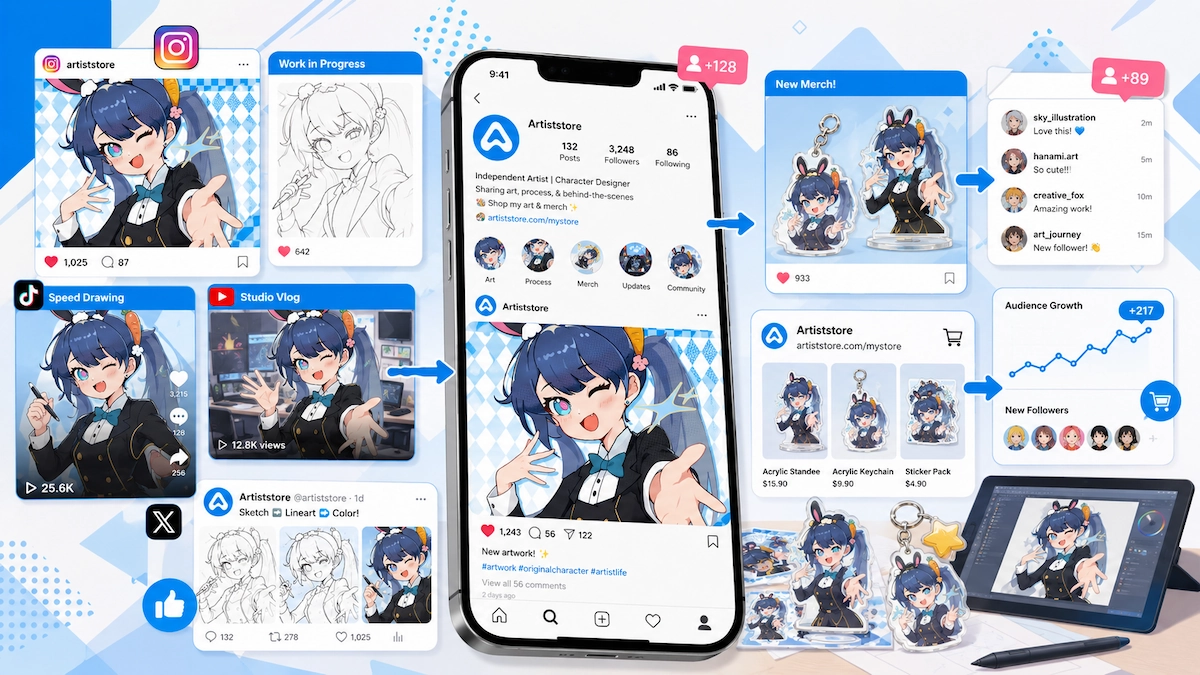
Social platforms such as Instagram, TikTok, X, YouTube, and Pinterest can play a major role in selling art online.
However, they are usually better viewed as discovery channels than complete sales platforms.
Someone might discover your artwork through a short video, follow your account, see your product later, and finally purchase from your store.
Useful content can include:
·Work-in-progress posts
·Drawing process videos
·Product development
·New product launches
·Packaging clips
·Studio updates
·Behind-the-scenes content
You do not need a huge following. A smaller audience that genuinely connects with your artwork can be much more valuable than a large but inactive one.
Always give interested followers a clear place to buy, such as your store, commission page, or product link.
Best for: almost every artist who wants to build long-term visibility.
7. License Your Art or Work With Brands
Artists can also earn by allowing companies to use their artwork commercially.
Art licensing may involve:
·Merchandise
·Packaging
·Publishing
·Games
·Apparel
·Stationery
·Collectibles
·Brand collaborations
Unlike selling a physical product, licensing usually means granting specific usage rights rather than transferring complete ownership of the artwork.
These agreements may define where the artwork can be used, for how long, and whether the license is exclusive.
Licensing can become especially valuable for artists with recognizable styles, original characters, or established audiences.
Always understand the rights, payment terms, and usage conditions before signing a commercial agreement.
Best for: artists with strong portfolios, recognizable IP, or established audiences.
Which Way Is Best for You?
There is no single best way to sell art online.
Your starting point depends on what you want to achieve.
| If You… | Consider |
| Are new to selling | Marketplace, commissions, or POD |
| Already have followers | Your own store + POD |
| Want to build a brand | Your own online store |
| Do not want inventory | Print-on-demand |
| Mainly create digital work | Digital downloads |
| Enjoy custom projects | Commissions |
| Have original characters or IP | Merch + licensing |
Many artists eventually combine several methods.
For example, you might take commissions for short-term income, sell merchandise through a POD store, and later develop licensing opportunities around your most popular characters.
How to Start Selling Your Art Online
You do not need dozens of products before you begin.
1. Choose Your Strongest Artwork
Start with a small collection of designs that represent your style clearly.
Pay attention to which artwork already receives strong reactions from your audience.
2. Choose What You Want to Sell
Decide whether your main offer will be:
·Physical products
·Digital products
·Commissions
·Original artwork
·Commercial licenses
This makes choosing the right platform much easier.
3. Set a Sustainable Price
For physical products, consider production, shipping, platform fees, and your desired profit.
For commissions, remember that customers are paying for your time, experience, and creative skill.
4. Create a Clear Place to Buy
Whether you use a marketplace or your own store, customers should quickly understand what you sell, how much it costs, and how to order.
Use clear product images, straightforward titles, and useful descriptions.
5. Promote, Test, and Adjust
Your first product lineup does not need to be perfect.
Launch, share your work, and learn from real customer behavior.
Some illustrations may perform better as stickers, while others work better as prints, keychains, or standees.
Treat early sales as feedback and improve from there.
Build More Than One Way to Earn From Your Art
One piece of artwork can create more than one source of income.
An illustration might become a print, sticker, acrylic keychain, social post, commission example, or even part of a future licensing portfolio.
You do not need to try every method immediately.
Start with the option that fits your current skills and audience. Once you understand what people respond to, you can gradually add new products and income streams.
For artists interested in physical merchandise, print-on-demand offers a practical way to test ideas without committing to large amounts of inventory. And when you are ready to build a stronger brand, your own artist store gives those products a home that feels distinctly yours.
Frequently Asked Questions
What is the easiest way to sell art online?
Marketplaces, commissions, and print-on-demand are common starting points because they require relatively low upfront investment.
Can I sell art online without inventory?
Yes. Print-on-demand allows products to be produced after customers place orders.
Do I need a large social media following?
No. A small, engaged audience can be more valuable than a large audience with little interest in your products.
What art products are good for beginners?
Stickers, prints, acrylic keychains, badges, and other relatively simple products are common beginner-friendly options.
Is print-on-demand good for artists?
It can be. POD reduces inventory risk, but artists should still compare product quality, shipping costs, and profit margins.
Should I use a marketplace or my own store?
Marketplaces offer easier discovery, while your own store provides more control over branding and the customer experience. Many artists use both.