How to Start a Keychain Business in 2026: A Beginner's Guide
September 15,2026 10:14 PM(UTC+8) 423 views
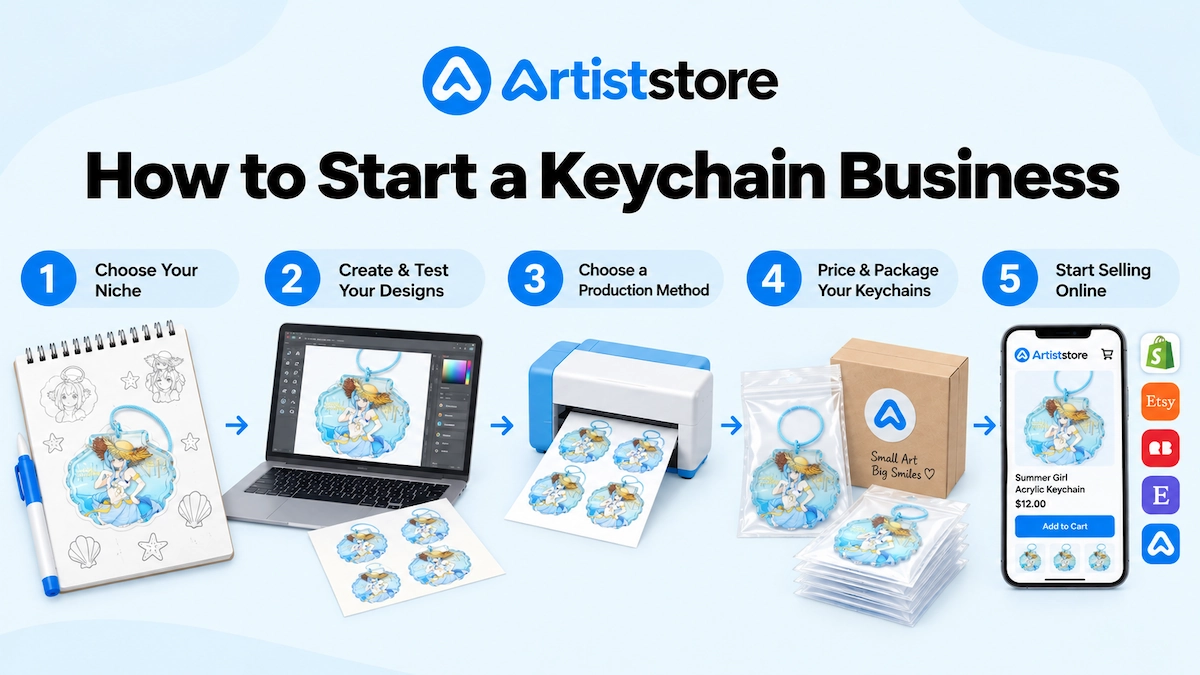
Keychains are simple products, but that simplicity makes them surprisingly versatile.
They can be sold as collectibles, personalized gifts, artist merch, souvenirs, promotional items, or everyday accessories. Keychains are also compact, easy to ship, and available in many materials—from acrylic and metal to PVC, resin, wood, and fabric.
That makes a keychain business accessible to artists, makers, creators, and small brands.
The challenge is not simply producing a keychain. It is choosing the right audience, product type, production model, pricing, and sales channel.
Here is how to start step by step.
Step 1: Choose Your Niche and Target Customer
Start with who you want to sell to, not simply “I want to sell keychains.”
A clear audience makes your design, material, pricing, marketing, and product photography easier to plan.
Possible niches include:
· Original characters
· Cute and kawaii designs
· Gaming
· Anime-inspired artwork
· Pets
· Books and reading
· Fantasy
· Personalized gifts
· Travel and souvenirs
· Couples and friendship gifts
· Small-business branding
· Event merchandise
You do not need to invent a completely new category. You need a recognizable angle.
For example:
“Custom keychains” is broad.
“Cute acrylic keychains for book lovers” gives you a much clearer direction.
Research Before Creating a Full Collection
Check marketplaces, social media, search results, conventions, customer reviews, and similar stores.
Look for:
· Popular materials
· Common sizes
· Typical price ranges
· Personalization options
· Customer complaints
· Popular bundles
· Oversaturated styles
· Gaps your own designs could fill
The goal is to understand demand, not copy other sellers.
Step 2: Choose What Type of Keychains to Sell
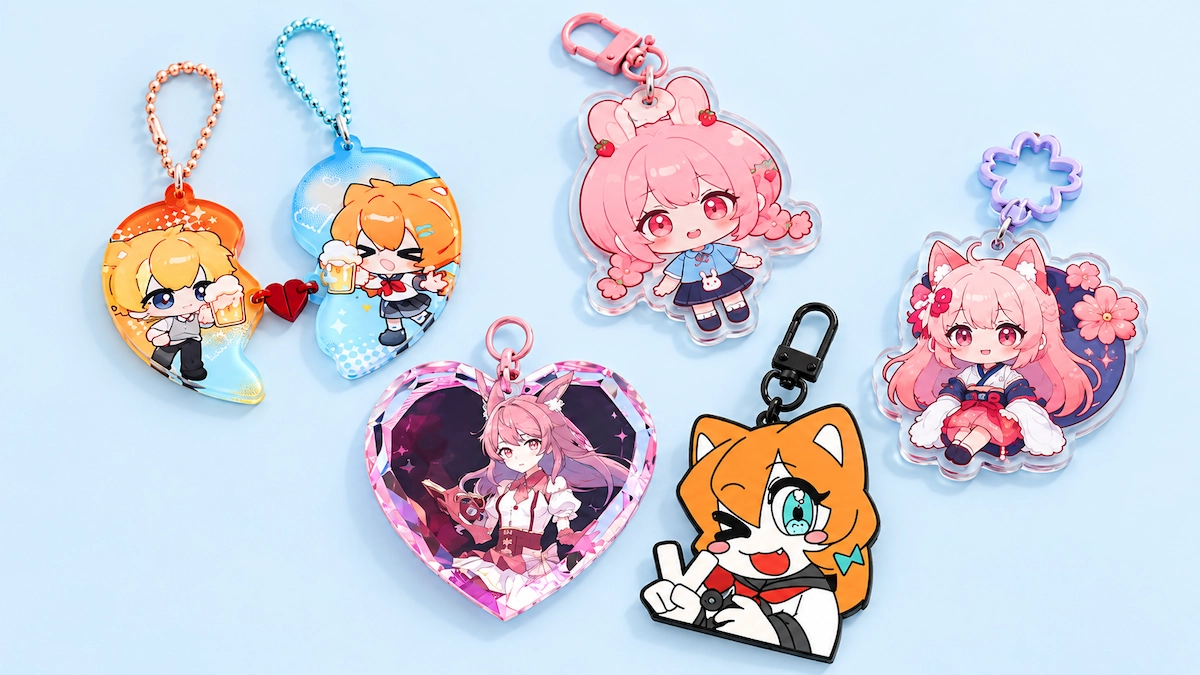
Material affects the look, feel, cost, durability, and perceived value of the product.
Acrylic Keychains
Acrylic is especially popular for colorful illustrations, characters, logos, and custom-shaped designs.
It works well for artist merch because the artwork remains the main focus. Depending on the manufacturer, acrylic keychains may support transparent areas, double-sided printing, specialty finishes, and different hardware options.
Metal and Enamel Keychains
Metal keychains usually feel heavier and more premium.
They work particularly well for:
· Logos
· Symbols
· Minimal designs
· Branded merchandise
· Premium gifts
Enamel can add color, while engraved or molded metal creates a more understated look.
PVC and Rubber Keychains
Soft PVC and rubber work well for bold graphics, mascots, logos, and simplified shapes.
They can be durable and have a distinctive tactile feel.
Resin and Handmade Keychains
Resin is popular with handmade sellers because it allows more experimentation with glitter, flowers, pigments, charms, and embedded objects.
The trade-off is labor. Each item may require more preparation and quality control.
Other Materials
Wood, fabric, embroidered, leather-look, and other styles can also work depending on your audience.
For a first launch, one or two keychain types are usually enough.
Step 3: Decide How You Will Produce Them
There are three common production models.
| Method | Best For | Main Advantage | Main Trade-Off |
| DIY | Handmade and personalized products | Maximum control | Time and equipment |
| Bulk manufacturing | Proven designs | Better unit economics at scale | Upfront inventory |
| Print on demand | Testing and low-inventory selling | Products made after orders | Less direct fulfillment control |
Make Keychains Yourself
DIY is well suited to resin, clay, fabric, wood, macramé, and personalized products.
You control the product, packaging, and quality directly.
The main limitation is time.
Making a few products for a weekend market is very different from producing hundreds of orders while also handling customer service, content, and shipping.
Work With a Manufacturer
A manufacturer can produce acrylic, metal, PVC, embroidered, and other custom keychains from your artwork.
This is often the most practical route when you need consistent quality or larger quantities.
Bulk manufacturing can reduce unit cost, but it also creates inventory risk.
Do not order large quantities of an untested design simply because the unit price is lower.
Use Print on Demand
With print on demand (POD), the keychain is produced after a customer places an order.
This reduces the need to predict demand or keep large amounts of inventory.
POD is useful if you want to test multiple designs or spend more time creating and marketing rather than packing orders.
The trade-off is less direct control over production and fulfillment, so samples and supplier quality remain important.
Step 4: Design for the Final Product
A detailed illustration may look great on a monitor but become hard to read once reduced to keychain size.
Before production, check:
· Is the silhouette recognizable?
· Are small details still visible?
· Is text readable?
· Is there enough contrast?
· Where will the attachment hole sit?
· Is important artwork too close to the edge?
· Does the design work from both sides?
Always follow your supplier’s file requirements and templates.
Build Small Collections
Instead of launching many unrelated designs, create a small group around one theme.
For example:
Moon Café Collection
· Moon Cat
· Coffee Ghost
· Star Cookie
· Sleepy Barista
A themed collection feels more intentional and gives customers a reason to collect multiple designs.
Successful artwork can later be expanded into stickers, pins, prints, or other merchandise.
Step 5: Choose a Reliable Supplier and Order Samples
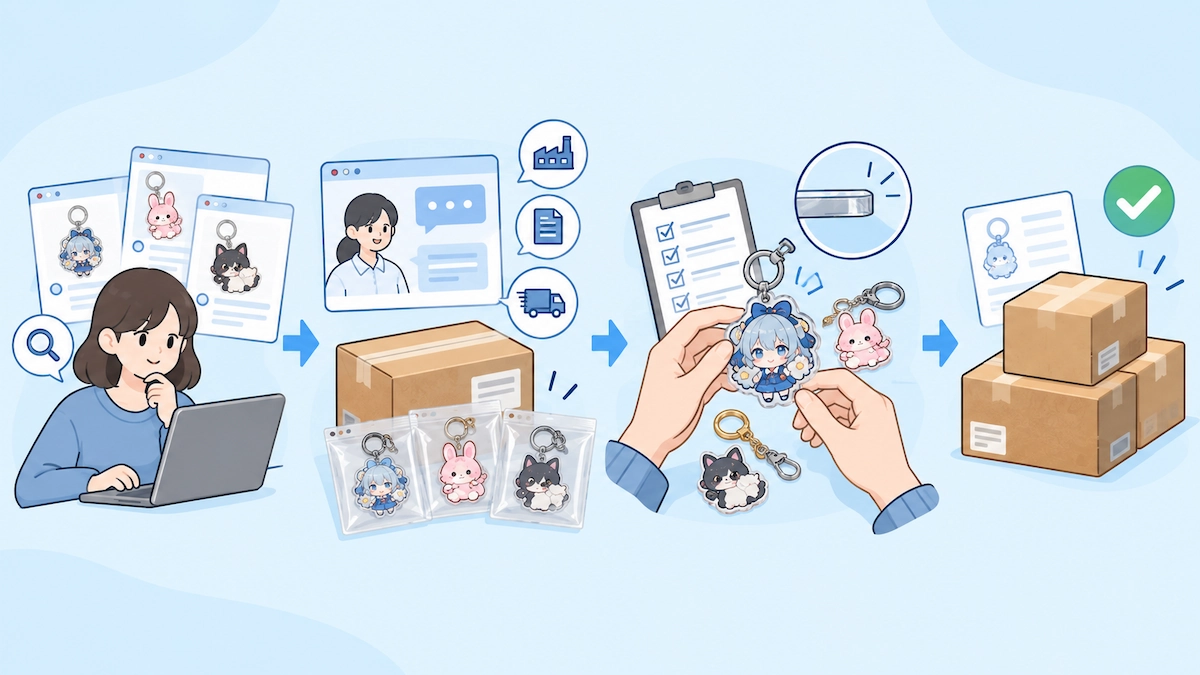
Your supplier affects more than the product cost.
Compare:
· Materials
· Printing quality
· Custom shapes
· Hardware options
· Minimum order quantities
· Unit prices
· Production time
· Packaging
· Shipping
· Replacement policies
· Proofing process
Do not choose only by the cheapest quote.
Poor printing, weak hardware, color problems, or inconsistent cutting can quickly erase the savings.
Check Physical Samples
A mockup cannot fully show:
· Color
· Transparency
· Thickness
· Weight
· Surface finish
· Hardware quality
· Print alignment
· Actual size
Samples are also useful for photography and marketing.
Step 6: Price Your Keychains Properly
Do not calculate your price from manufacturing cost alone.
Your real cost may include:
· Product cost
· Supplier shipping
· Packaging
· Postage
· Platform fees
· Payment processing
· Samples
· Advertising
· Storage
· Replacements
· Fulfillment time
A basic calculation is:
Selling Price − Total Cost per Sale = Gross Profit
Gross margin can be calculated as:
Gross Profit ÷ Selling Price × 100
This gives you a more realistic view than assuming anything above production cost is profit.
Your final price should also reflect the product itself. A simple acrylic charm and a premium metal or specialty-finish keychain do not need to be priced the same way.
Consider Bundles
You can also sell:
· Matching pairs
· Character sets
· Buy-two or buy-three bundles
· Keychain + sticker sets
· Limited collection bundles
Bundles can increase average order value without discounting every product individually.
Step 7: Choose Where to Sell
Your sales channel affects both visibility and control.
Online Marketplaces
Platforms such as Etsy can help you reach shoppers already searching for personalized or creative products.
The trade-off is competition, marketplace fees, and dependence on platform rules and search algorithms.
Your Own Online Store
An independent store gives you more control over:
· Branding
· Pricing
· Product presentation
· Collections
· Promotions
· Customer experience
But your store will not generate traffic automatically.
You need to attract visitors through search, social media, content, email, communities, partnerships, or advertising.
Social Media
Visual platforms work particularly well for keychains.
Useful content includes:
· Sketches
· Design polls
· Samples
· Material comparisons
· Product reveals
· Packaging
· New collection launches
· Customer photos
Showing the journey from artwork to physical merchandise often makes the product more interesting.
Conventions and Local Markets
Keychains are compact and easy to display in person.
Customers can immediately see their size, finish, color, and hardware.
For artists, conventions are also useful product research. You can quickly see which designs attract attention.
Step 8: Build Better Product Listings
A strong design still needs a clear product page.
Customers should quickly understand:
· Material
· Size
· Front and back design
· Hardware
· Finish
· Packaging
· What they receive
· Shipping or processing expectations
Use photographs that show:
· Front view
· Back view when relevant
· Product in hand for scale
· Keychain attached to a bag or keys
· Close-up of the finish
Avoid decorative images that make the actual product difficult to identify.
Write Clear Product Titles
A title should describe the item naturally.
For example:
Moon Cat Double-Sided Acrylic Keychain
is much clearer than:
Moon Cat
Use relevant keywords without stuffing the title with repeated phrases.
Step 9: Market Your Keychain Business
You do not need to promote everywhere.
Choose channels where your audience already spends time.
Turn Development Into Content
One product can create multiple pieces of content:
Sketch → Color → Sample → Reveal → Launch → Customer Orders
This gives you more variety than repeatedly posting the same finished image.
Use Limited Releases Carefully
Seasonal designs, event exclusives, and limited collections can create urgency.
But scarcity works best when it is genuine.
Do not label every product “limited” simply to force urgency.
Collaborate With Relevant Creators
A smaller creator with the right audience may be more valuable than a larger account with little connection to your niche.
Collaborations can include:
· Shared collections
· Giveaways
· Product swaps
· Cross-promotion
· Event merchandise
Audience relevance matters more than follower count alone.
Starting a Keychain Business With Print on Demand
If you want to sell keychains without ordering large batches in advance, print on demand can reduce inventory risk.
With Artiststore , artists and creators can upload artwork, create customizable products including keychains, set their selling prices, and use on-demand production and fulfillment after orders are placed.
This can be useful if you want to:
· Test multiple designs
· Avoid storing inventory
· Reduce manual fulfillment work
· Sell keychains alongside other merchandise
· Focus more on artwork and promotion
POD is not automatically better than bulk manufacturing.
If a design develops predictable sales, larger production runs may eventually offer better unit economics. If handmade production is part of your brand, DIY may still be the better choice.
Choose the model that fits how you actually want to operate.
Step 10: Understand Copyright and Business Basics
If you want to build a long-term keychain business, intellectual property matters.
Creating your own drawing does not automatically give you commercial rights to someone else’s:
· Character
· Logo
· Trademark
· Brand
· Game or movie property
· Artwork
Fan art should not automatically be assumed to be approved for commercial sale.
If you use third-party intellectual property, make sure you have the appropriate rights or permission.
Business registration, taxes, licensing, and consumer rules also vary by location. Check the requirements that apply where your business operates.
Common Keychain Business Mistakes
Ordering Too Much Inventory
A lower unit price is not helpful if the product does not sell.
Test demand before committing to large quantities.
Choosing Materials Only by Price
Material should match both your artwork and your target customer.
Ignoring Hardware Quality
Customers use the ring, clasp, chain, or attachment every day.
Hardware should be part of your quality check.
Underpricing
Packaging, fees, shipping, samples, replacements, and labor all affect profitability.
Launching Too Many Unrelated Designs
A smaller, more coherent collection is often easier to remember and promote.
Skipping Samples
Digital previews cannot fully replace checking a physical product.
How to Grow Your Keychain Business
Once you have real orders, use customer behavior to guide your next steps.
Track:
· Best-selling designs
· Best-performing materials
· Average order value
· Bundle performance
· Repeat purchases
· Traffic sources
· Customer questions
· Replacement issues
Then expand what already works.
A popular keychain can become:
· A matching sticker
· A pin
· An acrylic standee
· An art print
· A seasonal variation
Growth does not always mean creating more unrelated products.
Sometimes the best opportunity is giving customers more ways to buy the designs they already like.
FAQ About Starting a Keychain Business
How much does it cost to start a keychain business?
There is no fixed amount. DIY may require equipment and materials, bulk manufacturing requires upfront inventory, while POD can reduce initial inventory costs.
Is a keychain business profitable?
It can be, but profitability depends on product costs, selling price, fees, shipping, marketing expenses, and sales volume.
What type of keychain is best to sell?
There is no universal best type. Acrylic works well for illustrations and characters, while metal, PVC, resin, wood, and fabric suit different styles and audiences.
Do I need to make keychains myself?
No. You can make them yourself, work with a manufacturer, or use a print-on-demand provider.
Where can I sell keychains?
Common options include marketplaces, independent online stores, social media-driven storefronts, conventions, craft fairs, and local markets.
Do I need inventory?
Not necessarily. Bulk manufacturing requires inventory, while POD produces products after customers order. Preorders can also help test demand.
Should I sell keychains individually or in sets?
Both can work. Individual keychains offer a lower entry price, while sets can increase order value and make collections more appealing.
Can I sell copyrighted characters as keychains?
Not automatically. Commercial use of copyrighted or trademarked characters may require authorization from the rights holder.
Are acrylic keychains good for artists?
Yes. Acrylic is particularly suitable for colorful illustrations, character artwork, custom shapes, and artist merchandise.
Final Thoughts
Starting a keychain business does not require a huge catalog.
A practical first launch can be much simpler:
One audience.
One or two materials.
A small collection.
A reliable production method.
A realistic price.
A clear place to sell.
Launch, see what customers respond to, and improve from there.
A few strong keychains with a recognizable style can teach you more than dozens of products created without a clear direction.