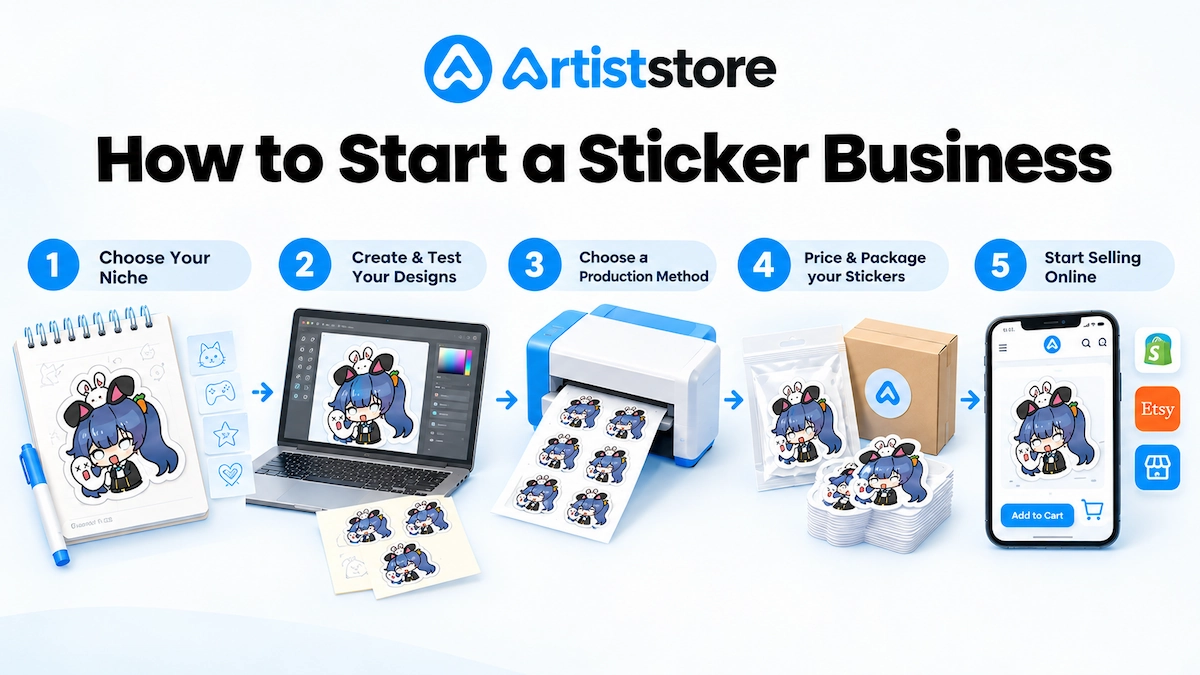
Stickers are one of the most accessible products for artists, designers, creators, and small businesses to sell online.
They are inexpensive to test, easy to bundle, and flexible enough to work across niches—from original characters and journaling to gaming, pets, humor, and small-business branding.
You can also choose how involved you want to be in production. Stickers can be printed at home, ordered in bulk, or produced through print on demand (POD), where products are made after customers place orders.
The barrier to entry is low, but that also means competition is high. A successful sticker business needs more than good artwork. You need a clear audience, suitable products, realistic pricing, reliable production, and a plan for getting your designs in front of potential buyers.
Here is how to get started.
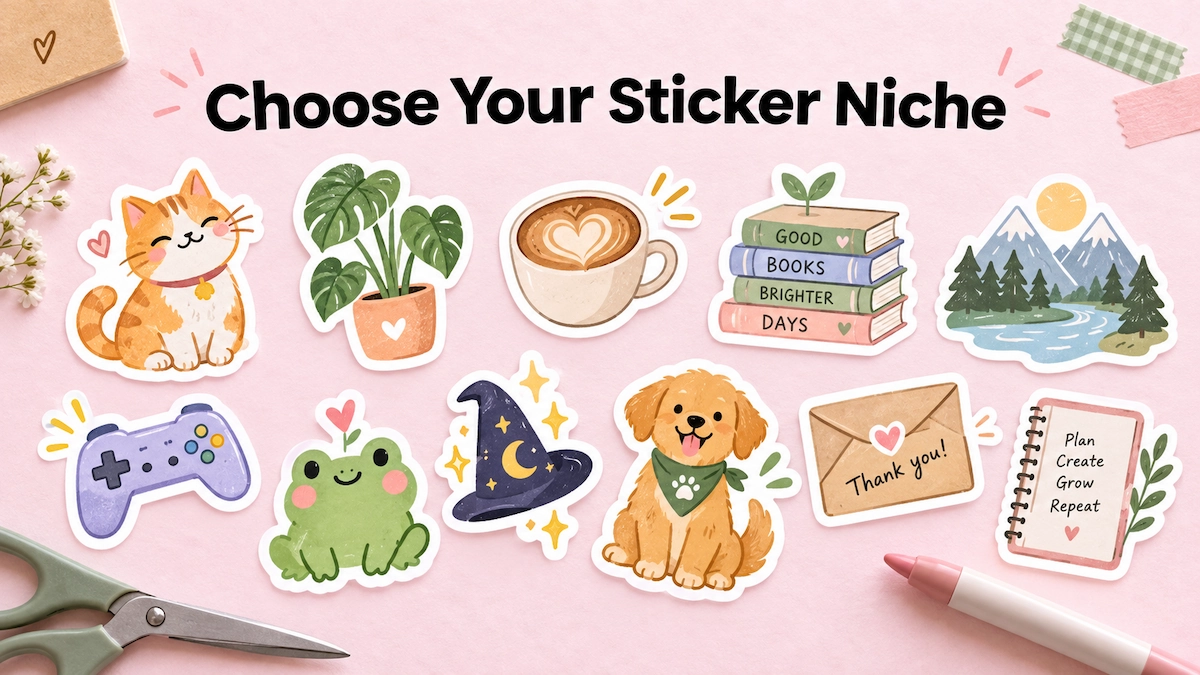
Step 1: Choose Your Sticker Niche
Trying to make stickers for everyone usually makes it harder to build a recognizable shop.
Start with a particular audience, interest, aesthetic, or use case.
Popular directions include:
· Original characters
· Cute animals
· Gaming
· Books and reading
· Anime-inspired artwork
· Fantasy
· Plants and nature
· Food and coffee
· Pets
· Journaling and planners
· Humor and quotes
· Personalized designs
· Small-business labels and packaging
A niche does not need to be extremely narrow. It simply gives your store a clearer identity.
For example, instead of selling general “animal stickers,” you might focus on cozy woodland characters, funny pet illustrations, or cute animals designed for journals.
Research Before You Create a Full Collection
Spend some time looking at marketplaces, social media, search results, customer reviews, and relevant communities.
Ask:
· Which themes already sell well?
· Which styles are heavily saturated?
· What price ranges are common?
· Are people buying single stickers, sheets, or packs?
· What do customers complain about?
· Is there an audience that current products do not serve particularly well?
The goal is not to copy successful sellers. It is to understand what customers already respond to and where your own style can fit.
Step 2: Test Your Sticker Ideas
You do not need dozens of finished designs before launching.
Test ideas while they are still inexpensive to change.
You can:
· Share sketches on social media
· Ask followers to choose between designs
· Release a small first collection
· Test products at conventions or local markets
· Take preorders when appropriate
· Compare engagement across different themes
Pay attention to buying behavior rather than compliments alone.
A design getting likes is useful information. A customer being willing to pay for it is much stronger validation.
Starting small also helps you avoid investing heavily in designs that look promising but never develop real demand.
Step 3: Choose How to Make Your Stickers
There are three common ways to produce stickers.
Method | Best For | Main Advantage | Main Trade-Off |
DIY production | Small batches and hands-on sellers | Maximum control | Equipment and time |
Bulk manufacturing | Proven designs | Lower unit cost at volume | Upfront inventory |
Print on demand | Testing and low-inventory stores | No large stock commitment | Less fulfillment control |
Make Stickers at Home
A home setup may include a printer, sticker paper or vinyl, a cutting machine, laminate, and packaging supplies.
DIY production gives you direct control over quality, customization, and packaging.
It is especially useful for small collections and personalized products.
The downside is time. Printing, cutting, sorting, packing, and shipping every order can become difficult as sales increase.
Order Stickers in Bulk
Bulk production is usually better once you know a design sells consistently.
Larger quantities can reduce the cost per sticker, while keeping inventory yourself gives you more control over packaging and fulfillment.
The risk is straightforward: you pay for products before customers buy them.
For that reason, bulk ordering makes more sense for proven designs than untested ideas.
Use Print on Demand
With print on demand, products are created after a customer places an order.
This reduces the need to buy and store inventory in advance and can make it easier to test multiple designs.
POD is especially useful if you would rather spend your time creating and marketing than printing and packing orders.
The trade-off is less direct control over production and fulfillment, so ordering samples before promoting a product is still important.
Step 4: Choose the Right Sticker Types
Different materials and formats can completely change how artwork looks as a physical product.
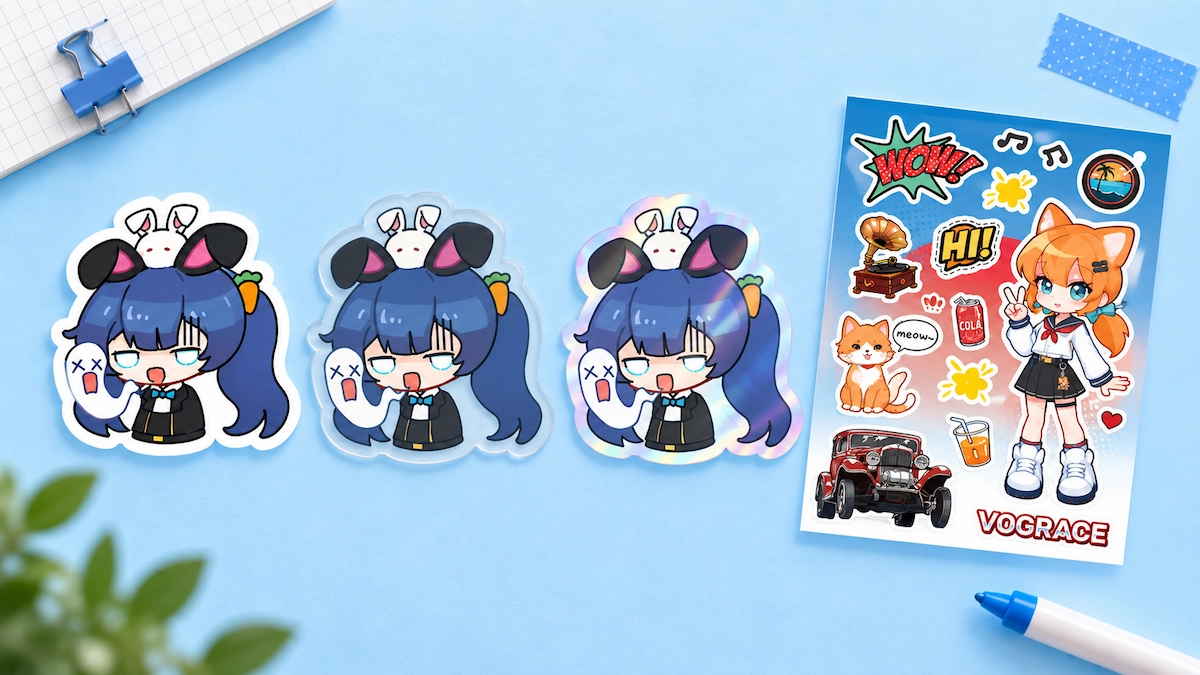
Vinyl Stickers
Vinyl is a popular option for decorative stickers because it is durable and works well for laptops, notebooks, bottles, cases, and similar surfaces.
However, do not automatically describe every vinyl sticker as waterproof or weatherproof. Those properties depend on the specific material, ink, coating, and production method.
Clear Stickers
Clear stickers work well when transparency is part of the design.
They are particularly effective on glass, bottles, transparent cases, and clean surfaces where you want the background to remain visible.
Holographic Stickers
Holographic materials create shifting reflective effects and can make certain designs feel more collectible.
They work especially well with fantasy, gaming, celestial, character, and limited-edition artwork.
Sticker Sheets
Sticker sheets combine multiple smaller designs on one backing.
They are useful for:
· Journaling
· Planners
· Character sets
· Themed collections
· Mini illustrations
They can also turn several inexpensive designs into one higher-value product.
Die-Cut and Kiss-Cut Stickers
Die-cut stickers follow the outer shape of the design.
Kiss-cut stickers usually leave additional backing around the sticker.
Neither is universally better. Choose based on presentation, manufacturing requirements, and how you want customers to use the product.
Step 5: Design Stickers for Their Actual Size
Artwork that looks great on a large monitor may not work when printed at two or three inches.
Before production, check:
· Is the main shape easy to recognize?
· Are small details still visible?
· Is text readable?
· Is there enough contrast?
· Does the border work with the design?
· Does the artwork still look good at actual size?
Always follow your printer or manufacturer’s recommended file specifications.
Think in Collections
Instead of launching many unrelated designs, create small groups around a common theme.
For example, a café-themed collection might include:
· A sleepy cat
· A coffee cup
· A pastry
· A book
· A matching quote
These can be sold individually, as a bundle, or together on a sticker sheet.
Collections make your shop feel more intentional and give customers an easier reason to buy multiple products.
Step 6: Order Samples and Check Quality
Mockups are useful, but they cannot fully show print quality, texture, size, shine, or cutting accuracy.
Whenever possible, inspect physical samples before a major launch.
Check:
· Print sharpness
· Colors
· Cut lines
· Adhesive
· Surface finish
· Actual size
· Small details
· Packaging
If you plan to advertise qualities such as water resistance or outdoor durability, make sure the product actually performs that way.
Samples also give you real products to photograph for listings and social media.
Step 7: Price Your Stickers Properly
Do not base your price only on printing cost.
Your total cost may include:
· Production
· Packaging
· Postage
· Marketplace fees
· Payment processing
· Advertising
· Samples
· Equipment
· Returns or replacements
· Fulfillment time
A basic calculation is:
Selling Price − Total Cost per Sale = Gross Profit
For example, if a sticker sells for $5 and your total cost associated with that sale is $2, the gross profit is $3.
That is not necessarily your final net profit. Taxes, software, marketing, overhead, and other business expenses may still apply.
Use Bundles to Increase Order Value
Sticker packs and themed sets can help increase average order value while making shipping costs easier to justify.
You might offer:
· Individual stickers
· Three-piece sets
· Complete collections
· Sticker sheets
· Limited-edition bundles
Let your customers decide which format they prefer.
Step 8: Decide Where to Sell Your Stickers
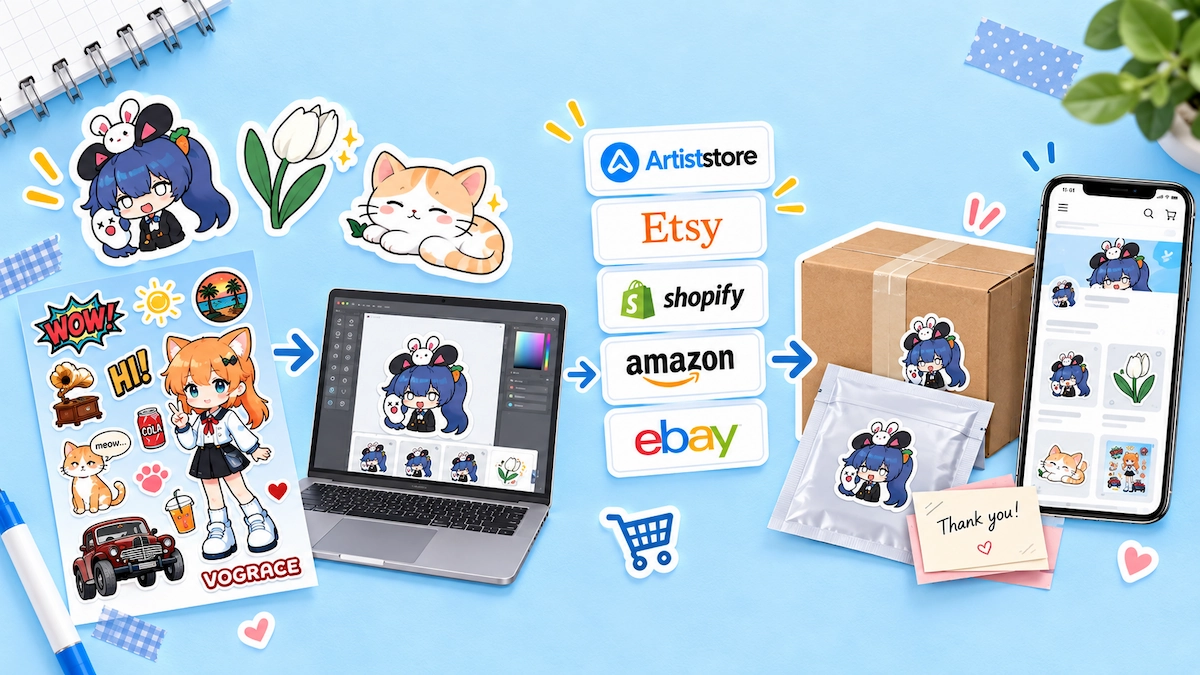
Your sales channel affects both visibility and control.
Online Marketplaces
Platforms such as Etsy can help new sellers reach shoppers who are already searching for handmade, creative, and personalized products.
The disadvantage is competition, platform fees, and dependence on someone else’s marketplace rules and search algorithm.
Your Own Online Store
An independent store gives you more control over:
· Branding
· Pricing
· Collections
· Store design
· Customer experience
· Marketing
However, your store will not automatically generate traffic.
You need to bring visitors through search, social media, email, communities, advertising, or an existing audience.
Social Media
Instagram, TikTok, Pinterest, X, YouTube, and other platforms can be valuable discovery channels.
Instead of only posting finished products, share:
· Sketches
· Design processes
· Printing or production
· Product previews
· Packaging
· New collection announcements
· Customer photos
For creative businesses, the process behind the artwork often makes the finished product more interesting.
Conventions and Local Markets
Stickers also work particularly well for in-person selling.
They require little table space, have an accessible price point, and allow customers to see finishes and colors directly.
Conventions and markets can also help you identify which designs attract attention before expanding production.
Step 9: Build a Recognizable Sticker Brand
A strong brand is more than a logo.
Customers may recognize you through:
· Illustration style
· Characters
· Humor
· Color palette
· Product photography
· Packaging
· Store design
· Social media voice
You do not need every product to look identical. You need enough visual and creative consistency that someone can recognize your work later.
Keep Packaging Practical
Packaging should first protect the product.
A backing card, simple envelope, branded label, or thank-you card can improve presentation without adding unnecessary cost.
Remember that small extras become significant expenses as order volume grows.
Track what your packaging actually costs.
Step 10: Market Your Sticker Business
You do not need to be active on every platform.
Choose the channels where your target audience already spends time.
Show How the Product Is Made
Creative-process content works naturally for stickers.
You can show:
· Sketches
· Coloring
· Design adjustments
· Printing
· Cutting
· Material comparisons
· Packaging
· Finished stickers in use
One design can generate multiple pieces of content before and after launch.
Make Product Listings Clear
Customers should quickly understand:
· What they are buying
· Sticker quantity
· Size
· Material
· Finish
· Recommended uses
· Shipping details
Product titles should also describe the item clearly.
For example:
Boba Bear Holographic Vinyl Sticker
is more useful than simply:
Boba Bear
Avoid stuffing every possible keyword into the title. Clarity comes first.
Launch Collections Instead of Quietly Adding Products
A collection gives you more reasons to promote your store.
You can build content around:
Preview → Design reveal → Product reveal → Launch → Customer orders → Restock
That creates a stronger story than adding one product without context.
Starting a Sticker Business With Print on Demand
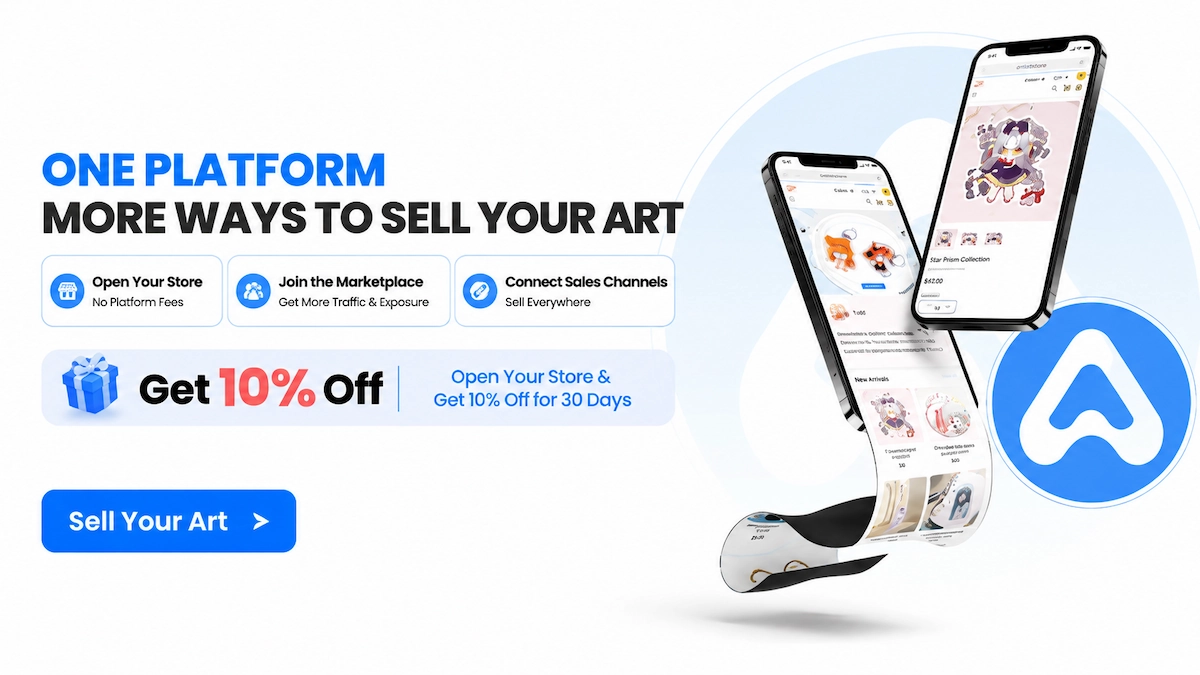
Print on demand can be a practical option for creators who want to sell stickers without investing in printing equipment or keeping large quantities of inventory.
With Artiststore, artists and creators can upload their designs, create customizable products including stickers, set their selling prices, and use a POD fulfillment model where products are produced after orders are placed.
This can be useful if you want to:
· Test several designs with less inventory risk
· Avoid storing products
· Reduce manual fulfillment work
· Expand successful artwork into other merchandise later
POD is not automatically the best option for every business.
If you already sell large quantities of a proven sticker, bulk manufacturing may offer better unit economics. If handmade production is an important part of your brand, producing stickers yourself may give you greater creative control.
Choose the production model that fits how you want to operate.
Step 11: Understand Copyright and Business Basics
Original artwork gives you the clearest foundation for building a sticker brand.
Creating an illustration yourself does not automatically give you the right to commercially sell someone else’s copyrighted character, logo, trademark, or other protected intellectual property.
Fan art is not automatically approved for commercial use.
If you plan to use intellectual property owned by another person or company, make sure you have the appropriate rights or permission.
Business licenses, tax requirements, and registration rules also vary by country and local jurisdiction. Check the requirements that apply where your business operates rather than assuming there is one universal rule for sticker sellers.
Common Sticker Business Mistakes
Buying Too Much Inventory
A lower unit price means little if half the products never sell.
Validate designs before placing large orders.
Underpricing
Production is only one cost.
Packaging, payment fees, shipping, marketing, replacements, and your time also affect profitability.
Launching Too Many Unrelated Designs
A smaller, more coherent collection usually gives customers a clearer idea of what your brand represents.
Skipping Samples
Physical stickers can differ from digital previews in color, size, texture, and finish.
Always check important products before making strong quality claims.
Copying Trends Instead of Building a Style
Trends can help you understand demand, but they should not define your entire business.
Long-term brands need something customers can recognize as their own.
How to Grow Your Sticker Business
Once you have actual sales, let customer behavior guide your next steps.
Look at:
· Best-selling designs
· Popular themes
· Preferred finishes
· Single stickers versus bundles
· Repeat purchases
· Main traffic sources
Then expand what already works.
A successful character sticker, for example, could later become:
· A sticker sheet
· A themed pack
· A keychain
· A pin
· An art print
Growth should come from evidence rather than simply adding more products.
FAQ About Starting a Sticker Business
How much does it cost to start a sticker business?
There is no fixed amount. DIY production requires equipment and materials, while bulk printing requires inventory investment. POD can reduce upfront production and inventory costs.
Is selling stickers profitable?
It can be, but profitability depends on pricing, production cost, shipping, fees, marketing expenses, and sales volume.
Can I start a sticker business from home?
Yes. Stickers can be made at home, outsourced to a manufacturer, or produced through a print-on-demand service.
Do I need a printer?
Only if you plan to print stickers yourself. Manufacturers and POD providers can handle production for you.
What type of sticker sells best?
There is no universal best type. Vinyl, holographic, clear, die-cut, kiss-cut, and sticker sheets appeal to different customers and use cases.
Where can I sell stickers?
Common options include online marketplaces, your own store, POD platforms, social-driven storefronts, craft fairs, and conventions.
Do I need a business license to sell stickers?
Requirements depend on your location and business structure. Check the applicable local and national regulations.
Can I sell copyrighted characters as stickers?
Not automatically. Commercial use of copyrighted or trademarked characters may require permission or licensing from the rights holder.
Is print on demand good for sticker businesses?
POD can be useful for testing designs, avoiding inventory, and reducing fulfillment work. Bulk or DIY production may be more suitable once sales become predictable or when greater control is important.
Final Thoughts
Starting a sticker business does not require a huge catalog or a large upfront investment.
Begin with a clear audience, a focused collection, and a production method that fits your budget and time.
Test designs before scaling, understand your actual costs, and pay attention to what customers buy rather than simply what receives the most likes.
Five strong stickers with a clear identity can be a better starting point than fifty unrelated listings.
Start small, learn from real sales, and build your next collection around what works.