How to Write an Artist Statement: Tips and Examples
November 7,2026 1:59 AM(UTC+8) 29 views
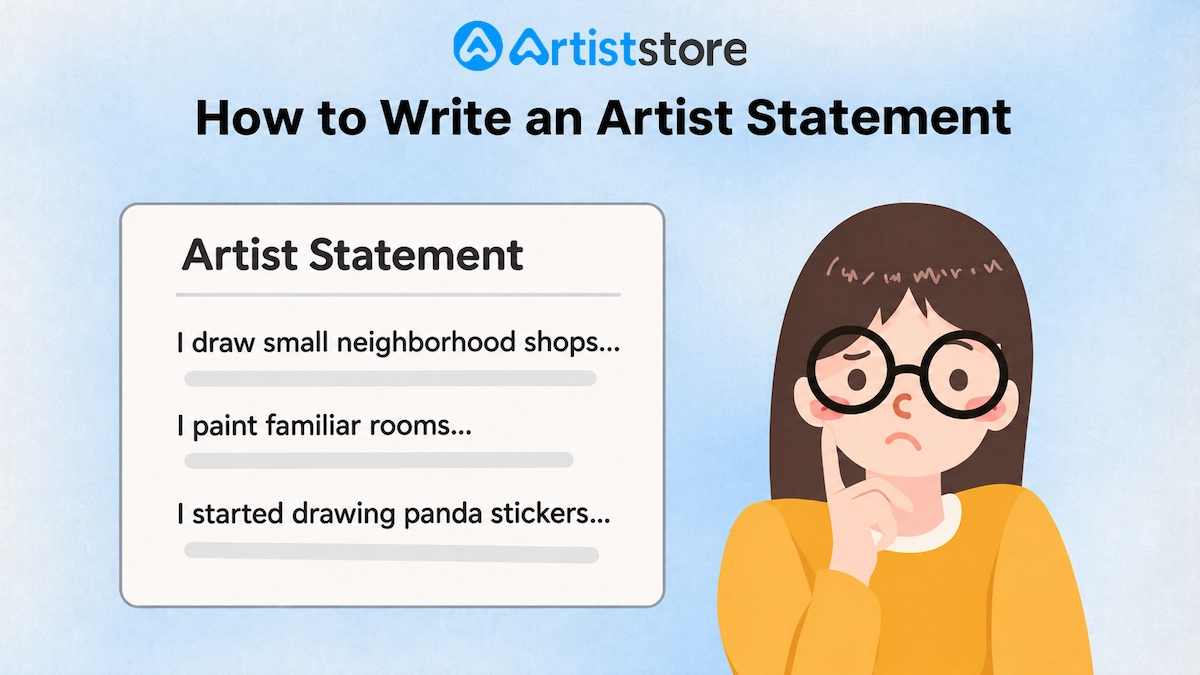
Ever been asked what your art is about and struggled to answer? You know your work, but explaining it in a few sentences can be tricky.
That’s where an artist statement helps. It tells people what you make and why you make it. In this guide, we’ll look at what to include in an artist statement, with tips and examples to help you write your own.
What Is an Artist Statement?
An artist statement is a short text about your art. It explains what you make, how you make it, and what gives you ideas. It can cover several pieces or just one collection.
Imagine someone at your convention table asking about your panda stickers. Why is the panda always holding a snack? You tell them you started drawing it during lunch breaks at work. That little story could be the start of your statement.
You can also talk about your materials or why you keep drawing the same subject. Include details that tell people something about the pieces in front of them.
You might need a statement for your portfolio, an exhibition application, or your website. It can also give shoppers some background on your designs. If you sell through Artiststore , think about what connects the pieces in your shop. Maybe you draw the same characters in different situations, or base your scenes on places you’ve visited. Write a few lines about that.
● Know the difference: A statement is about your art. A bio is about you and can include where you studied, where you’ve shown your work, and any awards you’ve won.
Where to Start With Your Artist Statement

A blank document makes it tempting to write something impressive. Try opening three recent pieces instead.
Choose work that represents what you’re making now. Look for repeated subjects, colors, moods, or decisions. Maybe every scene includes an open window. Perhaps your characters always carry objects that seem too large for them.
Write down what you notice before deciding what it means.
Use these questions to get going:
● What do I keep drawing, painting, photographing, or making?
● Which materials or tools do I return to, and why?
● What choices would someone notice across these pieces?
● Is there an experience, place, or interest behind those choices?
● What do people ask when they see my work?
You don’t have to answer everything. Two useful observations can give you more to work with than a page of broad claims.
● Pro tip: Record yourself explaining one piece to a friend. Listen for a sentence you would actually say. That’s often a better opening than the one you spent twenty minutes polishing.
What to Include in Your Opening Lines
Start with what you make and what appears in your work. Give readers enough detail to picture it.
“I get ideas from everyday life” doesn’t say much about your drawings.
“I draw small neighborhood shops with plants by the door, handwritten signs, and animals behind the counter” tells them what they’ll see.
From there, explain a choice. Why small shops? Why animals? Perhaps you’re interested in places where strangers become familiar faces. Perhaps replacing people with animals lets you exaggerate their habits.
A useful drafting order is:
1. Introduce the work: Name your medium and main subjects.
2. Describe your approach: Explain a meaningful visual or material choice.
3. Add the reason: Connect that choice to an interest, experience, or question.
Use this to get your first draft down. Your finished statement doesn’t need three paragraphs or a sentence answering every prompt. Read the ideas together and arrange them in the order that feels natural.
How to Explain the Choices Behind Your Art

Readers can see that a painting is blue. They may not know why you used that blue repeatedly or why you left parts of the canvas bare.
Give them information that adds to the experience of viewing your art. For example, “I use color to express emotion” could describe countless artists. “I paint familiar rooms in the pale blue of a television left on overnight” offers a much clearer sense of atmosphere.
Your process can help here, too. Do you build drawings from photographs of your neighborhood? Keep pencil marks visible beneath digital color? Stitch with fabric saved from family clothing?
Explain the connection when it matters. Saved fabric might carry memories that new cloth wouldn’t. Visible sketch lines might preserve the hesitation you want in a character’s posture.
There’s no need to attach a deep meaning to every brush or software setting. Include the details that help someone understand this particular work.
How Long Your Artist Statement Should Be
Always check the requirements of the application, gallery, or publication first. A requested word limit takes priority over general advice.
For your own website, try drafting around 100–200 words, then see whether the work needs more explanation. That’s a practical starting point, not a universal rule.
Keep a shorter version available for spaces where readers need a quick introduction. Save fuller notes separately so you don’t have to rebuild everything for a longer application.
First person often feels natural on a personal website: “I draw,” “I collect,” “I build.” Some organizations prefer third person. Follow their instructions and keep the perspective consistent.
Common Mistakes to Avoid in Artist Statement

Some sentences sound fine but say very little about your art. “My unique creative journey,” for example, doesn’t tell someone what you make or why. Instead, describe what you draw, paint, or make and the materials you use.
Here are some common problems to avoid in your artist statement:
● Unexplained terminology: Keep necessary specialist terms, but give unfamiliar readers enough context.
● A career summary: Move unrelated qualifications and achievements into your bio.
● Forced importance: A social issue belongs in your statement only if it connects to your work.
● Instructions for feeling: Your intentions matter, but viewers may have different reactions to your art.
● Outdated descriptions: Your statement should describe the work you’re showing now.
A Final Check Before Sharing Your Artist Statement
Take a break when you finish writing. Come back later and see if it still sounds like you.
You may find words you don’t usually use or a sentence you need to read twice. Change those parts.
You can also ask a friend to read it. Show them your art and ask if there’s anything they don’t understand. Their comments can help you see what you forgot to explain.
Keep your artwork nearby while you check the draft. Maybe you wrote about bold colors, but the pieces you chose have soft colors. You might also have mentioned a material you don’t use anymore. Make sure the details fit the work you’re sharing.
Check the spelling before you send it. For an application, look at the instructions and word limit again. Save the statement somewhere you can find it, with the date in the file name.
Artist Statement Examples for Different Types of Art
Need some inspiration? Here are three fictional examples to help you write your first artist statement.
Example 1: Character illustration
“I draw small creatures dealing with everyday tasks. A rabbit practices what to say on the phone. A dragon falls asleep next to a pile of laundry. Most of these ideas come from my own day or something a friend has told me. I start with pencil sketches, working on the face and posture until the feeling looks right. Then I add color digitally. I leave out most background details because I want people to notice the character first. I like drawing moments that are frustrating at the time but funny later, especially when someone says, ‘I do that too.’”
Example 2: Watercolor painting
“I paint the shops on the street where I grew up. Some still have the signs I remember from childhood. Others have new owners or different things in the windows. I sketch them during walks and sometimes take photos to finish a painting at home. I always ask before photographing inside. With watercolor, I can build up thin layers and leave a few pencil lines showing. I like keeping the crooked lettering, chipped doors, and patched awnings in the picture. Those are the details I remember, and I want to paint them before they’re repaired, painted over, or taken down.”
Example 3: Textile art
“I make soft sculptures using old tea towels, tablecloths, and bedsheets. I sew the fabric into spoons, bowls, and other things you’d find in a kitchen. They bend and sag because they’re made of cloth. I keep the stains, worn spots, and old repairs. If the fabric has a tear, I sometimes sew along it. I do all the stitching by hand. While I sew, I wonder who used the cloth and how long they kept it. I think about the time they spent washing and fixing it, and all the other small jobs people do around the house every day.”
Final Thoughts
An artist statement is an excellent way to tell people about your work. Pick a piece you’ve made recently and talk about it. What did you use to make it? Why did you choose those colors? Write down what you’d tell a friend who asked about it.
You don’t have to cover all your work. If your statement helps someone understand the pieces you’re sharing, then you’re good to go!