Merch Success Stories: How ×PAN1KAZ3 Creates Collectible Fandom Merch
September 14,2026 10:56 PM(UTC+8) 289 views
For ×PAN1KAZ3 , making merch did not begin with a detailed sales strategy.
It started with something much simpler: wanting to experience selling at a local convention.
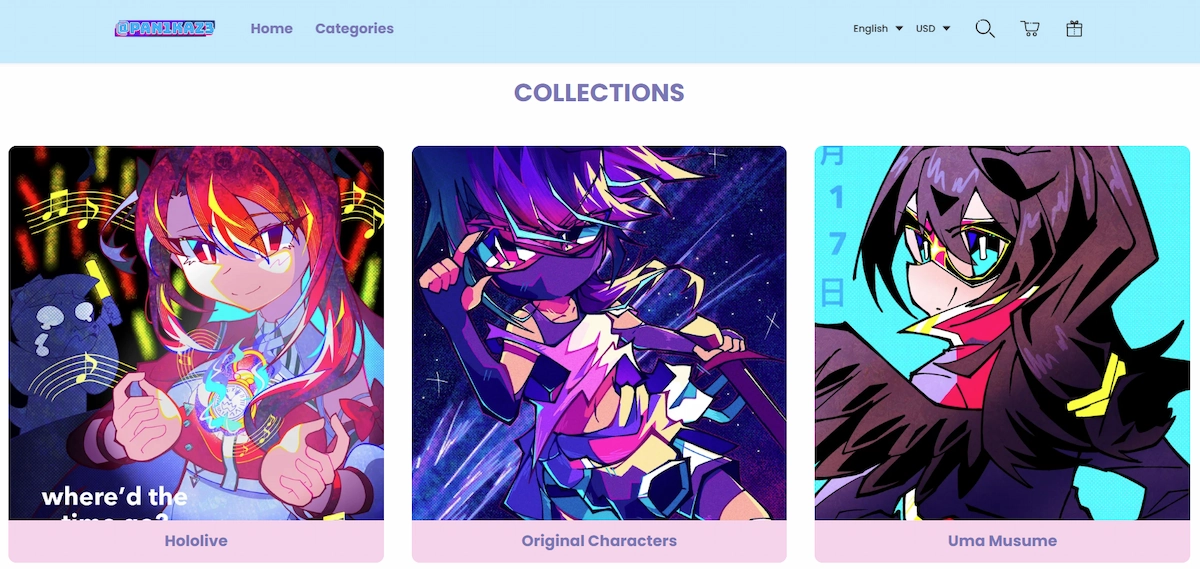
That interest gradually grew into a collection spanning Hololive, Uma Musume, and original characters, with products ranging from rainbow acrylic keychains and holographic stickers to prints, wall pieces, and mouse pads.
But the most useful part of ×PAN1KAZ3’s story is not the number of products.
It is the way personal taste, fandom demand, product format, and real customer behavior come together—and sometimes produce results the artist did not expect.
Start With Characters You Actually Care About
×PAN1KAZ3 mainly creates around media she already enjoys, especially Hololive and Uma Musume.
Rather than choosing characters only because they are popular, she starts with personal interest and occasionally asks her audience who they would like to see.
That creates a useful balance:
-
personal taste keeps the work authentic
-
audience feedback can reveal stronger demand
-
familiar fandoms provide an existing fan base
-
niche favorites can still create unexpected opportunities
As ×PAN1KAZ3 explains, she mostly draws characters from media she already likes.
That matters because successful merch does not always have to begin with the question:
“What will sell the most?”
Sometimes a better starting point is:
“What am I excited enough to keep making?”
Fan Merch and Original Characters Do Not Sell the Same Way
One of the most candid parts of ×PAN1KAZ3’s experience is the difference between fan merch and original-character products.
She openly notes that fan merch can sell far more strongly than merchandise based on her original characters.
That difference makes sense.
Fan art already benefits from:
-
existing character recognition
-
established fandom communities
-
emotional attachment that already exists
-
people actively searching for related merch
Original characters have to build that recognition from scratch.
But ×PAN1KAZ3 does not use that difference as a reason to abandon original work.
Instead, she approaches her own characters as if she were already a fan of them:
What would I want to own if I loved this character?
That keeps original-character merch in the store without forcing it to compete directly with fandom products on identical terms.
The El Condor Pasa Mouse Pads That Surprised ×PAN1KAZ3
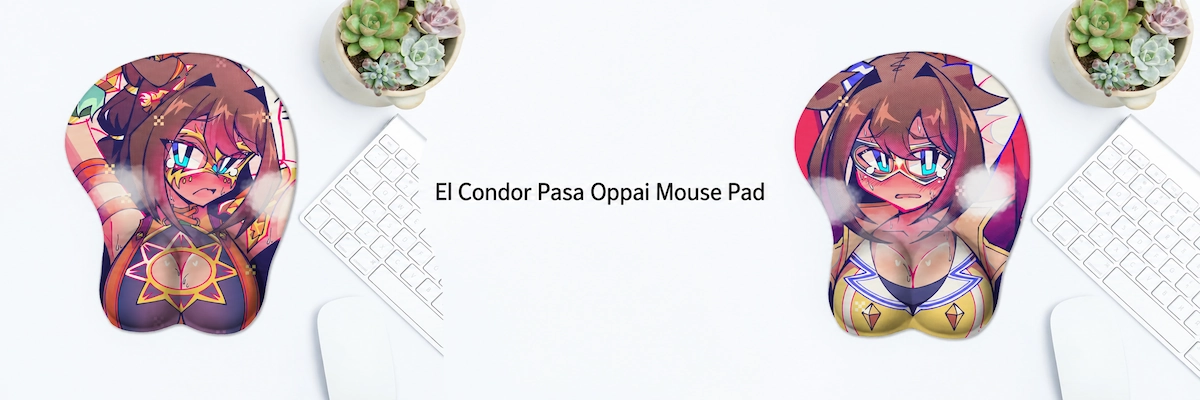
The clearest product-success story in the shop comes from two El Condor Pasa mouse pad designs.
×PAN1KAZ3 already expected the concept to do well.
What surprised her was how many customers bought both designs rather than choosing only one.
That behavior is important.
Customers were not necessarily treating the two products as alternatives.
For some fans, they worked more like a set.
That suggests something beyond simple product demand:
collector behavior.
When customers repeatedly buy multiple versions of the same character or concept, artists may be seeing an opportunity to develop:
-
paired designs
-
coordinated variants
-
character sets
-
matching product releases
-
limited series
That does not mean every successful design needs five versions.
But buying patterns can reveal when fans want more than one interpretation of the same idea.
A Niche Character Can Be a Sales Opportunity
El Condor Pasa is also a useful example of why the most obvious character is not always the best merch opportunity.
×PAN1KAZ3 chose the character because she genuinely liked her—not because she had calculated a market gap.
At the same time, she noted that El Condor Pasa merch could be relatively difficult to find.
Those two things happened to overlap:
personal interest + underserved fan demand
That is a useful lesson for fandom artists.
Popular characters usually have larger audiences, but they also often have far more competing merchandise.
A less represented character may have a smaller fan base, but those fans can also be more excited when they finally find something made for them.
Sometimes your niche favorite is not too niche.
It is simply underserved.
Design One Idea to Work Across More Than One Product
×PAN1KAZ3 also gets more value from some artwork by designing it with multiple products in mind.
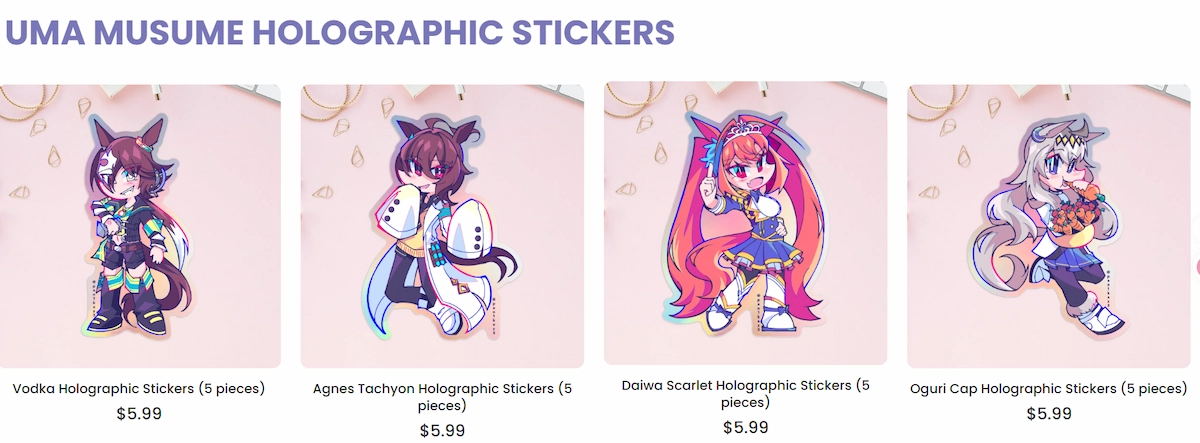
Her Hololive and Uma Musume designs can appear as both rainbow acrylic keychains and holographic stickers.
This is intentional.
She explains that she sometimes creates artwork specifically so it remains suitable for both formats.
That can make a single design more flexible without forcing it onto products where it does not belong.
A versatile design should still:
-
read clearly at a smaller size
-
have a strong silhouette
-
work without excessive background detail
-
remain recognizable across different materials
Prints follow a different rule.
For those, ×PAN1KAZ3 simply chooses artwork she personally likes most.
That distinction is useful: different product categories do not need the same selection logic.
Make the Material Part of the Product
Holographic stickers and rainbow acrylic appear frequently throughout ×PAN1KAZ3’s store.
These finishes are not random.
She likes the way they look and sees them as a recognizable part of Artiststore/Vograce-produced merch.
For colorful character artwork, those materials can add:
-
movement
-
reflection
-
visual depth
-
stronger collectible appeal
The finish becomes part of the product rather than an afterthought.
A useful question for other artists is:
Does this material make the artwork feel more like itself?
If the answer is yes, the finish is contributing to the design rather than simply decorating it.
Give Fans Different Ways to Collect
×PAN1KAZ3’s store does not depend on one product category.
Smaller collectibles include:
-
holographic stickers
-
rainbow acrylic keychains
Larger formats include:
-
prints
-
banners
-
wall tapestries
The El Condor Pasa release adds mouse pads as a more functional desk product.
That variety gives fans different ways to own the same creative interests.
Some people want something inexpensive and easy to collect.
Others want artwork they can display.
Others may prefer a larger or more unusual product.
The goal is not simply to increase SKU count.
It is to give the same audience different reasons to buy.
Why ×PAN1KAZ3’s Merch Strategy Works
Several patterns stand out.
1. Personal Interest Comes First
She mainly chooses characters and ideas she genuinely enjoys.
2. Audience Feedback Supports Rather Than Controls the Process
Fan requests can influence character choices, but they do not replace the artist’s own taste.
3. Designs Are Made With Product Flexibility in Mind
Some artwork is intentionally suitable for both stickers and keychains.
4. Materials Strengthen the Visual Appeal
Rainbow acrylic and holographic finishes become part of the collectible experience.
5. Fan Merch and Original Characters Serve Different Roles
Fan art may sell more quickly, while original-character products help build a world that belongs entirely to the artist.
6. Customer Behavior Reveals New Opportunities
The fact that fans bought both El Condor Pasa mouse pad designs suggests that variants can sometimes function as a set rather than direct alternatives.
Creator Insights
Why did ×PAN1KAZ3 start making physical merch?
She had been interested in trying a local convention booth and wanted the experience of selling physical artwork.
How does she choose characters?
Mostly through personal interest, especially Hololive and Uma Musume, while occasionally asking her audience what they want to see.
How does she choose product formats?
Sticker and keychain designs are sometimes created to work in both formats. Prints are usually based on her personal favorite illustrations.
How does she balance fan merch and original characters?
It is still a work in progress. Fan merch tends to receive stronger sales, but she continues creating original-character products by thinking about what she would want if she were a fan of her own characters.
Which product response was most surprising?
The two El Condor Pasa mouse pads. She expected them to perform well, but did not expect so many customers to buy both.
What advice does she have for artists starting out?
Her advice is simple:
“Make things that you would want.”
What Other Artists Can Learn
×PAN1KAZ3’s experience offers a few practical lessons:
-
Start with characters and ideas you genuinely care about.
-
Listen to fans without letting requests completely control your work.
-
Design for multiple formats when the artwork naturally supports it.
-
Use special finishes when they strengthen the artwork.
-
Do not abandon original characters just because fan merch sells faster.
-
Watch for customers buying multiple variants of the same idea.
-
Do not overlook niche characters with underserved fans.
-
Most importantly, make products you would genuinely want yourself.
You do not always need to start by asking:
“What will sell?”
Sometimes the better question is:
“What would I be excited to find at an artist alley booth?”
Final Thoughts
×PAN1KAZ3’s store shows that strong merch can grow naturally from the things an artist already loves.
Hololive and Uma Musume provide recognizable fandom worlds. Original characters keep the artist’s own creative universe visible. Different materials and product formats give fans several ways to collect.
But the clearest lesson comes from the El Condor Pasa release.
A character chosen because the artist personally loved her became a product that fans were excited enough about to buy in multiple versions.
That kind of result is difficult to predict perfectly.
And that is exactly why real customer behavior matters.
Make something you would want yourself, then pay attention to how other fans respond.
Sometimes the thing you personally wanted to see is exactly what someone else has been waiting for.
FAQ
Should artists only make merch for the most popular characters?
No. Popular characters have larger audiences, but niche characters may also have fans actively looking for merchandise that is difficult to find elsewhere.
Can one design work across different products?
Yes. ×PAN1KAZ3 intentionally creates some designs to work as both stickers and keychains, as long as they remain clear and visually strong in each format.
Should artists choose fan art or original-character merch?
They do not have to choose only one. Fan merch can reach an existing audience more quickly, while original-character products help build the artist’s own creative world.
Are holographic and rainbow finishes worth using?
They can be when the finish complements the artwork. Special materials can add visual depth and collectible appeal.
What if an artist does not know what will sell?
You do not need to know in advance. Start with something you genuinely like, watch how customers respond, and use that information to guide future releases.
Ready to turn your artwork into merch?
With Artiststore , you can create print-on-demand products from both fandom artwork and original characters, explore different formats, and build your collection without holding inventory upfront.