Design Success Story: Turning a Playful Character World into Collectible Merch
A memorable artist store usually has something that ties everything together.
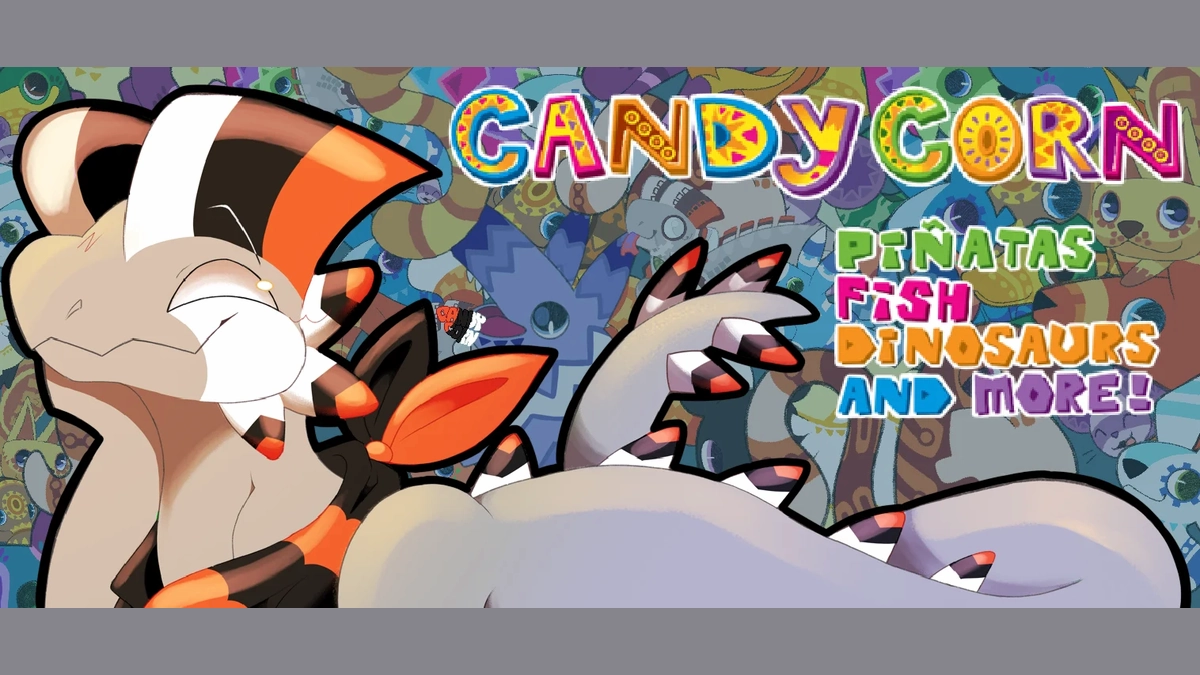
For CandyCorn, that connection comes from a playful world of Piñata-inspired characters, animals, bright colors, and distinctive shapes. The same creative language appears across pins, stickers, keychains, standees, apparel, prints, and home-and-living products, giving the store a clear identity even as the product formats change.
Instead of feeling like a collection of unrelated designs, CandyCorn’s Artiststore feels like one creative universe with different ways to explore it.
That makes the shop an interesting example of how artists can turn a recognizable visual idea into a cohesive merchandise collection .
A Strong and Recognizable Creative World
One of CandyCorn’s biggest strengths is consistency.
The store repeatedly returns to Piñata-inspired characters and animal motifs, supported by bright colors, playful silhouettes, and an energetic illustration style. Visitors do not need to browse very far before getting a sense of the personality behind the shop.
That consistency is not accidental uniformity. The characters are different, the products are different, and individual illustrations still have their own personality.
What stays consistent is the overall visual language.
CandyCorn’s store bio also helps explain where that personality comes from. The artist draws subjects they genuinely enjoy, including Piñatas and dinosaurs, while childhood games have also influenced the Piñata character series.
That personal interest gives the store something difficult to manufacture artificially: a clear point of view.
For other artists, the lesson is simple.
You do not need every design to look the same. You need enough recurring visual elements that people can begin to recognize your work as yours.
Consistency creates recognition, not repetition.
Designing Artwork to Become Products
CandyCorn also shows how one creative language can move across very different types of merchandise.
Among the store’s highlighted designs are products such as the Fudge PINata Acrylic Pin , Arctic Fox Pinata Vinyl Sticker , Multicoloured Wolf Pinata Moon T-shirt , and VPinata Standee .
These are very different physical formats, yet the artwork still feels connected.
The important point is that the illustration is not simply treated as an image that can be placed on anything. Different designs naturally suit different products.
Match the Design to the Product
Compact character artwork can work especially well for products such as pins, stickers , and keychains , where a clear silhouette and recognizable focal point matter.
More complete compositions have additional room to work on standees, apparel, or prints.
CandyCorn follows a similar approach when designing merchandise. The artist does not radically change their style for each product, but tends to keep keychain designs simpler while allowing standees to become more complex.
It is a small distinction, but an important one.
When planning merch, instead of only asking:
“Which product should I print this artwork on?”
It can be more useful to ask:
“How can this design work as a product?”
The best format often depends on the shape, amount of detail, composition, and personality of the artwork itself.
Turning Characters Into Collections
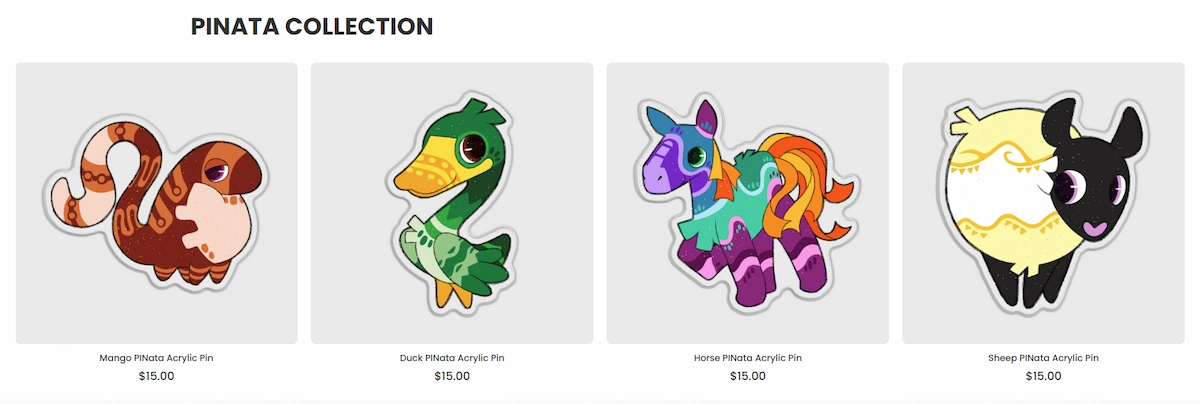
CandyCorn does not stop with one Piñata character.
The dedicated Piñata collection brings together multiple related designs, including Mango, Duck, Horse, Sheep, Beetle, and Worm PINata Acrylic Pins.
That changes the way the products are experienced.
A single character is an individual item. Once several related characters appear together, they begin to feel like a series.
Visitors who discover one character can naturally move on to the others, while fans of the wider theme have more to collect.
For character artists, this is a particularly useful way to expand a store.
You do not always need a completely new concept for your next release. A successful visual idea can grow sideways:
-
one character becomes several characters
-
one design becomes several product formats
-
related designs become a themed collection
-
a collection becomes a recognizable part of the store
This gives the catalog more depth without making it feel disconnected.
One creative idea can become many products—and one character can become a collection.
Giving Customers Different Ways to Buy
A strong collection does not have to depend on one type of merchandise.
CandyCorn combines small collectibles with larger display and wearable products. Someone who likes the artwork might choose a vinyl sticker, acrylic pin, keychain, standee, print, T-shirt, or another format depending on how they want to enjoy it.
This creates several entry points into the same creative world.
A sticker may suit someone looking for a small, accessible piece of merch.
A pin or keychain works naturally as a collectible.
A standee becomes a display piece.
Apparel lets the artwork become something wearable.
The creative identity stays familiar, while the way customers interact with it changes.
For artists planning a product range, this is usually more effective than adding product types simply for the sake of having a larger catalog.
Product variety should give the artwork new ways to be experienced .
Product Variety Without Losing the Store Identity
CandyCorn currently organizes artwork across several merchandise categories, including standees, prints, apparel, keychains, pins, and home-and-living products.
With that much variety, a store could easily begin to feel random.
What keeps CandyCorn connected is that the product category changes more than the creative identity does.
The same character-driven, playful visual world continues to appear throughout the shop.
This is an important distinction for artists who are expanding their catalogs.
More products do not automatically create a better store.
New products work best when they still feel connected to what customers already recognize about your artwork.
A sticker can become a pin.
A character can become a keychain.
A more detailed composition can become a standee or print.
A strong graphic design can move onto apparel.
Each new format expands the creative world rather than replacing it.
Using Best Sellers as Storefront Anchors
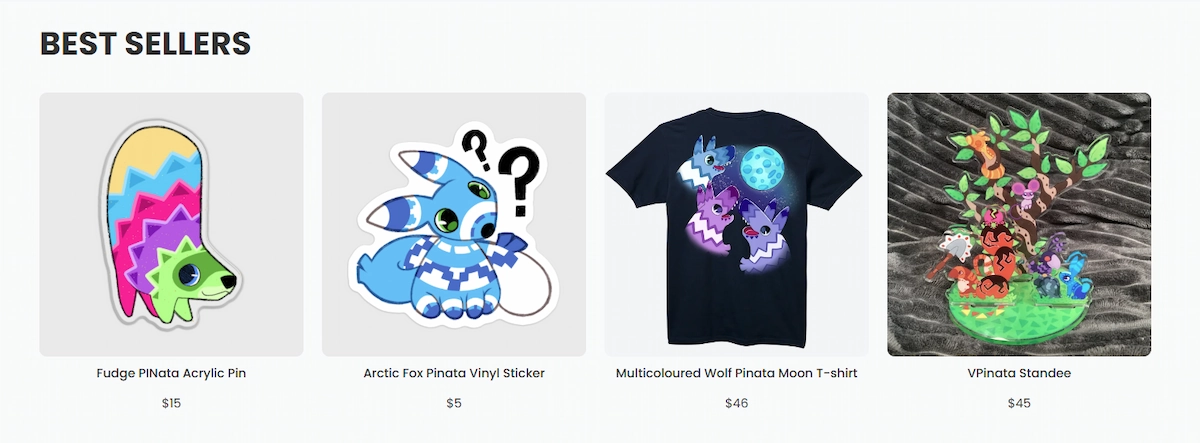
CandyCorn also uses a Best Sellers section to give visitors a quick introduction to some of the store’s strongest products.
The highlighted items span several formats instead of showing only one product category.
That serves two purposes.
For visitors, it provides an easy starting point.
For the artist, it creates useful feedback about which characters, designs, and product formats are connecting with customers.
Best sellers therefore do not have to be treated only as a sales ranking.
They can also become a merchandising tool .
A strong-performing character might be worth exploring in another format. A popular visual style might inspire another character. A successful product might become the starting point for a larger collection.
A Simple Growth Loop
A practical approach could look like this:
-
Identify the designs customers respond to.
-
Feature strong products where visitors can easily find them.
-
Explore suitable new formats for successful artwork.
-
Build related designs into a collection.
-
Use customer response to help guide the next release.
This does not mean copying the same best seller indefinitely.
The goal is to understand what people are responding to and use that information to make the next creative decision a little less random.
A Creative World, Not Just a Product List
The strongest part of CandyCorn’s store is how the individual pieces connect.
Repeated character themes, related collections, multiple product formats, and playful subject matter give the shop a stronger identity than a catalog built from unrelated listings.
That distinction matters.
When customers recognize the same creative language across several products, they begin to remember the store rather than only the individual item they first discovered.
It also makes future releases easier to understand.
A new Piñata character does not feel like an unrelated addition. It feels like another part of a world visitors have already seen.
This is where a merchandise store can start to feel more like a creator brand.
Not because everything is heavily branded, but because the artwork itself creates continuity.
One design. Multiple products. One creative world.
Creator Insights
The decisions behind a store become easier to understand when the creator explains them directly.
CandyCorn shared a few simple insights into how the Piñata series developed and how designs are chosen for merchandise.
What inspired the Piñata character series?
The inspiration comes partly from games the artist enjoyed growing up, together with a genuine personal interest in Piñatas.
That helps explain why the theme appears so naturally throughout the store rather than feeling like a product concept created only for merchandising.
How are characters chosen for products?
CandyCorn starts with personal favorites from a group of designs, asks friends for their opinions, and then chooses which ones to release.
It is a simple process that combines personal taste with outside feedback.
Does the design change for different products?
Not dramatically.
The artist generally keeps keychains simpler while giving standees more room for complexity.
This shows that adapting artwork for merchandise does not necessarily mean redesigning everything. Sometimes it is simply about adjusting the amount of visual information to suit the format.
Which design has performed particularly well?
The Fudge PINata Acrylic Pin has been one of CandyCorn’s strongest products.
The artist believes customers connect with the character partly because of its unusual, playful shape.
That is a useful reminder that merchandise is physical. The silhouette of a character can sometimes become part of the appeal just as much as the illustration itself.
What advice does CandyCorn have for other artists?
The answer is refreshingly straightforward: start drawing.
Almost anything can potentially become merchandise. Creating the artwork comes first; researching the right product and format can follow.
What Other Artists Can Learn From CandyCorn
CandyCorn’s store does not rely on every product looking identical.
What matters is that everything still feels like it belongs to the same creator.
For artists building their own stores, several ideas are worth taking away:
-
Build around a recognizable creative idea or character world.
-
Think about how artwork can adapt to different merchandise formats.
-
Turn related characters into collections instead of isolated listings.
-
Give fans different ways to enjoy the same artwork.
-
Let strong products provide clues about what to expand next.
-
Add product variety without losing the identity people already recognize.
-
Keep your own interests and personality visible in the store.
The goal is not to create perfect uniformity.
It is to create enough connection that when someone sees another product, they understand why it belongs in the same shop.
Final Thoughts
CandyCorn is a strong example of how a distinctive creative idea can grow beyond a single illustration.
The store builds depth by returning to a recognizable character language, developing individual designs into collections, and carrying the same creative identity across different merchandise formats.
For other artists, the takeaway is not that you need a huge number of products.
Quite the opposite.
Start with the ideas that feel most like your work. Find the product formats that suit them. Build related designs around the concepts that have room to grow.
Then let the store expand without losing the personality that made it recognizable in the first place.
A strong artist store is not only about how many products are available.
It is about creating a world customers can recognize, explore, and return to.
FAQ
What makes an artist store feel cohesive?
A recognizable visual language. Repeated themes, colors, character styles, shapes, or motifs can connect different products without making them identical.
Should every design be available on every product?
No. Choose products that suit the artwork’s shape, composition, level of detail, and intended use.
How can artists turn characters into a collection?
Create related characters, variations, or themed designs and group them together so customers can easily discover the wider series.
Is it better to offer many different product types?
Not necessarily. Add products when they give customers a useful new way to enjoy the artwork while still fitting the store’s identity.
Can the same artwork work across several products?
Yes. Some designs adapt naturally across formats, although small products may benefit from simpler compositions and larger products can support more detail.
How should artists decide what to create next?
Look at the designs customers respond to, combine that feedback with your own creative interests, and expand the ideas that still have room to grow.
Ready to turn your art into merch?
Open your Artiststore , upload your designs, and start building a product collection that feels unmistakably yours.