How to Ship Art Prints: 4 Best Ways for Artists
October 14,2026 1:25 AM(UTC+8) 404 views
You've finished the artwork, found a buyer, and made your first sale. Now comes a less exciting but equally important part: getting that print to its new home without a bent corner, crease, or scratch.
Shipping art prints isn't especially complicated, but a regular envelope and a "Do Not Bend" sticker won't always cut it. Different print sizes, paper types, and finishes need different levels of protection.
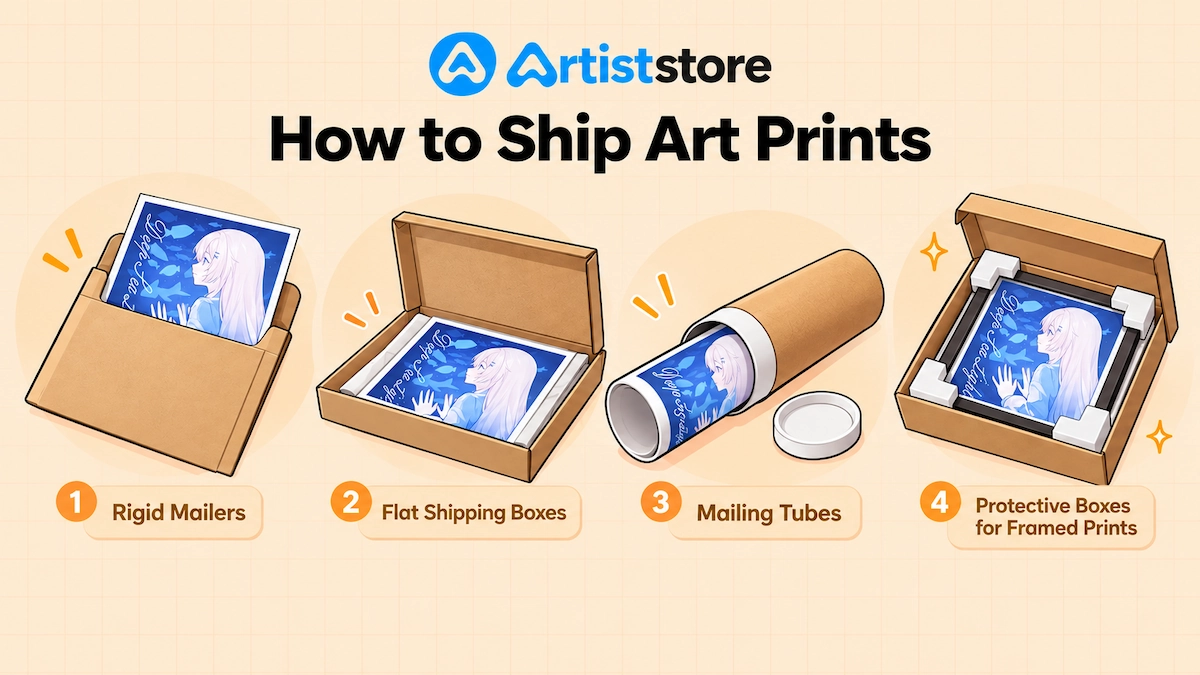
The best way to ship art prints is to use rigid mailers for smaller pieces, flat boxes for delicate prints, mailing tubes for large flexible prints, and protective art boxes for framed work.
Here's how to choose the right packaging, prepare your prints, and keep shipping costs manageable.
How to Prepare Art Prints for Shipping
Good packaging starts before you put anything in a mailer.
First, make sure your print is completely dry and ready to handle. Freshly printed artwork may need additional drying or curing time, depending on the ink, paper, and printing process. Handle it with clean, dry hands, and avoid touching the printed surface unnecessarily.
For most unframed prints, you'll need a few basic supplies:
· Protective sleeves: Clean, print-safe sleeves help protect against moisture, dust, and fingerprints. Choose archival-quality materials for valuable or collectible prints.
· Glassine or acid-free tissue: Useful for separating delicate printed surfaces from other packaging materials. Check compatibility with the print finish.
· Rigid backing boards: Help keep flat prints from bending during handling and transit.
· Mailers, boxes, or tubes: Choose packaging based on the print's dimensions, flexibility, and value.
· Packing tape and cushioning: Secure the outer packaging and prevent the artwork from shifting inside.
Avoid putting adhesive tape directly on a print. Bubble wrap is useful for cushioning an outer package, but it shouldn't press directly against an unprotected printed surface.
Measure your artwork before buying packaging, including any white borders or margins you want to preserve.
4 Best Ways to Ship Art Prints Safely
There isn't one perfect shipping method for every artist. A small illustration print and a large gallery poster have very different packaging needs.
These four methods cover the most common situations.
1. Rigid Mailers for Small Art Prints
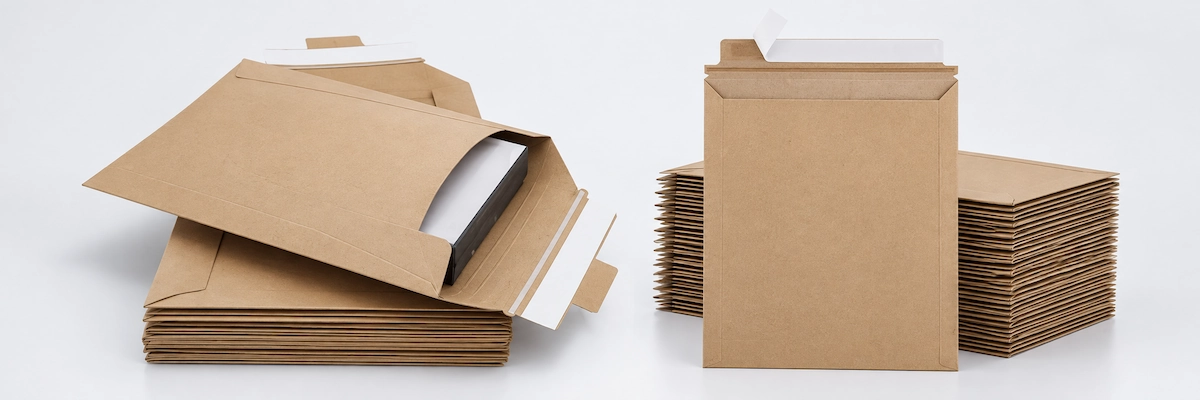
Rigid mailers are a practical choice for small, unframed art prints, especially when you're shipping individual orders from an online shop.
They're commonly used for sizes such as 5 × 7, 8 × 10, and 11 × 14 inches, provided the mailer is sufficiently strong for the artwork.
How to pack art prints in a rigid mailer:
1. Place the print inside a suitable protective sleeve.
2. Sandwich the sleeved print between two sturdy backing boards slightly larger than the artwork.
3. Secure the boards together without attaching tape to the print.
4. Slide the protected artwork into a properly sized rigid mailer.
5. Seal the package and attach the shipping label.
The backing boards are important. Some cardboard mailers are surprisingly easy to bend, particularly when sent through automated sorting systems.
Choose a mailer with a little room around the print's edges, but not so much that the contents can slide around.
Best for: Small prints, illustration prints, postcards, and lightweight unframed artwork.
Rigid mailers are convenient and relatively lightweight, making them a good starting point for independent artists handling regular print orders.
2. Flat Shipping Boxes for Larger or Delicate Prints
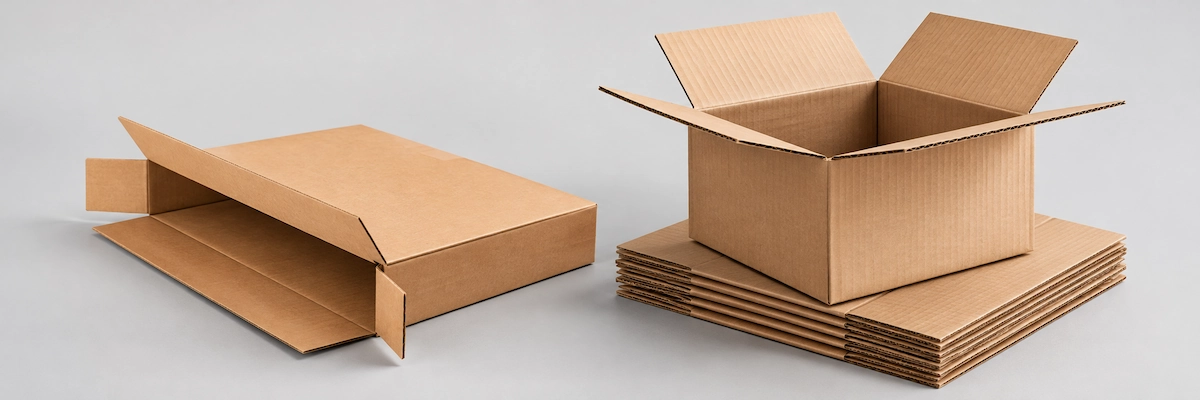
Some prints deserve more protection than a rigid mailer can provide.
Flat shipping boxes are suitable for larger artwork, heavy paper, limited-edition prints, and pieces that should remain completely flat.
They can be particularly useful for prints around 11 × 17 or 18 × 24 inches, although the best choice depends on the paper, packaging strength, and shipping distance.
How to pack art prints in a flat box:
1. Cover the artwork with an appropriate protective sheet or sleeve.
2. Place it between sturdy boards or suitable foam-board supports.
3. Wrap the protected assembly to prevent movement and moisture exposure.
4. Position it inside a strong, appropriately sized corrugated box.
5. Fill remaining gaps with cushioning that won't press against or damage the artwork.
6. Seal the box securely along its openings and seams.
For especially fragile or valuable work, a second outer box with cushioning between the boxes can provide additional protection.
The goal is to stop the artwork from bending, rubbing, or moving during shipping—not to compress it under excessive padding.
Best for: Medium-to-large prints, heavyweight fine art paper, signed editions, and artwork unsuitable for rolling.
Flat boxes generally use more packaging material than mailers or tubes. However, for delicate artwork, the additional protection may be worth the expense.
3. Mailing Tubes for Rolled Art Prints
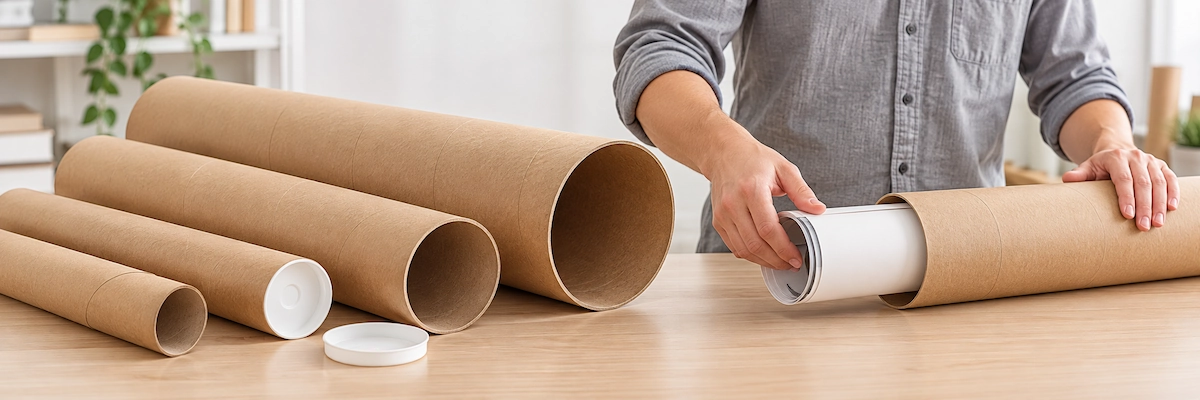
Mailing tubes are a popular option for larger posters and art prints that can be rolled without damaging the paper or printed surface.
They're especially useful when shipping large, flexible prints that would otherwise require an oversized flat box.
For example, a 24 × 36-inch poster may be easier to package in a tube than to ship flat.
However, not every art print should be rolled. Thick paper, textured coatings, certain fine art prints, and prints with delicate finishes may crease, crack, or retain an unwanted curl.
Always check whether the paper and finish are suitable for rolling.
How to ship art prints in a mailing tube:
1. Place a suitable protective sheet against the printed surface.
2. Roll the print loosely, following any rolling-direction guidance from the printer or paper manufacturer.
3. Use a tube with enough diameter to avoid forcing the artwork into a tight roll.
4. Slide the protected print carefully into the tube.
5. Add cushioning at the ends to prevent the print from shifting or striking the end caps.
6. Close and securely seal both ends.
Never fold a print to make it fit.
A strong, wide-diameter tube is generally preferable to a narrow one that forces the paper into a tight curl. Square or triangular mailing tubes can also be useful, depending on carrier requirements and packaging availability.
Best for: Large posters, flexible unframed prints, and artwork specifically suitable for rolled shipping.
Mailing tubes can reduce the amount of packaging needed for oversized prints, but they aren't always cheaper. Some carriers apply additional charges based on a tube's dimensions or nonstandard shape.
4. Protective Boxes for Framed Art Prints
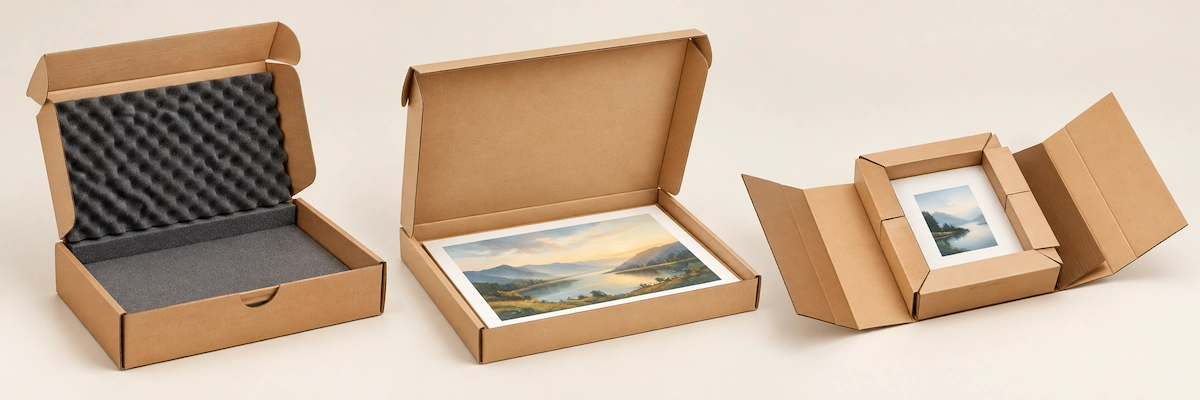
Framed prints are more challenging to ship because you're protecting more than the artwork itself.
Frames can crack, corners can separate, and glass or acrylic glazing can be damaged in transit. Even when the printed artwork is unharmed, a broken frame can leave the customer with an unusable product.
For framed pieces, use a sturdy art shipping box with appropriate corner protection and cushioning.
How to pack framed art prints:
1. Protect the front surface with a clean, non-abrasive material.
2. Add suitable corner and edge protectors around the frame.
3. Cushion the frame with foam or other appropriate protective materials.
4. Place the wrapped artwork inside a properly sized art shipping box.
5. Fill empty spaces so the frame cannot shift during transportation.
6. Seal the package and consider tracking, signature confirmation, and shipping protection.
If the frame contains glass, use an appropriate glazing-protection method recommended by the packaging provider. Avoid applying ordinary packing tape directly to the frame, glass, or artwork.
For high-value framed work, professional packing services or a purpose-built art box may be a better choice.
Best for: Framed illustrations, framed photographs, gallery prints, and valuable display-ready artwork.
This is generally the most packaging-intensive of the four methods, but framed artwork also carries greater damage risk.
Flat vs. Rolled Shipping: Which Is Better?
For most unframed art prints, choosing between flat and rolled shipping is the first important decision.
Neither method is universally better. It depends on the artwork and what matters most to your customer.
| Factor | Flat Shipping | Rolled Shipping |
| Best for | Small, delicate, or stiff prints | Large, flexible prints |
| Packaging | Rigid mailer or flat box | Mailing tube |
| Main risk | Bending and crushed corners | Creasing, curling, and end damage |
| Shipping costs | Can increase with package size | Often compact, but tube surcharges may apply |
| Customer experience | Ready to display or frame | May need careful flattening |
| Paper compatibility | Suitable for most unframed prints | Only for papers and finishes that tolerate rolling |
For smaller prints, flat shipping is usually more convenient. The artwork arrives ready to handle and frame without the customer needing to flatten it.
For large, flexible posters, rolled shipping can be more practical.
If you're selling signed or collectible artwork on thick fine art paper, prioritize the print's condition over saving a little space in the package.
How to Ship Art Prints Without Damage
Even the right shipping box won't help much if the artwork moves freely inside it.
Most preventable shipping problems come down to four things: bending, surface damage, moisture, and movement.
A few habits can make a real difference.
Protect the corners. Even a small dent can ruin a print's clean border. Use backing boards that extend beyond the artwork, and add corner protection when needed.
Keep moisture away. Use a suitable protective sleeve or wrapping material inside the outer package. Cardboard alone isn't a reliable moisture barrier.
Prevent movement. Your print shouldn't slide around when the package is gently moved. Fill empty spaces without putting pressure on delicate surfaces.
Test your packaging. Before shipping a new size or product regularly, pack a sample and check how well it resists bending, movement, and ordinary handling.
Also, don't rely on "Do Not Bend" or "Fragile" labels as your main protection. They can communicate handling preferences, but packaging must withstand normal transportation conditions.
For valuable orders, photograph the artwork and finished package before dispatch. If damage occurs, those records may help with carrier claims and customer support.
How Much Does It Cost to Ship Art Prints?
Shipping costs vary considerably depending on the print size, packaging, destination, and delivery service.
A small print shipped locally may cost much less than a large framed piece sent internationally. There isn't a single shipping rate that works for every art business.
The main factors affecting your total cost are:
| Cost Factor | What Affects the Price |
| Print size | Larger packages may cost more, even when lightweight |
| Package weight | Heavier boxes and protective materials increase shipping weight |
| Packaging materials | Rigid boards, tubes, art boxes, and cushioning have different costs |
| Shipping destination | Domestic, international, and remote-area rates vary |
| Delivery service | Express delivery typically costs more than economy shipping |
| Additional protection | Insurance, signature services, and special handling may add fees |
If you're shipping within the United States, compare services such as USPS Ground Advantage, UPS Ground, and FedEx Ground where available.
Be careful with postal classifications. In the US, a rigid flat mailer may be charged as a package rather than a standard large envelope. Ordinary decorative art prints also generally do not qualify for USPS Media Mail, which is restricted to specified types of educational and media content.
For accurate pricing, enter the final packed dimensions and weight, not just the size of the print.
Ways to Reduce Art Print Shipping Costs
You don't have to choose the cheapest packaging to keep expenses under control.
Instead, look for ways to reduce unnecessary costs without compromising protection:
· Standardize a few print sizes so you can buy compatible packaging materials in larger quantities.
· Avoid oversized boxes and unnecessary filler.
· Compare carrier prices using your actual package measurements.
· Offer combined shipping when multiple prints can travel safely together.
· Build packaging and fulfillment expenses into your retail pricing.
Remember that packaging materials aren't free, and neither is the time you spend preparing orders.
When setting your prices, account for these costs alongside printing, marketplace or payment fees, and your intended profit.
For a broader breakdown, see our guide on how to price your art .
Self-Shipping vs. Print-on-Demand: Which Is Better for Artists?
Packing prints yourself makes sense when you want direct control over each order.
You can select the exact paper, add handwritten notes, sign individual prints, and create a personal unboxing experience. It's also a natural option for artists selling originals, handmade editions, or products they already have in stock.
The downside is the work involved.
As orders grow, you'll need to manage packaging supplies, inventory, labels, carrier pickups, shipping expenses, and customer questions.
Print-on-demand (POD) offers a different approach.
With POD, products are manufactured after a customer places an order. Instead of keeping finished prints in stock and packing them yourself, you work with a fulfillment provider that handles production and shipping.
That can be particularly useful for artists who want to offer several designs without purchasing inventory upfront.
However, POD also comes with trade-offs. Product options and packaging methods depend on the provider, and made-to-order production adds time before an item can ship.
Selling and Shipping Art Prints With Artiststore

Artiststore is built for independent artists who want to turn their designs into physical products without managing the entire fulfillment process themselves.
Artists can create their own storefronts, upload artwork, set retail prices, and sell supported print-on-demand products. Artiststore handles production, packaging, and shipping after an order is placed.
That means you can spend more time developing your illustrations, preparing new collections, and connecting with your audience instead of packing every order at home.
Artiststore also supports art prints and other artist merchandise, making it possible to build a collection around a particular illustration, character, or visual theme.
You can learn more about the process in How Artiststore Works .
Before listing a product, check the available printing options, packaging details, and delivery destinations. Production and shipping times vary by product and destination, so they should be reflected accurately in your store's delivery information.
For current destination coverage and shipping estimates, see Artiststore's shipping policy .
If you're still planning your first collection, our guide on how to start an online art store covers the steps from preparing artwork to launching your storefront.
Ultimately, self-shipping and POD don't have to be competing choices.
You might pack signed limited editions yourself while using print-on-demand for everyday art prints and other merchandise. The right balance depends on your artwork, order volume, and the experience you want to offer buyers.
FAQs About Shipping Art Prints
What Is the Cheapest Way to Ship Art Prints?
For small prints, a lightweight rigid mailer with suitable backing is often economical. For larger flexible prints, mailing tubes may reduce packaging size. Compare final package rates before choosing, since carrier pricing varies.
Can You Ship Multiple Art Prints Together?
Yes. Place each print in suitable protective material, separate delicate surfaces, and secure the stack between rigid boards or inside a properly sized box. Avoid overpacking or allowing prints to rub against one another.
How Do You Ship Art Prints Internationally?
Use protective packaging, choose an international service with suitable tracking, and complete the required customs information accurately. Check destination restrictions, delivery estimates, and applicable duties or taxes before dispatch.
Should You Insure Art Prints When Shipping?
Consider additional shipping protection for valuable, limited-edition, or difficult-to-replace prints. Review the carrier's coverage limits, exclusions, packaging requirements, and claims conditions before purchasing it.