Creative materials, structures, personalized concepts, gift ideas, and products artists can turn into merch
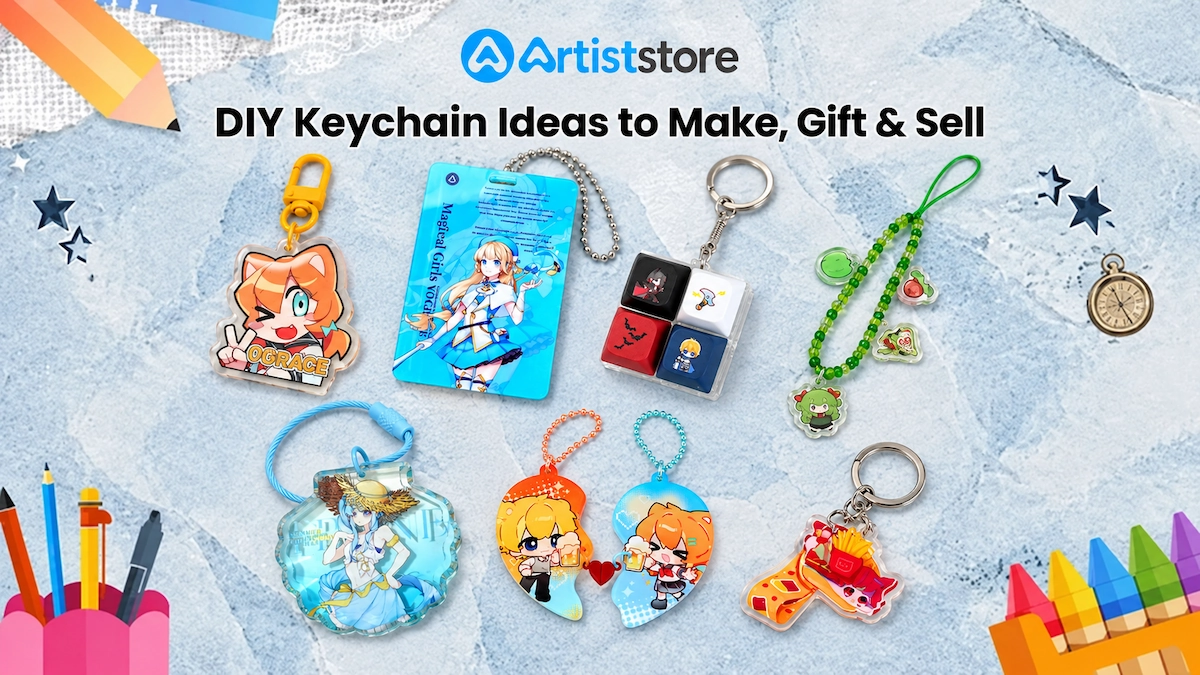
Keychains may be small, but they leave plenty of room for creativity. From wood, resin, metal, leather, and fabric to beads, clay, acrylic, and mixed materials, a keychain can be designed around its material, shape, structure, finish, function, or artwork. That makes DIY keychains an accessible project for personal crafts, thoughtful gifts, and artist merchandise.
If you are looking for inspiration before starting your own design, browsing artist-designed keychains can help you see how different materials, shapes, characters, charms, and creative concepts translate into finished products. In this guide, we explore 70+ DIY keychain ideas across materials, structures, personalization styles, gift occasions, and designs you can make or sell.
The ideas below cover materials, structures, finishes, useful formats, personalized gifts, and visual themes. Use them as starting points, then adjust the color, shape, artwork, scale, and hardware to fit your own style.
Keychain Ideas by Material
Material changes the weight, texture, durability, production method, and overall mood of a keychain. Treat each material as a design choice rather than simply a surface for the same artwork.
1. Clear Acrylic Character Keychains
Use a character, mascot, animal, or graphic with a clean outer silhouette so the transparent edge becomes part of the look. Clear areas can make floating details, sparkles, wings, or magical effects feel lighter.
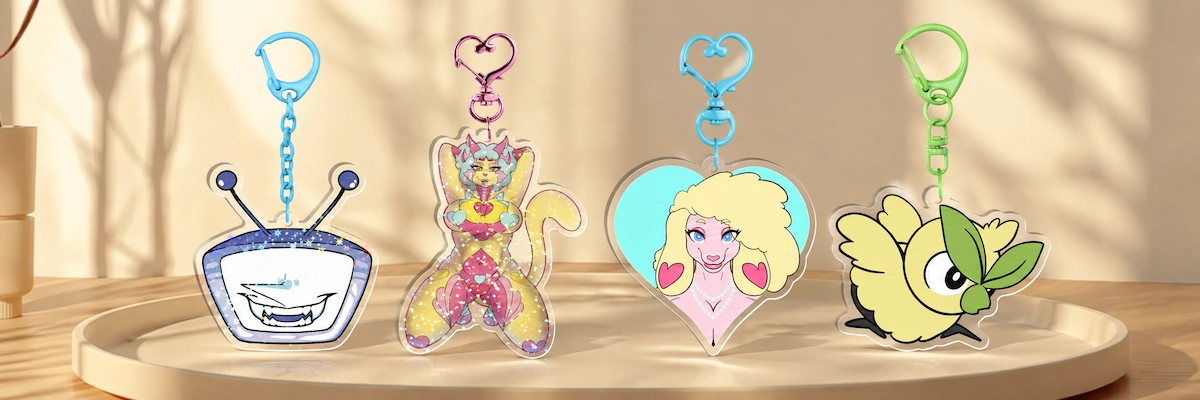
✨ Our Recommended Creator Stores: Sophie the Cow Store
2. Wooden Engraved Keychains
Laser-cut or engraved wood works well for line art, initials, botanical motifs, logos, maps, and rustic illustrations. The grain adds warmth, so simple artwork often looks better than dense color.
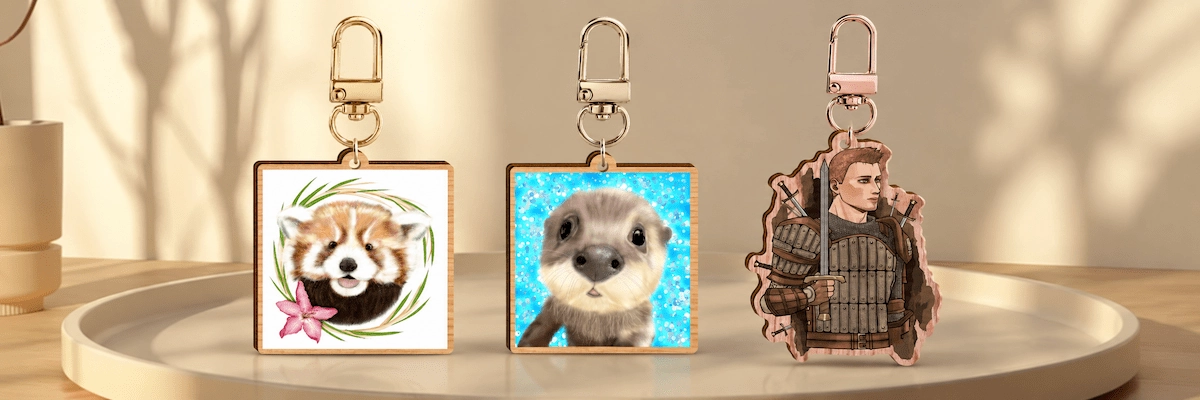
✨ Our Recommended Creator Stores: Christine Chambers Author and Illustrator Store
3. Resin Keychains
Cast resin into geometric or custom molds and add pigments, glitter, dried flowers, flakes, tiny charms, or printed inserts. Resin is especially useful when the material itself is meant to be decorative.
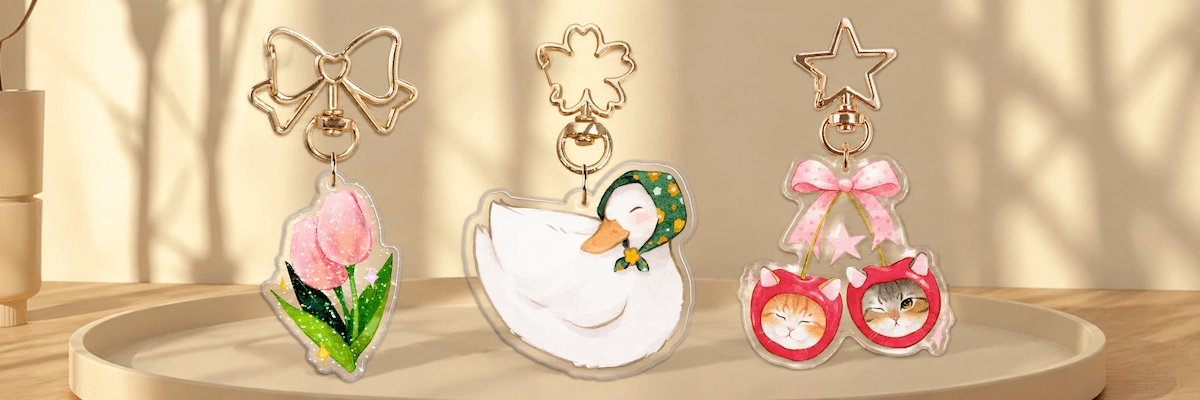
✨ Our Recommended Creator Stores: The Funky Cake Store
4. Polymer Clay Keychains
Sculpt mini fruit, animals, food, icons, abstract shapes, or character-inspired originals. Clay gives you a handmade, dimensional look that printed keychains cannot fully imitate.
5. Metal Keychains
Use die-cast, engraved, printed, or enamel-style metal for clean logos, symbols, line art, monograms, and durable everyday designs. Metal suits concepts that benefit from weight and a polished finish.
6. Leather or Faux-Leather Keychains
Cut simple tags, loops, initials, stamped shapes, or layered pieces. Leather-like materials work especially well for minimal, travel, vintage, and personalized gift designs.
7. Fabric Key Fobs
Turn patterned fabric, printed artwork, or leftover sewing scraps into short loops that are easy to grab from a bag. Reinforced stitching and proper key-fob hardware make the result feel finished.
8. Felt Character Keychains
Layer felt pieces to build flat animals, simple mascots, seasonal icons, or tiny plush-like charms. Felt is inexpensive, soft, and friendly for hand-sewn projects.
9. Embroidered Keychains
Create small stitched patches, initials, icons, flowers, or mascots and finish them with a reinforced edge. Embroidery adds texture and works especially well for bold, simplified shapes.
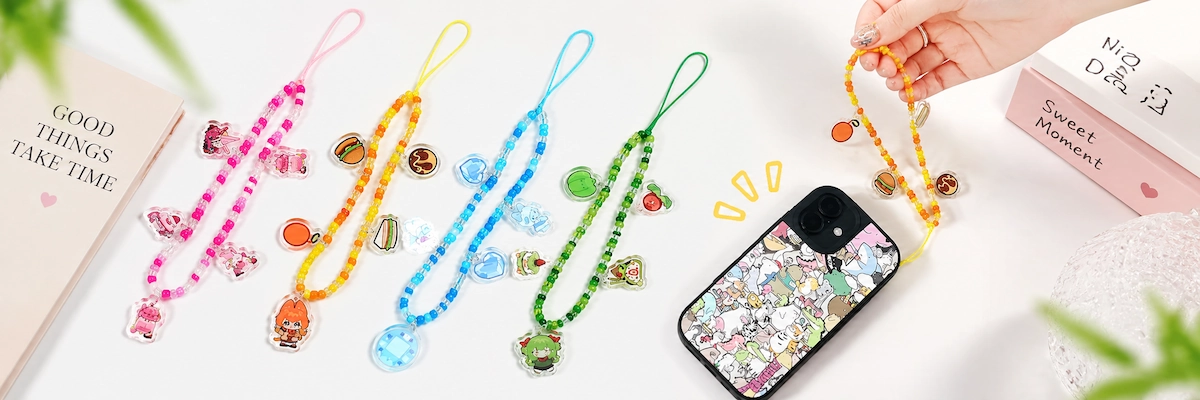
10. Beaded Keychains
Combine glass, acrylic, clay, pearl, seed, or letter beads on strong cord or wire. Color stories, names, short words, and themed bead mixes make easy personalized variations.
11. Macrame Keychains
Use cotton cord to knot mini rainbows, leaves, tassels, spirals, or geometric patterns. Neutral fibers feel earthy and minimal, while bright cord can make the same construction playful.
12. Paracord Keychains
Braided or knotted paracord creates a durable, sporty keychain with strong texture. Mix two or three colors, add a carabiner, or build a compact loop for bags and outdoor gear.
13. Shrink-Plastic Keychains
Draw or print artwork on shrink plastic, cut the shape, punch the hole, and shrink it according to the material instructions. It is a practical way to turn hand-drawn mini illustrations into lightweight charms.
14. Soft PVC or Rubber Keychains
Raised and recessed areas can turn mascots, logos, icons, and simplified characters into flexible, tactile pieces. Bold shapes and limited fine detail generally read best in this format.
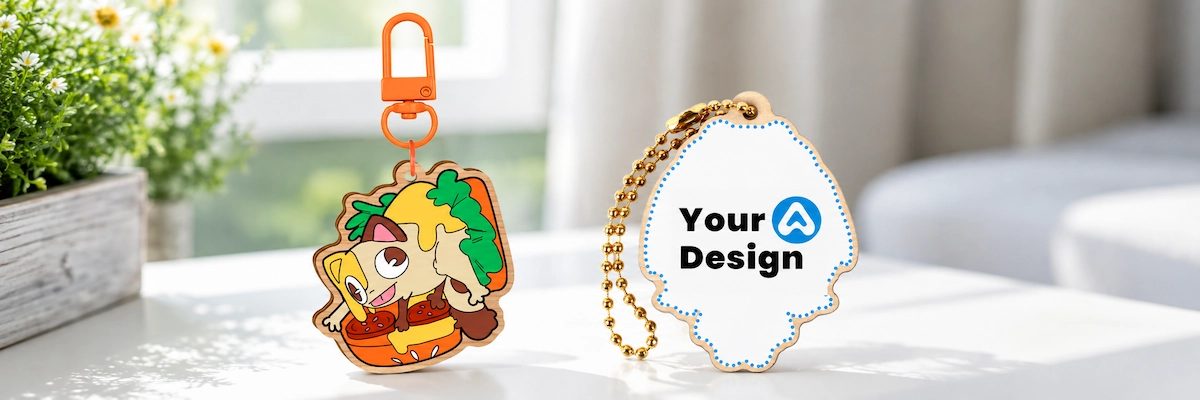
✨ Our Recommended Creator Stores: PJayScribbles Store
15. Crochet or Amigurumi Keychains
Mini hearts, fruit, animals, flowers, stars, and tiny characters can be crocheted and attached to a ring. Keep stuffing light and reinforce the hanging loop so the piece handles daily movement.
16. Upcycled Keychains
Repurpose small fabric offcuts, bottle caps, broken jewelry components, old tags, leather scraps, or clean packaging materials. A cohesive color palette helps reclaimed materials feel intentional rather than random.
Creative Keychain Structures & Finishes
Once the material is chosen, the structure can become the main creative hook. Movement, layers, hardware, transparency, and surface effects can turn a basic charm into a product people want to handle and collect.
17. Shaker Keychains
Build a hollow or layered charm with loose sequins, stars, beads, or tiny printed pieces inside. The movement adds a playful element that works especially well with cute, magical, food, and gaming themes.
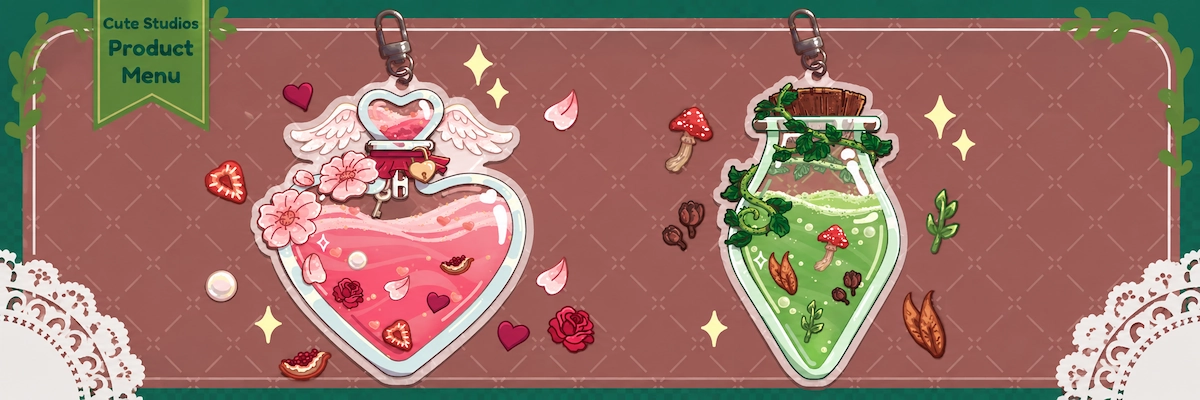
✨ Our Recommended Creator Stores: Cute Studios Store
18. Layered Keychains
Stack two or more cut pieces to create foreground and background depth. You can separate a character from scenery, build a frame around the artwork, or use transparent layers to create a miniature scene.
19. Double-Sided Keychains
Use both faces of the charm instead of repeating the same art. Try front/back character poses, day/night scenes, two expressions, or complementary graphics.
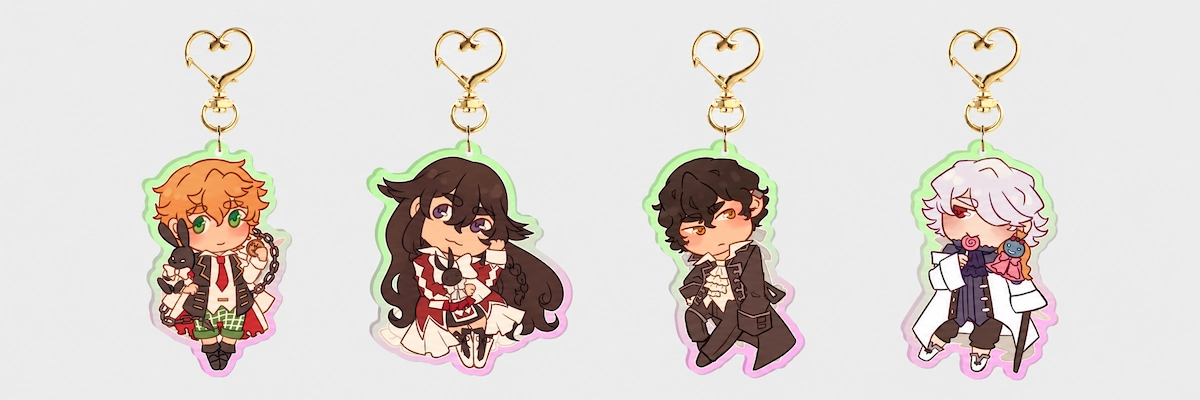
✨ Our Recommended Creator Stores: ursanic’s Shop
20. Spinner Keychains
Add a rotating inner piece so the user can spin a character, symbol, planet, wheel, or reversible message. Keep enough clearance around the moving part to prevent rubbing.
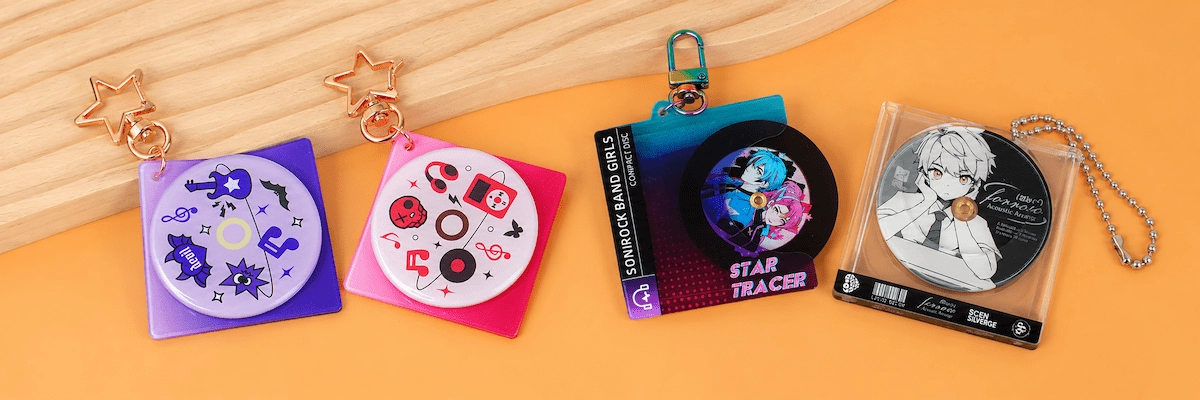
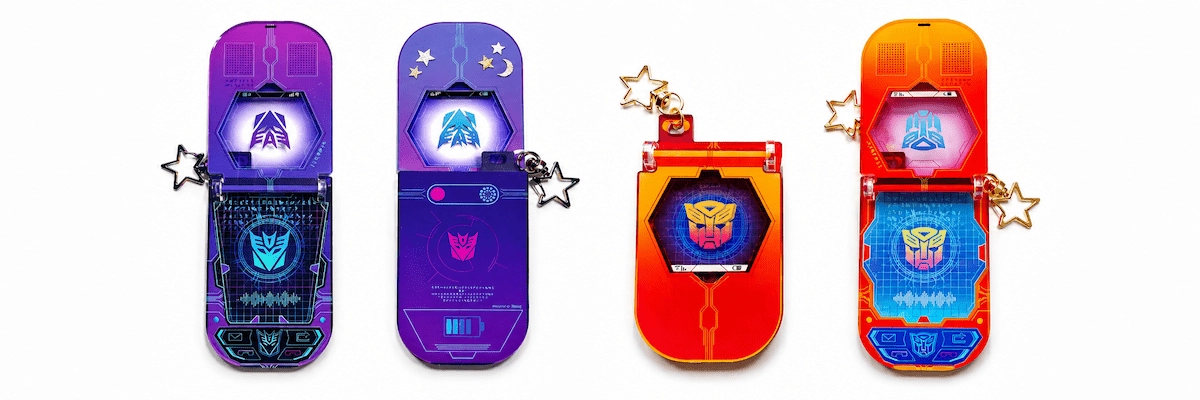
21. Hinged or Flip Keychains
Connect two small components with a hinge or movable joint. A compact object such as a flip phone, book, compact mirror, game device, or tiny door can become the structure itself.
✨ Our Recommended Creator Stores: illac Store
22. Charm Cluster Keychains
Combine two to five small charms on one ring instead of relying on one large piece. Mix a main character with icons, initials, symbols, or color-matched mini charms.
23. Interchangeable Charm Keychains
Use lobster clasps or detachable links so individual charms can be added, removed, or rearranged. This format is useful for collectible series and mix-and-match sets.
24. Puzzle-Pair Keychains
Split one concept into two or more pieces that fit together visually. Hearts, moons, character duos, food pairs, or original symbols make easy friendship and couple gifts.
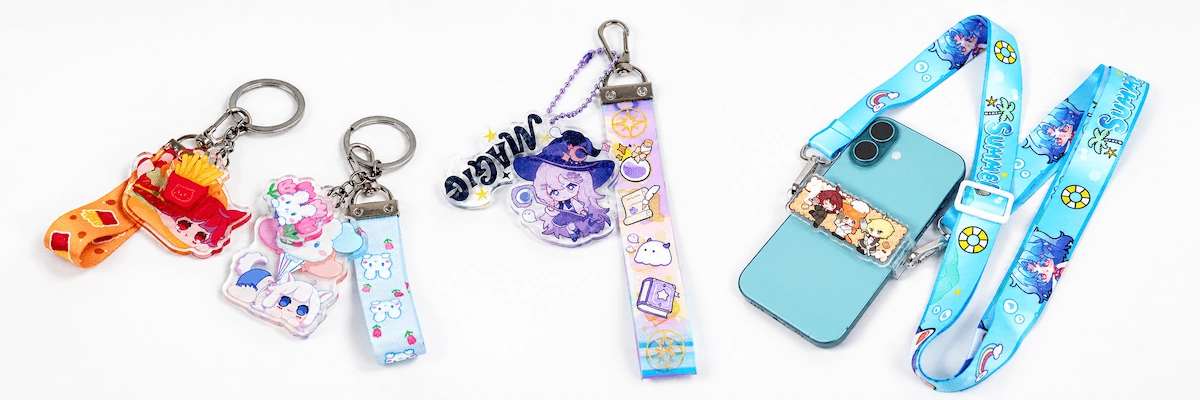
25. Wristlet Keychains
Add a fabric, silicone, beaded, or braided wrist loop so keys are easier to carry. The strap itself can carry the color palette, pattern, or branding.
26. Lanyard-Style Keychains
Use a short printed strap for names, repeating graphics, symbols, or patterns. This works well for convention merch, clubs, teams, staff gifts, and creator branding.
27. Mini Pouch Keychains
Sew or construct a tiny zip pouch that can hold coins, earbuds, a token, or other small items. The pouch can be shaped like a character, food, envelope, or simple geometric form.
28. Bottle-Opener Keychains
Combine a decorative body with a functional opener. Keep the visual design away from high-stress areas so the piece remains practical as well as attractive.
29. Carabiner Keychains
Use a carabiner as the main attachment point for a sporty or utility-focused design. Add one charm, a strap, or a small cluster instead of a conventional split ring.
30. Hotel-Tag Keychains
Use the long diamond or rounded-rectangle shape associated with vintage hotel key tags. Try room numbers, fictional locations, studio names, short phrases, or retro typography.
31. License-Plate Keychains
Create miniature plate-style designs with names, locations, dates, fictional places, or original slogans. Keep typography bold enough to stay readable at small scale.
32. Transparent Window Keychains
Build negative space or a clear window into the design so the background shows through. Windows can frame tiny scenes, stars, liquid effects, or suspended graphics.
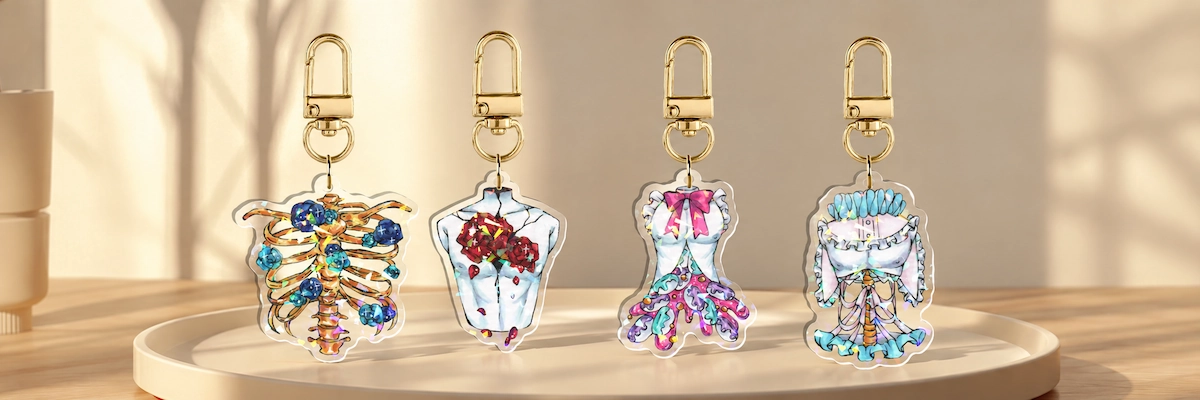
33. Holographic Keychains
Use a holographic film or reflective substrate as a purposeful part of the art. Celestial details, magic effects, water, wings, chrome graphics, and futuristic designs benefit most from controlled reflective areas.
✨ Our Recommended Creator Stores: Tokidoll Store
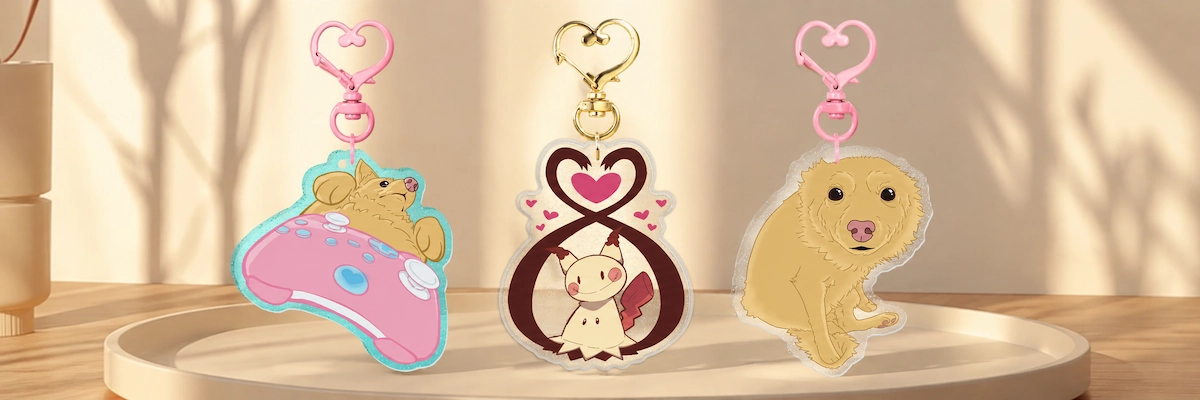
34. Glitter Keychains
Treat glitter as an accent rather than covering every surface. It can highlight stars, clothing, backgrounds, magical effects, desserts, or celebratory designs.
✨ Our Recommended Creator Stores: Sophie the Cow Store
35. Glow-in-the-Dark Keychains
Use glow pigment or a glow layer for ghosts, stars, moons, warning symbols, fantasy creatures, or night-themed art. Make sure the design still looks complete in normal lighting.
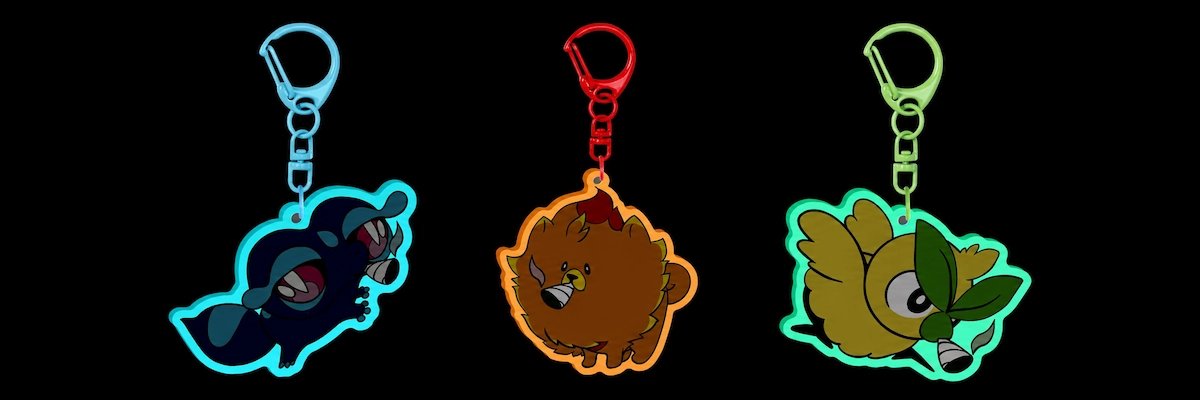
✨ Our Recommended Creator Stores: Sophie the Cow Store
36. Mirror or Metallic Keychains
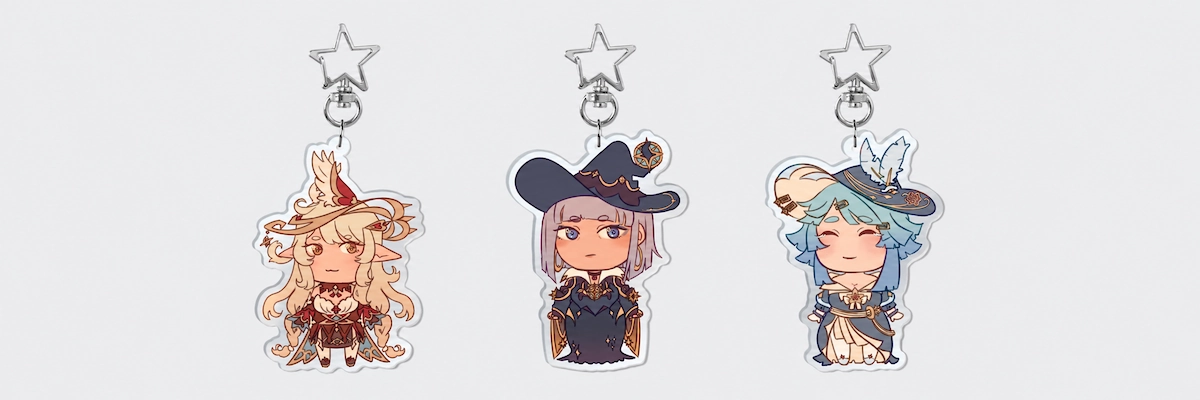
Reflective surfaces can become part of futuristic, jewelry-inspired, celestial, typographic, or minimal designs. Large clean shapes usually show the finish better than busy illustrations.
✨ Our Recommended Creator Stores: ursanic’s Shop
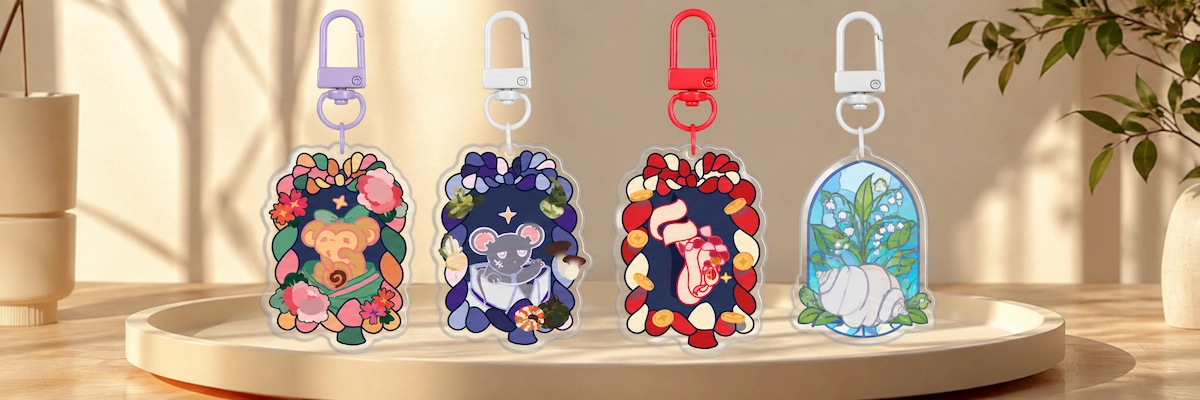
37. Stained-Glass-Inspired Keychains
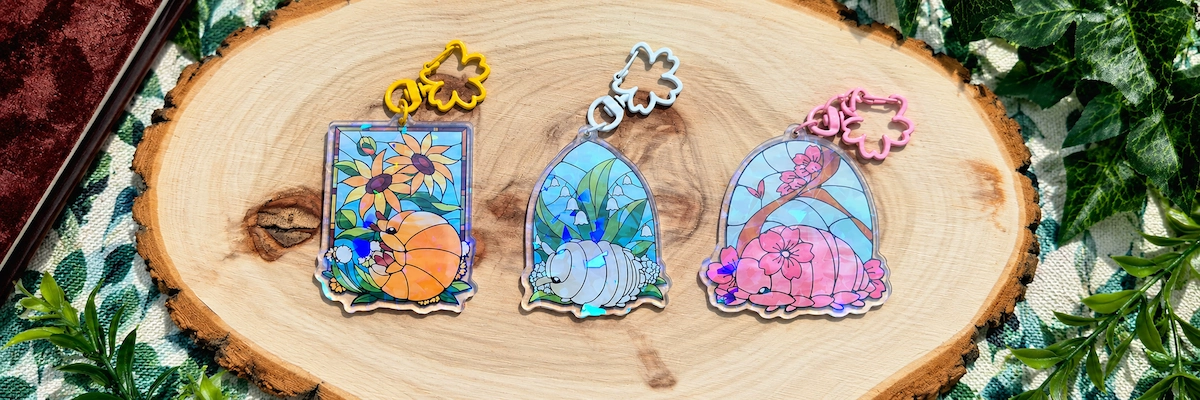
Use dark outlines and segmented translucent color areas to mimic stained glass. Flowers, insects, birds, fantasy creatures, and geometric motifs translate naturally into this look.
✨ Our Recommended Creator Stores: Isovana's Critter Cove Store
38. Mixed-Material Keychains
Combine acrylic with metal, wood with resin, fabric with embroidery, or a printed charm with a tassel. Use one material as the hero and the second as an accent so the piece does not feel overloaded.
Personalized Keychain Ideas for Gifts
Keychains work well as gifts because personalization can be small but meaningful. A name, portrait, date, shared symbol, or useful detail can turn a simple format into something made for one person.
39. Name Keychains
Build the shape around a first name, nickname, gamer tag, or shop name. Letter beads, acrylic lettering, engraving, embroidery, and resin all support this format.
40. Initial or Monogram Keychains
Use one or two letters as the main design and add a restrained border, small icon, color block, or texture. Monograms are easy to adapt for birthdays, weddings, and everyday gifts.
41. Pet Portrait Keychains
Turn a dog, cat, bird, rabbit, reptile, or other pet into a simplified portrait. Focus on the animal’s most recognizable markings and expression so it stays readable at a small size.
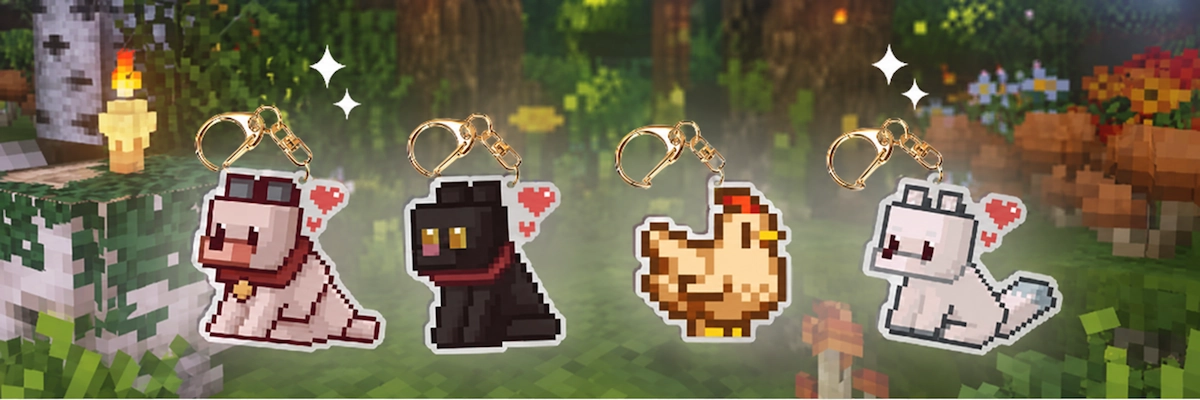
✨ Our Recommended Creator Stores: Minuko Store
42. Photo Keychains
Use a family photo, travel image, graduation portrait, pet photo, or small memory snapshot. Crop tightly and test contrast before production because tiny faces can lose detail quickly.
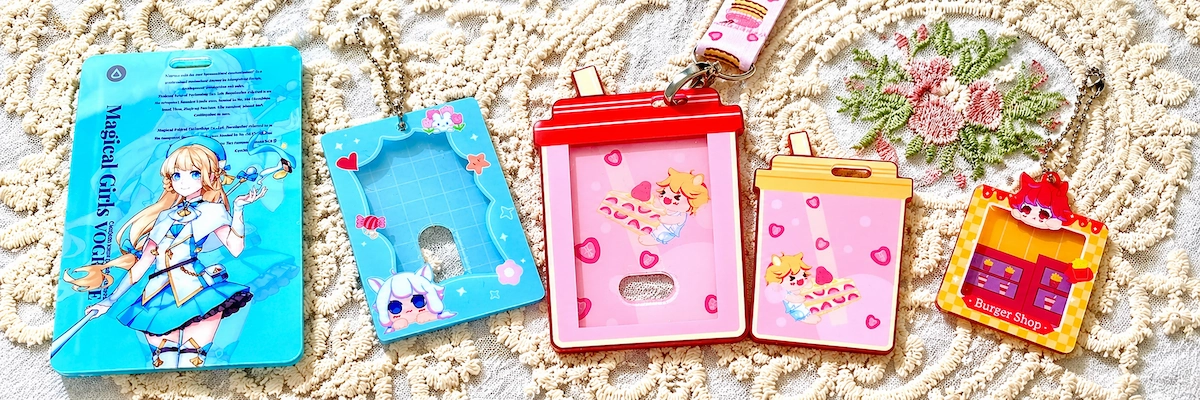
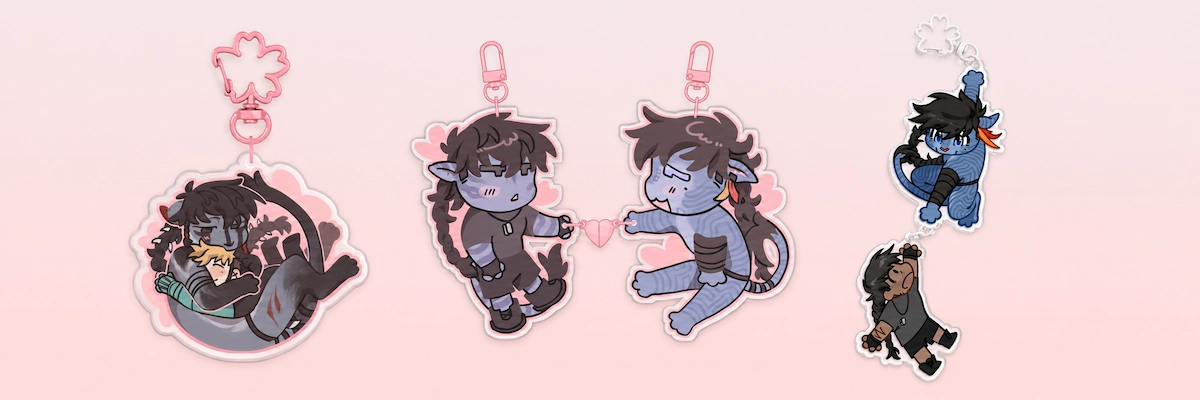
43. Couple Keychains
Create a coordinated pair using initials, two characters, complementary colors, matching symbols, or pieces that connect. The two items should still look complete when carried separately.
44. Best-Friend Keychains
Use inside jokes, matching mascots, friendship phrases, favorite snacks, shared hobbies, or a split illustration. Avoid making both pieces identical if a paired concept can tell a better story.
45. Family Keychains
Build a simple family illustration, surname tag, home icon, birth-flower set, or cluster of initials. This format can work for parents, grandparents, and housewarming gifts.
46. Teacher Keychains
Try pencils, books, apples, classroom icons, names, grade levels, or short appreciative phrases. Durable, easy-to-clean materials are useful for something handled every day.
47. Wedding & Bridesmaid Keychains
Personalize with initials, wedding dates, roles, flowers, colors, or a venue-inspired motif. Small matching variations can make each gift individual while keeping the set cohesive.
48. Graduation Keychains
Use the graduation year, school colors, field of study, cap motifs, initials, or a small future-goal symbol. Keep protected institutional logos out unless you have permission to use them.
49. Memorial Keychains
A name, date, small portrait, handwriting sample, flower, paw print, or meaningful symbol can create a quiet remembrance piece. Keep the design restrained and handle personal details carefully.
50. Coordinate & Location Keychains
Use meaningful coordinates, a hometown outline, a favorite travel destination, or a simple map-inspired graphic. Double-check the location before engraving or printing.
51. Birth-Flower Keychains
Pair a month’s flower with a name, initial, date, or minimal botanical frame. This is easy to expand into a twelve-design gift collection.
52. Zodiac Keychains
Use constellations, zodiac symbols, celestial animals, moons, and original astrology-inspired artwork. A consistent system makes the twelve signs easy to collect as a series.
✨ Our Recommended Creator Stores: Pantacotta Store
53. QR Code Keychains
Link to a portfolio, playlist, menu, event page, contact card, or business landing page. Test the final printed or engraved code at actual size before relying on it.
Keychain Ideas to Make & Sell
For products you plan to sell, the strongest idea is usually specific enough to attract a clear audience but flexible enough to become a small collection. Think beyond one design: ask whether the concept can support variants, matching products, or repeat releases.
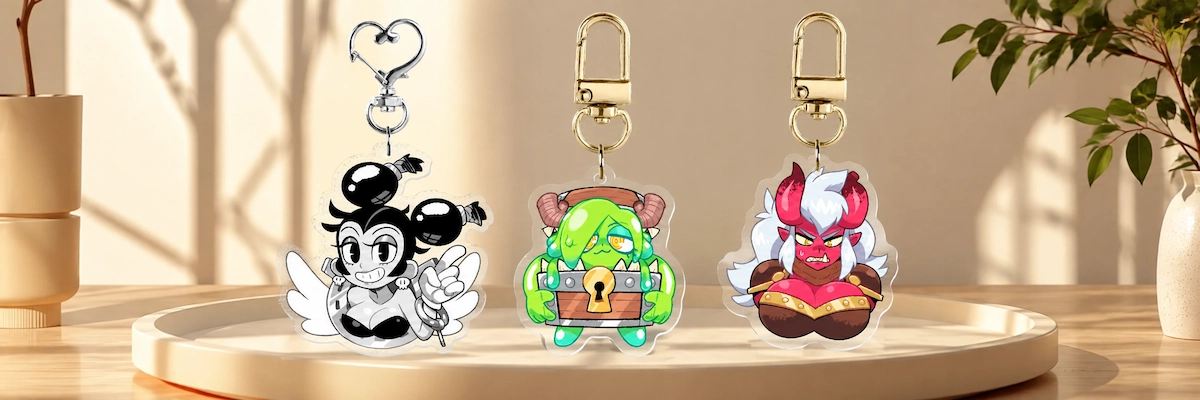
54. Original Character Keychains
Turn an OC into a compact pose, portrait, expression, outfit, or prop-based design. Character keychains become stronger when the silhouette is recognizable before the viewer notices small details.
✨ Our Recommended Creator Stores: SpookyDeadSkeleton Store
55. Artist Mascot Keychains
Use your shop mascot drawing, packing orders, drinking coffee, attending conventions, or reacting to creator life. Repeating the same mascot across products can build a recognizable store identity.
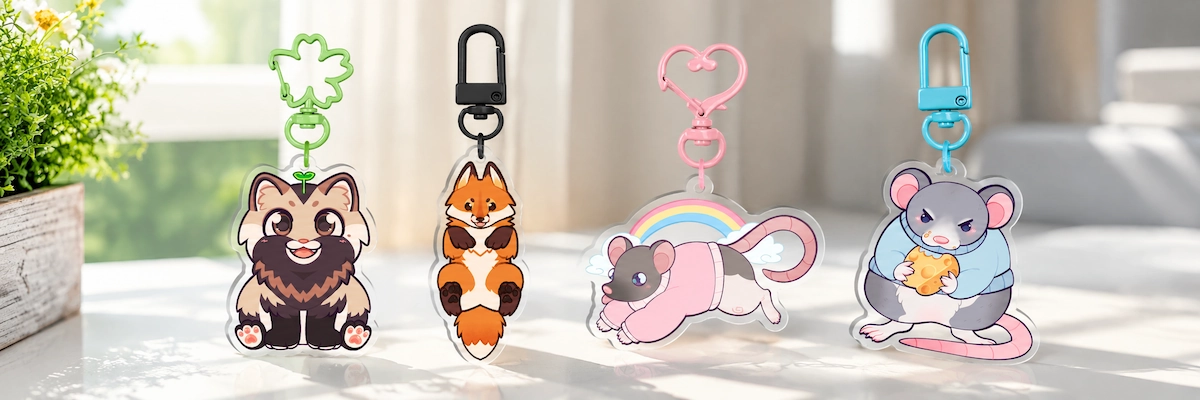
56. Cute Animal Keychains
Cats, rabbits, frogs, ducks, bears, sharks, pigeons, reptiles, and unusual critters all work well when the pose and expression are clear. A less common species can help the collection feel more specific.
✨ Our Recommended Creator Stores: Local Tanuki's Shop
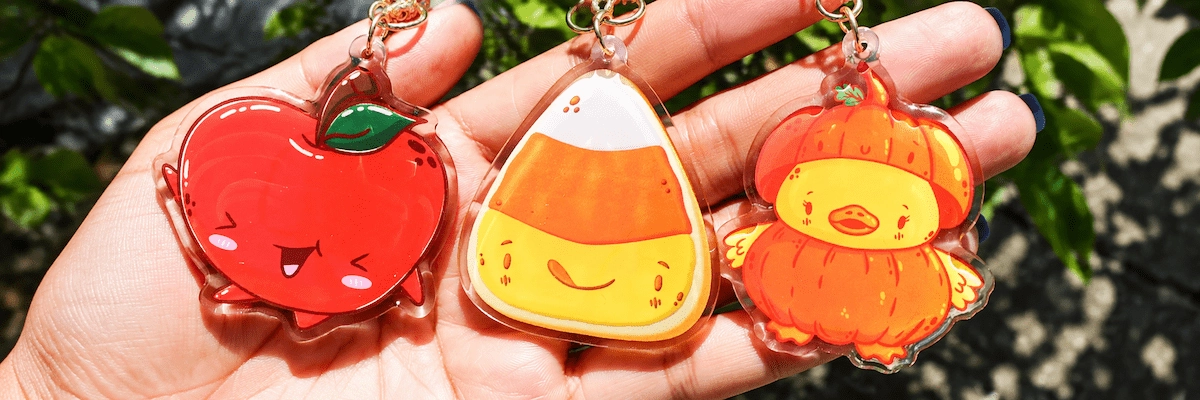
57. Food & Drink Keychains
Boba, coffee, ramen, pastries, fruit, desserts, snacks, and original food mascots translate well into rounded, easy-to-read shapes. Pair related items into mini collections instead of listing random foods.
✨ Our Recommended Creator Stores: believablyMe Designs Shop
58. Botanical Keychains
Flowers, herbs, leaves, mushrooms, vines, and garden motifs can feel elegant, cottagecore, scientific, or whimsical depending on the linework and material.
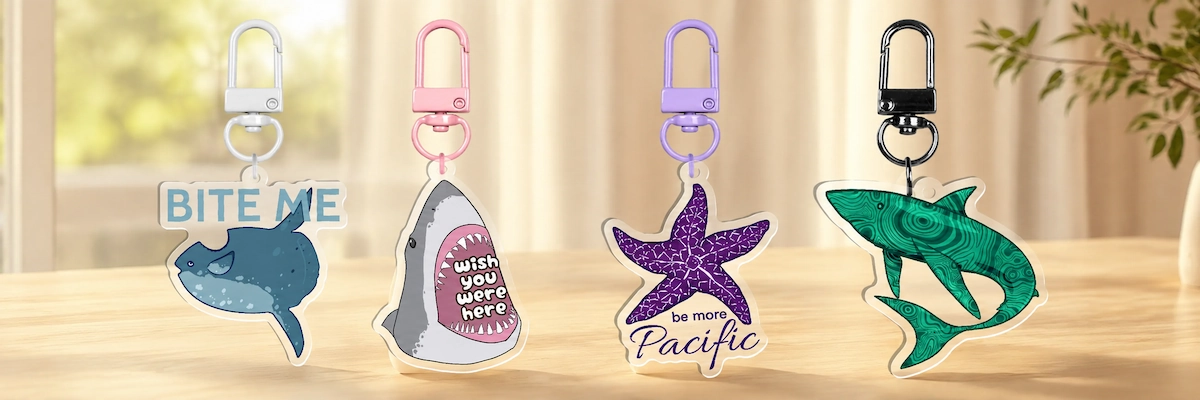
59. Ocean & Marine Keychains
Jellyfish, sharks, rays, whales, sea slugs, shells, coral, and ocean scenes work especially well with transparent, glitter, holographic, or layered effects.
✨ Our Recommended Creator Stores: Rory's Store
60. Fantasy & RPG Keychains
Original mages, familiars, potion bottles, swords, spell books, dice-inspired symbols, dragons, and fantasy inventory items can support collectible sets and character classes.
61. Gaming-Inspired Original Keychains
Controllers, keyboards, handheld-device shapes, pixel-style originals, inventory icons, and creator-made game references can speak to gaming culture without copying protected characters or logos.
62. Bookish & Reading Keychains
Books, shelves, reading animals, fictional bookshop signs, bookmarks, library motifs, and original reader jokes can work as both decorative charms and gifts.
63. Hobby Keychains
Photography, sewing, painting, pottery, gardening, fishing, coding, cycling, climbing, baking, and other hobbies offer built-in communities. Focus on details insiders recognize rather than generic symbols.
64. Travel Keychains
Create city silhouettes, luggage tags, mountains, road-trip icons, camping motifs, original destination art, or map-inspired shapes. Series by region or trip theme can encourage collecting.
65. Seasonal Keychains
Spring flowers, summer fruit, autumn leaves, winter characters, rain themes, and seasonal outfits give creators natural reasons to refresh a collection during the year.
66. Holiday Keychains
Halloween, Christmas, Valentine’s Day, birthdays, Lunar New Year, and other celebrations can support limited drops. Keep the artwork connected to your normal style so seasonal products still feel like your shop.
67. Logo & Small-Business Keychains
Turn a logo, brand symbol, shop icon, or mascot into a practical giveaway or product. Simplify thin details so the mark remains legible at keychain scale.
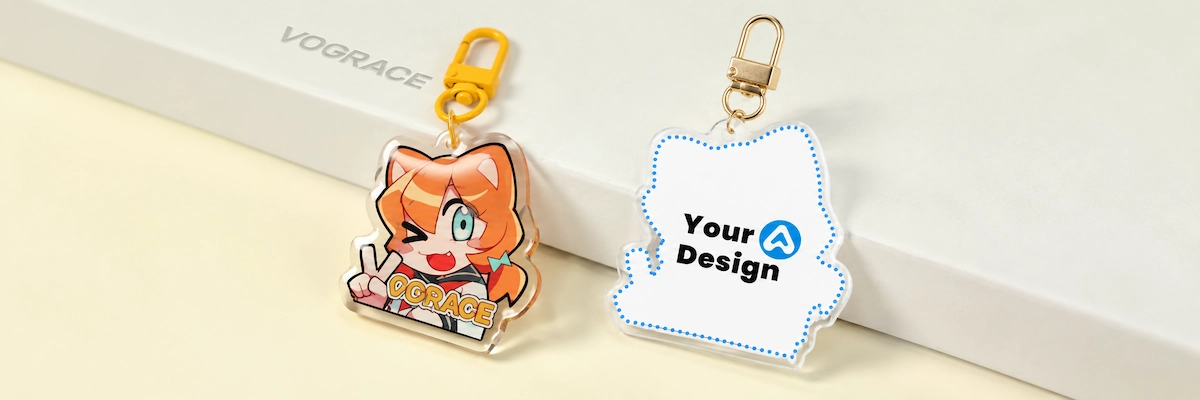
68. Event & Convention Keychains
Create dated event merch, staff identifiers, artist-alley exclusives, meetup tokens, club pieces, or limited colorways. A small edition can make a familiar design feel event-specific.
69. Fandom Keychains
Fandom merch can attract highly engaged buyers, but protected characters, logos, and artwork may require permission or a license for commercial use. When rights are unclear, build around original characters and genre-inspired ideas you own.
✨ Our Recommended Creator Stores: Frolixkav Store
Bonus Functional & Interactive Keychain Ideas
70. Mini Mirror Keychains
Add a small mirror behind a decorative cover or frame. Compact shapes, character faces, flowers, and simple graphics can make the functional part feel integrated rather than attached as an afterthought.
71. Token or Coin-Holder Keychains
Create a small holder for a cart token, arcade token, pick, or similarly sized object. Design the opening for the exact item so it stays secure while still being easy to remove.
72. Fidget Keychains
Use safe moving parts such as rotating discs, sliding beads, flexible tabs, or textured elements to add tactile interaction. Keep small detachable components secure, especially if the product may be around children.
73. Mini Notebook or Message Keychains
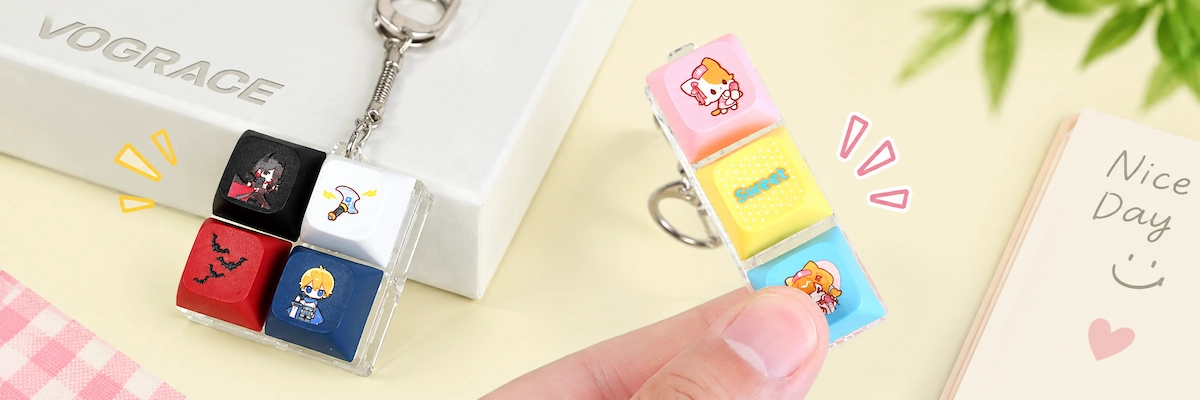
Bind a few tiny pages or add a reusable message surface for a novelty stationery concept. This works best as a light-use accessory rather than a replacement for a full notebook.
74. Bag-Charm Keychain Hybrids
Scale the design slightly larger and combine a main charm with ribbon, beads, tassels, or secondary icons so it works on handbags and backpacks as well as keys.
How to Choose the Right Keychain Idea
A good keychain idea is not simply the most elaborate option. The best format is the one that supports the artwork, audience, budget, and way the product will actually be used.
Start With the Role of the Product
Decide whether the keychain is mainly decorative, collectible, personalized, useful, or gift-focused. That choice narrows the material and structure quickly.
Match the Material to the Artwork
Flat full-color illustration naturally suits printed surfaces, while minimal line art can work beautifully in wood, metal, or leather. Soft characters may make more sense as plush, felt, crochet, or embroidered pieces.
Design for Keychain Scale
A detailed illustration that looks great on a screen may become muddy at two or three inches. Test the design small, strengthen the silhouette, enlarge important facial features, and remove details that do not survive reduction.
Think About the Attachment Point
The hole, eyelet, clasp, or sewn loop takes physical stress. Leave enough material around it and avoid placing a fragile protruding detail exactly where the keychain hangs.
Use Special Effects With a Purpose
Glitter, holographic film, transparent areas, epoxy, metal, and moving pieces work best when they support the idea. A special finish should reinforce the artwork, not compete with it.
Plan a Collection, Not Just One Piece
If the first design works, ask what belongs next to it: another expression, colorway, character, zodiac sign, pet breed, food item, or seasonal variant. A coherent series is easier for shoppers to understand and collect.
Basic Supplies for Making DIY Keychains
The exact materials depend on the project, but many DIY keychains use the same small set of hardware and finishing tools.
· Split rings, lobster clasps, swivel clasps, or carabiners
· Jump rings and small pliers for opening and closing hardware cleanly
· Cord, chain, ribbon, wire, or reinforced fabric loops
· Appropriate cutting, drilling, hole-punching, sewing, molding, or curing tools for the chosen material
· Protective finishes when needed, such as sealers or coatings compatible with the material
· Artwork files prepared at the size, resolution, bleed, and color settings required by your production method
For any handmade design, test the attachment point before gifting or selling it. Pull gently on the finished piece, check that jump rings are fully closed, and make sure edges are smooth enough for regular handling.
How to Make a Keychain Feel More Giftable
A small keychain becomes a better gift when the concept feels specific to the person receiving it. You do not always need a name printed across the front.
· Choose a pet, hobby, food, flower, place, or color the person already loves.
· Use a meaningful date, coordinate, symbol, or short phrase instead of a generic message.
· Create a matching pair for couples, siblings, or friends.
· Use the hardware and finish to match the recipient: minimal metal, warm wood, colorful beads, soft fabric, or playful acrylic.
· Keep packaging simple and intentional. A small backing card or gift note can explain the story behind the design.
How to Turn Keychain Ideas Into Products People Want to Buy
Design for a Specific Audience
A “cute keychain” is broad. A sleepy pigeon keychain for bird lovers, a pottery-tool charm for ceramic artists, or an original mage class set gives shoppers a clearer reason to care.
Choose a Format That Adds to the Artwork
Do not automatically place every illustration on the same flat charm. A potion might become a shaker; a celestial design might use holographic material; a character duo might work better as a pair.
Create Variants With a Reason
Color variants, expressions, outfits, finishes, and companion characters can expand a winning concept. Avoid producing ten near-identical versions unless each one adds a clear choice.
Make the Listing Easy to Understand
Show the front and back, approximate dimensions, attachment hardware, material, finish, and any moving or layered features. Product photos should make scale and surface effects obvious.
Price Beyond the Material Cost
Include production, packaging, platform costs, payment fees, shipping strategy, sampling, failed prototypes, and the value of your design work. A more complex structure may need a different margin than a simple flat charm.
Test Before Expanding
A sample can reveal whether colors print well, tiny text stays readable, edges feel smooth, hardware is secure, and the overall size feels right. Use what you learn before building a large collection.
Creating and Selling Keychains with Artiststore
For artists who want to sell keychains without stocking finished inventory themselves, Artiststore combines a creator storefront with print-on-demand production and fulfillment. Artists can build products from their artwork, set retail prices, and sell alongside related merch such as stickers, pins, prints, and standees.
1. Start With Artwork That Reads Clearly
Choose a character, icon, logo, pattern, or illustration with a strong focal point. Keychains are viewed at a small scale, so clarity usually matters more than extra detail.
2. Choose the Product Format
Pick a keychain option that supports the concept rather than forcing every design into the same style. Consider shape, transparency, finish, front/back artwork, and how the piece will hang.
3. Upload, Position, and Preview
Use the product editor and mockup tools to check scale and placement. Keep important faces, text, and focal details away from cut lines and attachment areas.
4. Set the Price and Build a Collection
Set a retail price that fits the product and organize related designs together. A character set, seasonal drop, animal series, or matching sticker-and-keychain release can feel more intentional than unrelated listings.
5. Publish and Promote
Share sketches, process clips, close-up product shots, collection reveals, and the story behind the design. Showing why you chose a shaker, layered format, special finish, or matching pair can make the product more memorable.
DIY Keychain Ideas FAQ
What are the easiest DIY keychains to make?
Beaded keychains, tassels, fabric fobs, felt charms, shrink-plastic charms, and simple polymer-clay pieces are approachable starting points because they use common tools and straightforward construction.
What materials can be used to make keychains?
Common choices include acrylic, wood, resin, polymer clay, metal, leather or faux leather, fabric, felt, embroidery, beads, cord, paracord, shrink plastic, soft PVC, silicone, and crochet.
What keychain ideas are good for selling?
Original characters, artist mascots, pet themes, hobby niches, personalized names, collectible sets, matching pairs, and structures such as shakers or layered charms can all work. The best choice depends on your audience and production method.
How big should a keychain design be?
There is no single ideal size. Choose a size that keeps the artwork readable without becoming bulky, then follow the dimensions and safe-area requirements of the material or manufacturer you use.
How do I make a keychain design look professional?
Use a clear silhouette, simplify tiny details, choose hardware that matches the design, keep attachment points strong, and test a finished sample. Consistent edges and intentional material choices matter as much as the artwork.
Can I sell keychains with fan art?
Commercial use of copyrighted characters, logos, or artwork may require permission or a license. Rights-holder policies and laws vary, so check the relevant permissions before selling; original characters and artwork you own are the safest foundation for a long-term product line.
What is the difference between a charm and a keychain?
A charm is the decorative component. A keychain usually combines that charm or tag with hardware such as a split ring, clasp, chain, or strap so it can attach to keys, bags, or other items.
How can I turn one keychain idea into a collection?
Create related expressions, characters, colors, signs, animals, food items, seasons, or finishes while keeping the same visual system. You can also extend the artwork into matching stickers, pins, prints, or standees.
Final Thoughts
The strongest keychain ideas come from treating the whole product as part of the design. Material, structure, movement, finish, hardware, artwork, and purpose can all change how the same concept feels.
Start with a format that genuinely fits your art or the person you are making it for. Then simplify the design for a small scale, test the finished piece, and build outward from the ideas that feel most distinctive. You do not need to make every kind of keychain—you need a few concepts that people can recognize as yours.